


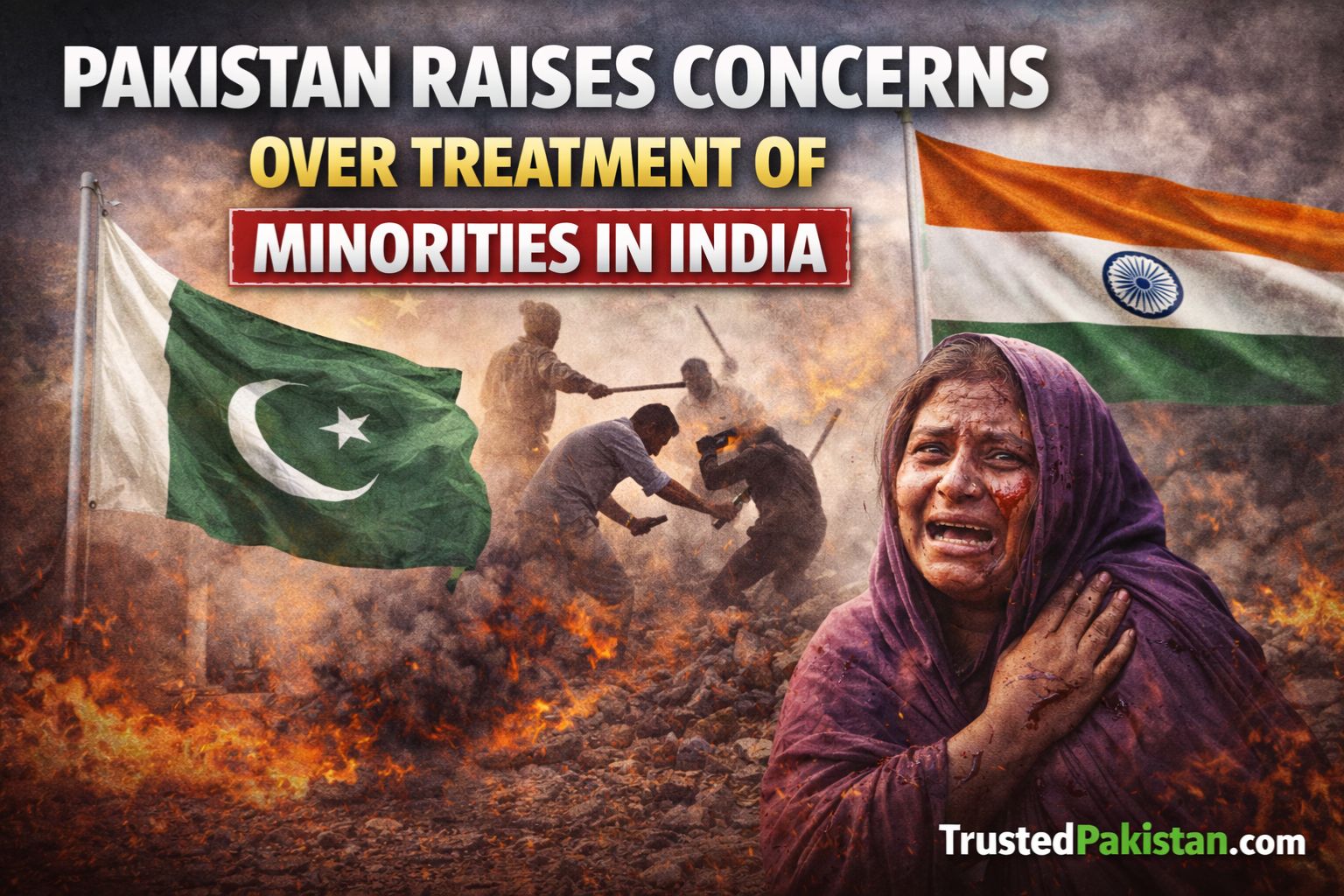
Pakistan Raises Concerns | Over Treatment of Minorities in India
Pakistan Raises Concerns Over Treatment of Minorities in India as growing reports of discrimination, violence, and systemic suppression against religious and ethnic minorities continue to attract international attention. Islamabad has repeatedly urged the global community to closely examine what it describes as serious and ongoing human rights violations in neighboring India. The issue has evolved into a major diplomatic concern, impacting regional stability and raising questions about India’s commitment to democratic values and constitutional protections.
Over recent years, minority communities in India—particularly Muslims, Christians, Sikhs, and Dalits—have reportedly faced increasing social, political, and economic marginalization. Pakistan argues that such conditions undermine peace in South Asia, stressing that lasting regional harmony is impossible without justice, equality, and respect for fundamental human rights.
Pakistan Raises Concerns Over Treatment of Minorities in India at Global Forums
Pakistan Raises Concerns Over Treatment of Minorities in India at major international platforms including the United Nations, the Organization of Islamic Cooperation (OIC), and global human rights conferences. Pakistani representatives have consistently highlighted laws and policies they claim disproportionately affect minorities and restrict religious freedoms.
According to Pakistan’s Foreign Office, India is witnessing a troubling decline in civic freedoms, where dissent is suppressed and minorities increasingly feel unsafe. Officials point to restrictive legislation, selective law enforcement, and a rise in nationalist rhetoric as factors contributing to an atmosphere of fear and exclusion.
Pakistan maintains that raising these concerns internationally is not an act of hostility, but a moral and legal obligation under international human rights norms.
Religious Minorities Under Pressure in India
Pakistan Raises Concerns Over Treatment of Minorities in India with a particular focus on challenges faced by religious communities. Reports and independent investigations have highlighted:
- Rising incidents of mob violence
- Forced displacement of minority families
- Restrictions on religious practices and places of worship
- Targeted hate speech and incitement
Muslim communities have been significantly affected by controversial citizenship-related laws, which critics say could render millions stateless. Christians and Dalits, meanwhile, often report social exclusion, discrimination in employment, and limited access to justice. Pakistan argues that such practices directly contradict India’s constitutional guarantees of equality and secularism.
International Human Rights Reports Support Pakistan’s Claims
Several global human rights organizations have published reports echoing Pakistan Raises Concerns Over Treatment of Minorities in India. Organizations such as Amnesty International and Human Rights Watch have documented cases of religious intolerance, misuse of security laws, and a lack of accountability for perpetrators of violence.
These organizations warn that shrinking space for civil society and media restrictions further exacerbate the problem. Pakistan cites these independent findings to reinforce its argument that the issue extends beyond political rivalry and reflects a genuine humanitarian crisis.


The growing body of international documentation strengthens Pakistan’s position that minority rights in India require urgent attention and transparent investigation.
Pakistan’s Diplomatic and Moral Responsibility
Pakistan Raises Concerns Over Treatment of Minorities in India as part of what it describes as a broader diplomatic and moral responsibility to advocate for oppressed communities. Pakistani leadership has repeatedly stated that remaining silent in the face of injustice would amount to complicity.
Islamabad emphasizes peaceful engagement, dialogue, and multilateral oversight rather than confrontation. Officials argue that international monitoring mechanisms, fact-finding missions, and open discussions can help de-escalate tensions and encourage reforms that protect minority communities.
India’s Internal Challenges and Global Image
Pakistan Raises Concerns Over Treatment of Minorities in India also in the context of India’s global standing. Analysts note that rising intolerance and internal unrest could damage India’s image as the world’s largest democracy.
Economic growth, foreign investment, and strategic partnerships are increasingly tied to a country’s human rights record. Critics argue that ignoring minority grievances risks long-term instability and could weaken India’s influence on the global stage. Pakistan maintains that protecting minority rights is not only a moral duty but also essential for sustainable development and regional credibility.
Role of the International Community
Pakistan Raises Concerns Over Treatment of Minorities in India while urging the international community to play an active role. Pakistan has called on global powers and human rights institutions to:
- Demand accountability for rights violations
- Support independent and transparent investigations
- Promote legal and institutional protections for minorities
The United Nations, international media, and civil society organizations are seen as crucial in ensuring transparency, amplifying marginalized voices, and encouraging constructive engagement.
Conclusion
Pakistan Raises Concerns Over Treatment of Minorities in India as a sustained call for justice, equality, and long-term regional stability. A growing number of independent reports suggest that minority communities continue to face serious challenges, making international attention increasingly necessary.
Pakistan maintains that peace in South Asia depends on mutual respect, adherence to the rule of law, and protection of all citizens—regardless of religion or ethnicity. Addressing minority rights through dialogue, accountability, and cooperation, Islamabad argues, remains the only viable path toward stability and coexistence in the region.
