


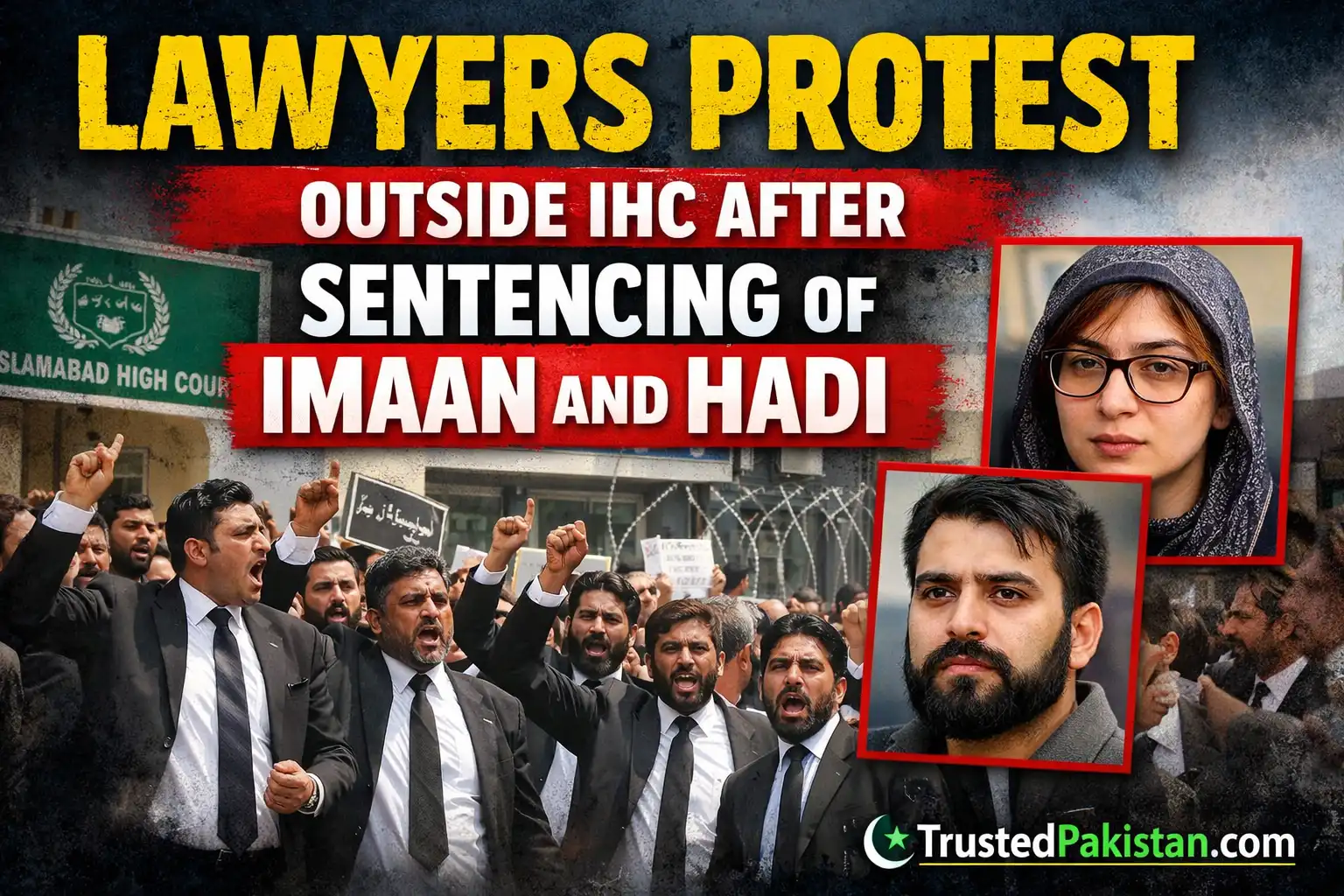
Lawyers Protest Outside IHC After Sentencing of Imaan and Hadi
Lawyers protest outside IHC following the controversial sentencing of Imaan and Hadi has ignited a fresh debate over judicial transparency, due process, and the protection of fundamental rights in Pakistan. The protest, staged outside the Islamabad High Court (IHC), saw a large number of lawyers observing a strike and suspending court proceedings in solidarity with the convicted individuals.
The sentencing has not only stirred outrage within the legal fraternity but has also attracted attention from civil society groups, rights activists, and political observers across the country. As the situation unfolds, the lawyers protest outside IHC continues to symbolize growing unease within Pakistan’s justice system.
Background of the Imaan and Hadi Case
The case involving Imaan and Hadi has remained under intense scrutiny since its inception. Legal experts argue that the proceedings raised serious questions regarding procedural fairness and proportionality of punishment. According to lawyers involved in the protest, the verdict reflects a broader pattern of selective accountability and rushed judicial processes.
Many lawyers claim that the sentencing lacked adequate consideration of mitigating factors, further fueling frustration among members of the bar. The lawyers protest outside IHC was therefore not an isolated reaction but the result of accumulated grievances within the legal community.
Lawyers Protest Outside IHC: Nature of the Demonstration
The protest outside the Islamabad High Court was organized by senior lawyers, bar associations, and representatives of legal bodies. Demonstrators chanted slogans demanding justice, judicial restraint, and a review of the verdict. Courtrooms remained largely empty as lawyers observed a symbolic strike.
This lawyers protest outside IHC disrupted routine judicial work, underscoring the seriousness of the concerns raised. Protest leaders emphasized that their movement was peaceful and aimed solely at safeguarding the integrity of the justice system.
Legal Community’s Response and Strike Observance
Bar councils across Islamabad and Rawalpindi issued statements supporting the protest. Several lawyers warned that if their demands were ignored, the strike could expand nationwide. The unity displayed during the lawyers protest outside IHC highlighted rare consensus within Pakistan’s often-divided legal fraternity.
Senior advocates stressed that the protest was not against the judiciary as an institution, but against what they termed “questionable judicial outcomes.” This distinction, they argued, was necessary to preserve public trust in courts.
Judicial Independence and Due Process Concerns
One of the central themes raised during the lawyers protest outside IHC was the issue of judicial independence. Protesters argued that external pressures and hasty proceedings undermine the credibility of court verdicts.
Legal analysts have pointed out that due process is a cornerstone of any democratic justice system. When verdicts appear rushed or disproportionate, public confidence erodes. The Imaan and Hadi sentencing, according to critics, exemplifies such risks.




Reaction from Civil Society and Rights Groups
Beyond the legal community, human rights organizations and civil society activists have voiced concern over the case. Many have called for transparency, access to fair trial standards, and judicial accountability.
Rights advocates argue that the lawyers protest outside IHC should be seen as a warning sign rather than a disruption. They believe such protests reflect deeper institutional issues that require urgent reforms rather than punitive responses.
Political and Public Implications
The unfolding situation has political implications as well. Opposition figures have cited the lawyers protest outside IHC as evidence of shrinking civic space and growing intolerance of dissent. Meanwhile, government officials have largely maintained silence, avoiding direct commentary on the verdict.
Public reaction remains divided. While some citizens view the protest as necessary, others worry about the impact of strikes on already overburdened courts. Nevertheless, the protest has reignited national discussion on judicial reform.
Comparison with Past Legal Protests in Pakistan
Pakistan has a long history of lawyer-led movements shaping national discourse. From the restoration of the judiciary to resistance against authoritarian measures, lawyers have often played a decisive role.
The current lawyers protest outside IHC draws parallels with past movements, though analysts note that today’s challenges are more complex, involving digital surveillance, free speech concerns, and evolving legal frameworks.
What Lies Ahead for the Case and the Legal System
As pressure mounts, legal experts expect review petitions and appeals to follow. Whether the judiciary responds with reconsideration or clarification will likely determine the future trajectory of the protest.
The lawyers protest outside IHC may also prompt broader conversations on sentencing guidelines, judicial accountability mechanisms, and the role of bar councils in safeguarding justice.
Why This Protest Matters Beyond One Verdict
Rather than concluding, it is important to recognize that the lawyers protest outside IHC represents more than opposition to a single judgment. It reflects systemic anxieties about fairness, transparency, and the balance of power within Pakistan’s justice system.
If addressed constructively, this moment could become an opportunity for reform. If ignored, it risks deepening mistrust between institutions and the public they serve.
