


Gul Plaza Fire Remains Identification Crisis
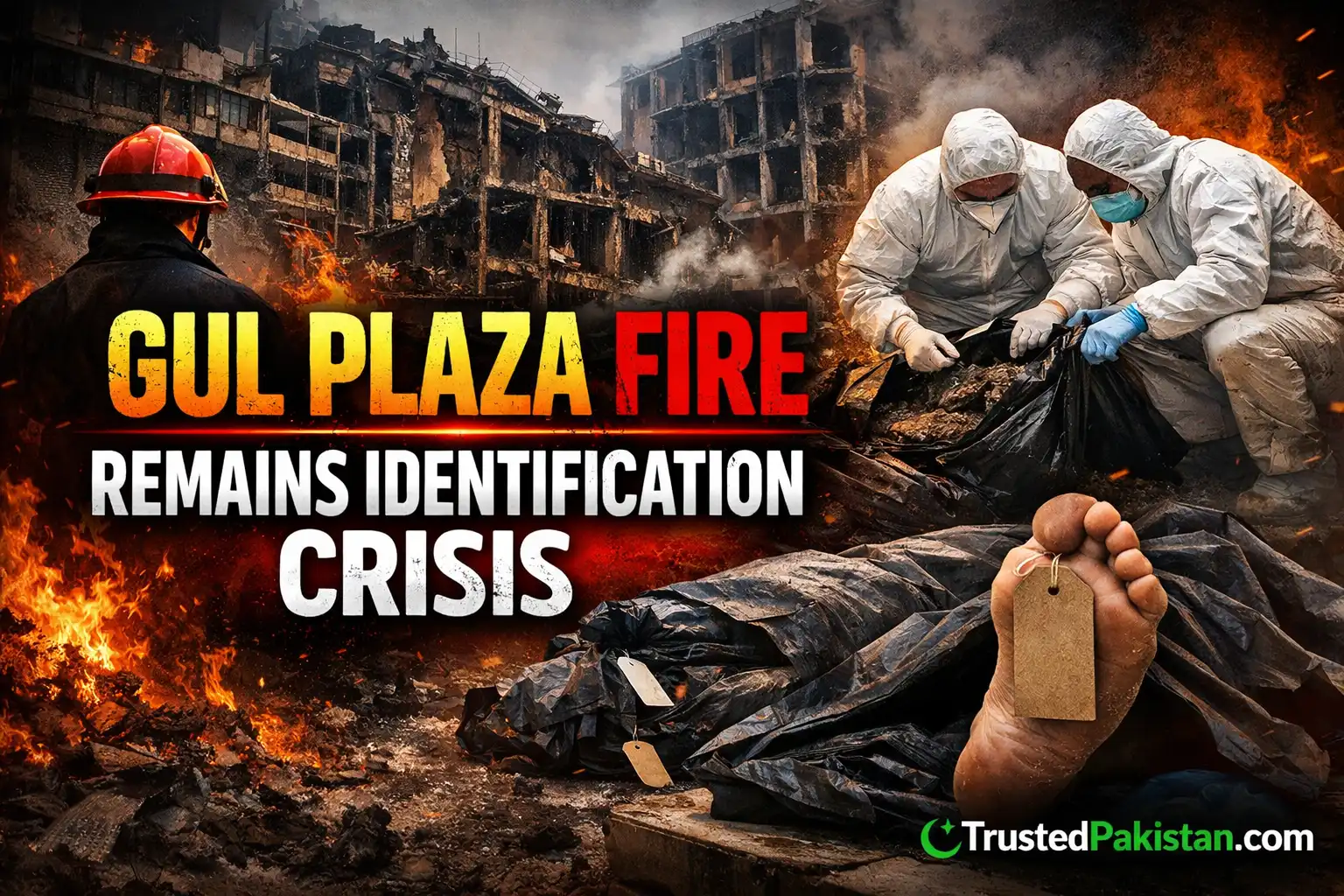
On the night of January 17, 2026, a catastrophic fire erupted at the Gul Plaza shopping mall on Muhammad Ali Jinnah Road in Karachi, Pakistan. Flames engulfed the multi-story commercial complex that housed nearly 1,200 shops, quickly turning it into one of the deadliest urban fires in the city’s recent history. The fire burned intensely for more than a day, and recovery teams have since been struggling with the grim task of identifying remains amid the wreckage.
According to reports compiled from the ongoing incident:
- The blaze took the lives of at least 73 people.
- Remains in many cases were badly burned, complicating identification.
- DNA testing, bone analysis, and physical recognition are being used to confirm identities.
This article provides an in-depth look at the Gul Plaza fire remains identification process, the scientific and logistical obstacles involved, and how families are coping with uncertainty.
What Happened at Gul Plaza
The fire began late in the evening of January 17 in a section of the mall stocked with flammable goods. Rapid spread was fueled by combustible materials common in the shops, including clothing, plastics, and other retail merchandise. Thick smoke and intense heat overwhelmed rescue efforts, which were further challenged by partial building collapses.
Emergency personnel battled flames for nearly 36 hours before the fire was largely extinguished, by which point significant portions of the structure had been destroyed. Observers described the scene as a “forensic nightmare” due to how badly remains were burned.
Why Identification Is So Challenging
One of the most complex aspects of the recovery operation has been the Gul Plaza fire remains identification process. Extreme heat from the fire not only destroyed buildings but also made many bodies unrecognizable by typical means such as facial features or fingerprints.
Forensic DNA Testing
Authorities have sent charred remains to specialized labs, primarily at the Sindh Forensic DNA and Serology Lab at the University of Karachi, for detailed analysis. DNA profiling is often the only reliable method when remains are fragmented or severely burned.
However, forensic teams face multiple challenges:
- Thermal degradation: Heat damage breaks down DNA, making extraction and matching more difficult.
- Fragmented remains: Many victims were found in small, scattered pieces, complicating lab processing.
- Limited resources: Pakistan’s disaster forensic capacity — especially during mass-fatality events — is limited compared to some Western countries.
This situation has left many families in limbo, waiting for positive identification so they can proceed with funerals and legal documentation.


Progress So Far in Identification
Despite these challenges, forensic teams have made some progress. Of the 73 sets of remains retrieved so far:
- 23 victims have been positively identified.
- DNA testing confirmed 16 of those identities.
- Additional identifications were made through physical recognition where possible.
These confirmations have allowed families to perform burial rites, but dozens of remains still await identification.
The Human Toll | Stories Behind the Numbers
The Gul Plaza fire remains identification effort isn’t just a scientific exercise — it represents real people and devastated families.
For instance:
- Many victims were local shopkeepers who stayed behind to help customers or secure inventory as the fire worsened.
- Some families provided DNA samples in hopes of accelerating the identification process.
- Local communities have been gathering at hospital gates and site perimeters, anxious for news.
These personal losses underscore the broader emotional and societal toll of the disaster.
Government Response and Safety Reviews
In response to the tragedy, authorities launched investigations into the causes and management of the fire. Reports indicate:
- A first information report (FIR) was filed, citing negligence and poor safety standards.
- Technical and forensic teams from Lahore and other areas have been assisting with recovery and investigation.
Discussions on improved building codes and fire safety regulations are now gaining traction in Pakistan’s urban policy discussions. This tragedy has opened a renewed focus on the importance of enforcing fire safety standards in commercial buildings nationwide.
Continuing Impact & Recovery
The Gul Plaza fire remains identification process continues. Dozens of remains await confirmation, and families remain hopeful that scientific methods, including advanced DNA testing and forensic analysis, will provide the answers they need.
This ongoing effort also serves as a stark reminder of the importance of safety vigilance, preparedness for disasters, and investment in scientific infrastructure to support mass-fatality events.
