


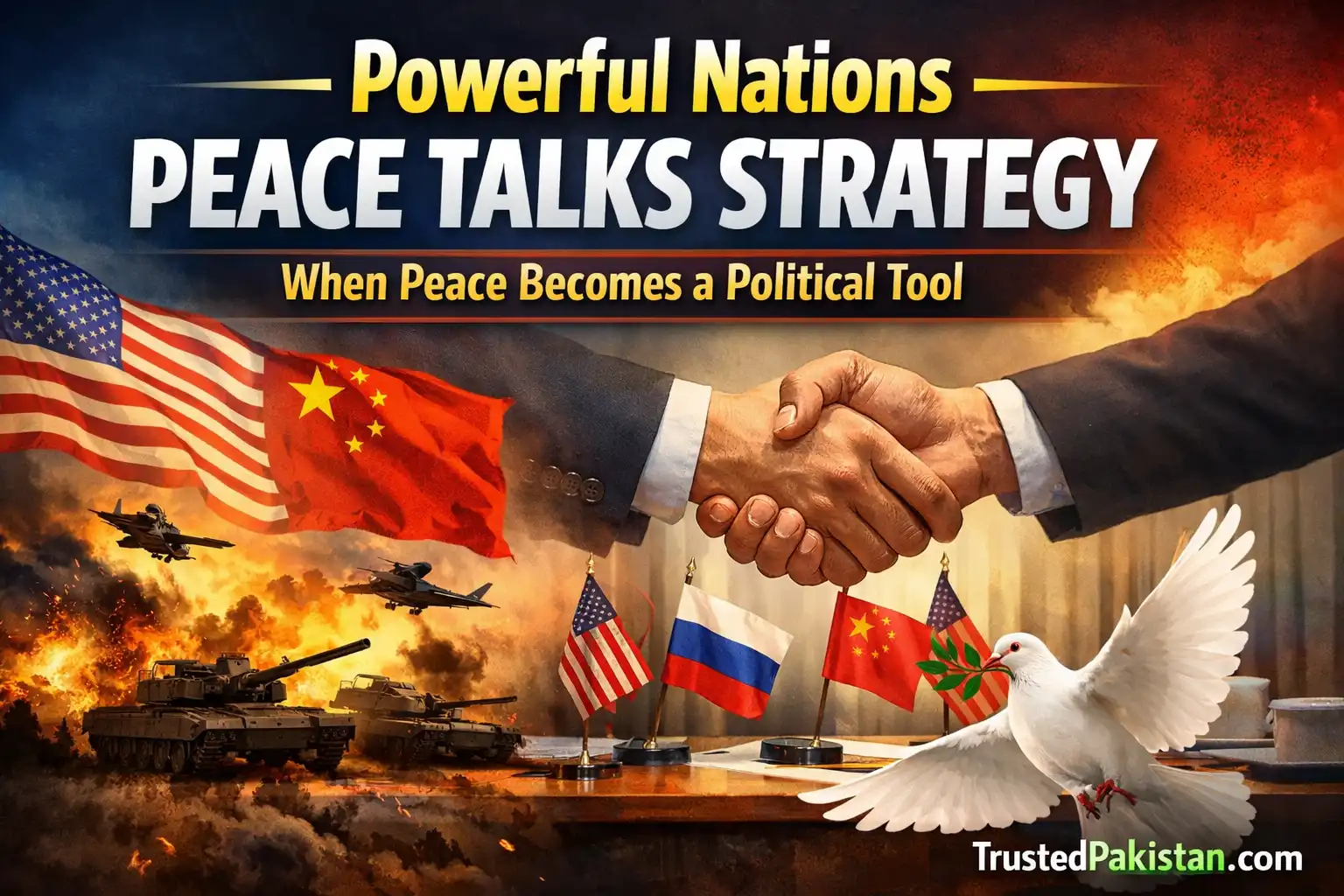
Powerful Nations Peace Talks Strategy | When Peace Becomes a Political Tool
Powerful Nations Peace Talks Strategy has become a defining feature of modern international diplomacy. Whenever influential states speak of peace, ceasefires, or dialogue, weaker nations are often expected to applaud politely. However, history shows that applause is rarely enough. Instead of clapping, vulnerable states must calculate—because peace talk is not always peace intent.
When global powers sit at negotiation tables, the question is not whether peace is discussed, but why it is discussed at that specific moment. Is it genuine diplomacy, or a calculated move to buy time, shift pressure, or restructure global narratives?
Understanding the Powerful Nations Peace Talks Strategy
The Powerful Nations Peace Talks Strategy revolves around timing, language, and international optics. Peace proposals often emerge when:
- Military objectives stall
- Sanctions intensify
- Global opinion turns hostile
- Economic or political costs rise
Peace, in such cases, becomes a strategic pause rather than a moral objective.
Powerful states understand that international institutions reward dialogue more than decisive action. By proposing peace talks, they reposition themselves as rational actors, even when underlying policies remain unchanged.
Peace Boards or Chessboards?
International peace forums often resemble chessboards more than reconciliation spaces. Every signature, handshake, and statement is carefully weighed.
For weaker nations, the Powerful Nations Peace Talks Strategy demands caution. A signature on a peace board may not represent goodwill—it may represent delay tactics.
Historically, many conflicts show that peace initiatives were launched not to resolve disputes but to:
- Freeze unfavorable battle lines
- Regain diplomatic legitimacy
- Divide opposing alliances
This makes it essential for smaller states to analyze intentions rather than emotions.
Buying Time Through Diplomacy
One of the most common applications of the Powerful Nations Peace Talks Strategy is time-buying. Delays achieved through negotiations allow dominant states to:
- Rebuild military capacity
- Adjust economic policies
- Reframe global media narratives
While talks continue, realities on the ground often remain unchanged. The illusion of progress replaces actual resolution.
According to international diplomatic principles outlined by the United Nations, peaceful dialogue must be backed by measurable commitments to be meaningful . Without accountability, talks risk becoming tools of manipulation rather than peace.
Media Framing and Global Perception
Peace language is powerful. When major powers announce dialogue initiatives, international media often amplifies the message without questioning motives.
The Powerful Nations Peace Talks Strategy thrives on this amplification. Headlines shift from aggression to diplomacy, while structural injustices remain untouched.



Weaker nations that challenge these narratives risk being labeled “uncooperative,” even when their concerns are legitimate. This imbalance makes strategic calculation essential.
When Dialogue Replaces Justice
Peace without justice is fragile. The Powerful Nations Peace Talks Strategy sometimes prioritizes stability over accountability.
This approach may silence immediate conflict, but it rarely addresses root causes such as:
- Territorial violations
- Human rights abuses
- Economic coercion
International law recognizes that sustainable peace requires justice, not merely dialogue. Ignoring this principle benefits powerful actors more than affected populations.
The Cost of Blind Trust for Weaker States
Trusting peace proposals without scrutiny can be costly. For developing and conflict-affected nations, the Powerful Nations Peace Talks Strategy can lead to:
- Loss of negotiating leverage
- Long-term political dependency
- Frozen conflicts with no resolution
Strategic patience, supported by data, alliances, and legal frameworks, is often more effective than emotional agreement.
Calculated Diplomacy vs Genuine Peace
Not all peace talks are deceptive. Genuine diplomacy exists—but distinguishing it requires evidence.
Signs of sincerity include:
- Clear timelines
- Third-party verification
- Legal enforcement mechanisms
- Ground-level confidence-building measures
Without these, the Powerful Nations Peace Talks Strategy remains a warning signal rather than an opportunity.
Why Calculation Matters More Than Applause
For weaker nations, survival depends on calculation, not applause. Every peace proposal must be measured against history, intent, and enforceability.
The global system is unequal. Those who hold power shape rules, narratives, and timelines. Recognizing the Powerful Nations Peace Talks Strategy allows smaller states to protect sovereignty while engaging diplomatically.
Peace is not rejected—but it must be verified.
A Strategic Reflection Instead of a Conclusion
Peace offered without commitment is not peace—it is positioning. When powerful nations speak of harmony, weaker nations must listen carefully, analyze deeply, and respond strategically.
The real question is not who speaks of peace, but who benefits from its timing.
In modern geopolitics, calculators matter more than claps.
