


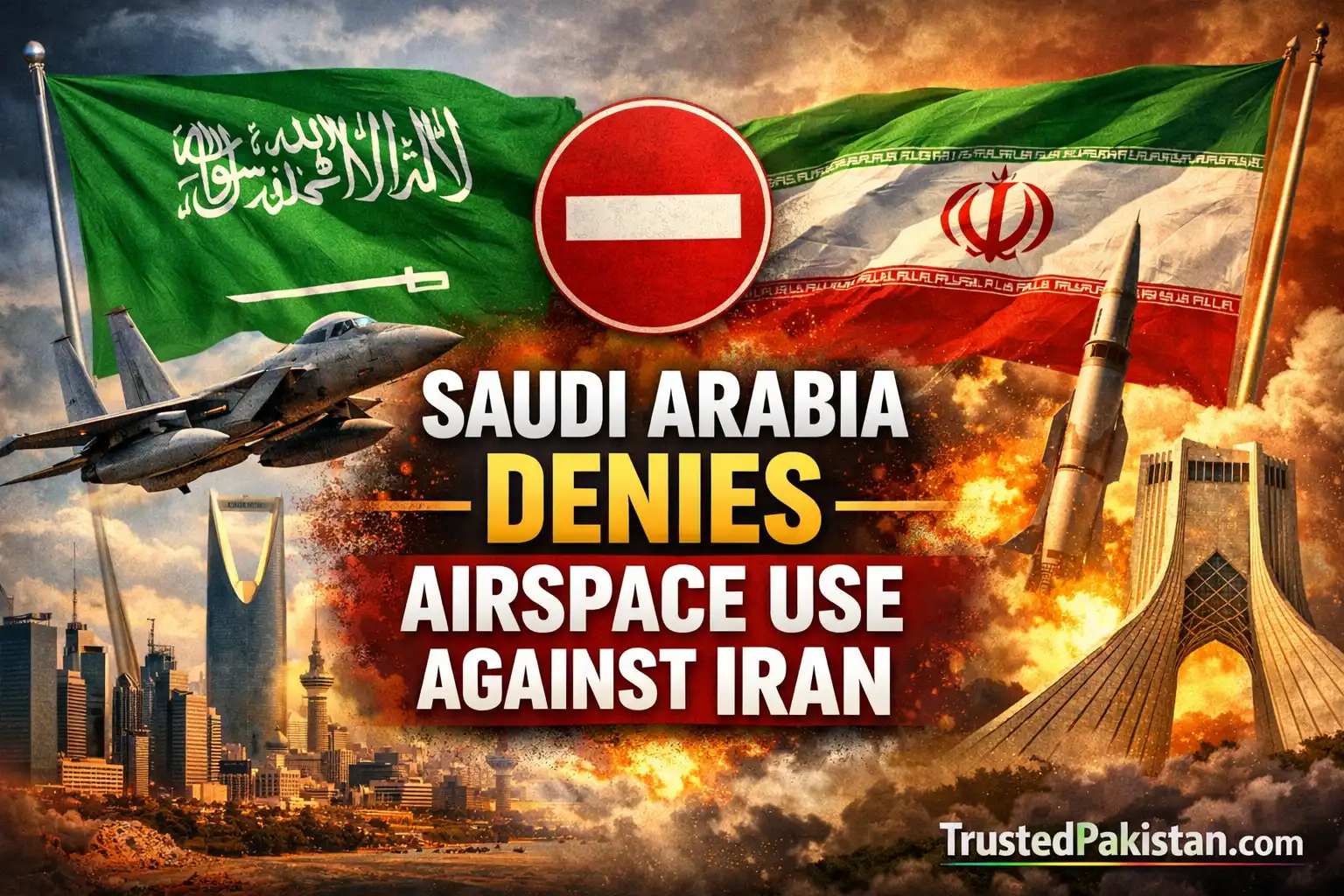
Saudi Arabia Denies Airspace Use Against Iran
Saudi Arabia denies airspace use against Iran, sending a clear and powerful diplomatic signal amid escalating regional tensions. The Kingdom has firmly stated that it will not allow its airspace to be used for any military action against Iran, reaffirming its commitment to sovereignty, neutrality, and regional peace.
This statement comes at a time when speculation and misinformation have been circulating regarding potential military escalations involving regional and global powers. Saudi Arabia’s position aims to shut down these narratives and reinforce its role as a stabilising force in the Middle East.
Official Saudi Position on Iran Conflict
Saudi officials clarified that the Kingdom’s airspace is governed strictly by international aviation law and national security policy. Any military usage that could drag Saudi Arabia into external conflicts is categorically rejected.
According to official communications released via the Saudi Ministry of Foreign Affairs, the Kingdom remains committed to dialogue, de-escalation, and peaceful conflict resolution.
Saudi Arabia denies airspace use against Iran as part of its broader diplomatic doctrine, which prioritises stability over confrontation.
Why Saudi Airspace Matters Strategically
Saudi Arabia controls one of the most strategically significant airspaces in the Middle East. Any military access could dramatically alter regional power equations.
Key strategic reasons include:
- Proximity to Iran and the Gulf
- Critical global oil shipping routes
- Major international flight corridors
- Central role in Islamic and Arab geopolitics
By stating that Saudi Arabia denies airspace use against Iran, the Kingdom prevents escalation and avoids becoming a logistical participant in regional conflict.
Regional and Global Diplomatic Reactions
Regional powers have largely welcomed Saudi Arabia’s stance, viewing it as a responsible and stabilising decision. Several diplomatic observers note that this position reduces the risk of broader regional spillover.
Internationally, analysts see the move as consistent with Saudi Arabia’s recent foreign policy shift — from confrontation to strategic balance and diplomacy.
Iran Saudi Arabia Relations | Recent Developments
In recent years, Iran and Saudi Arabia have taken cautious steps toward diplomatic normalisation. Mediation efforts, particularly by regional stakeholders, have reopened communication channels.
Saudi Arabia denies airspace use against Iran not as a hostile gesture, but as a neutral policy decision, ensuring that rapprochement efforts are not undermined by external military agendas.



This approach reinforces the Kingdom’s message that it seeks peaceful coexistence, not proxy conflicts.
Impact on Middle East Security Dynamics
Security experts argue that Saudi Arabia’s decision:
- Lowers the risk of airspace militarisation
- Reduces chances of retaliatory escalation
- Encourages diplomatic solutions
- Strengthens regional confidence-building measures
Saudi Arabia denies airspace use against Iran as part of a broader de-escalation framework, aligning with Gulf security interests and Islamic unity principles.
Economic and Energy Security Implications
The Middle East remains the backbone of global energy supply. Any conflict involving Saudi airspace could:
- Disrupt oil markets
- Spike global energy prices
- Threaten maritime trade routes
By maintaining neutrality, Saudi Arabia protects:
- Global oil supply chains
- Investor confidence
- Regional economic stability
This decision reassures markets that Saudi Arabia remains a predictable and responsible global energy partner.
Media Narratives and Misinformation Control
In the digital age, false reports spread rapidly. Saudi Arabia denies airspace use against Iran partly to counter:
- Social media rumours
- Speculative foreign media claims
- Politically motivated disinformation
Clear official communication plays a vital role in maintaining public trust and diplomatic clarity.
What This Means for the Muslim World
As the custodian of Islam’s holiest sites, Saudi Arabia’s actions carry symbolic weight. Neutrality in conflicts between Muslim nations reinforces:
- Islamic unity
- Peaceful conflict resolution
- Respect for sovereignty
Saudi Arabia denies airspace use against Iran while emphasising dialogue over division — a message resonating across the Muslim world.
The Road Ahead for Gulf Diplomacy
Rather than ending with a conventional conclusion, the situation points toward a forward-looking diplomatic trajectory. Saudi Arabia’s stance reflects a strategic recalibration — one that favours mediation, economic development, and regional cooperation over military entanglement.
As tensions fluctuate, Saudi Arabia’s consistent policy may serve as a blueprint for conflict avoidance, reinforcing its emerging role as a diplomatic anchor in the Middle East.
Saudi Arabia denies airspace use against Iran not just as a statement — but as a signal of intent for a more stable regional future.
