


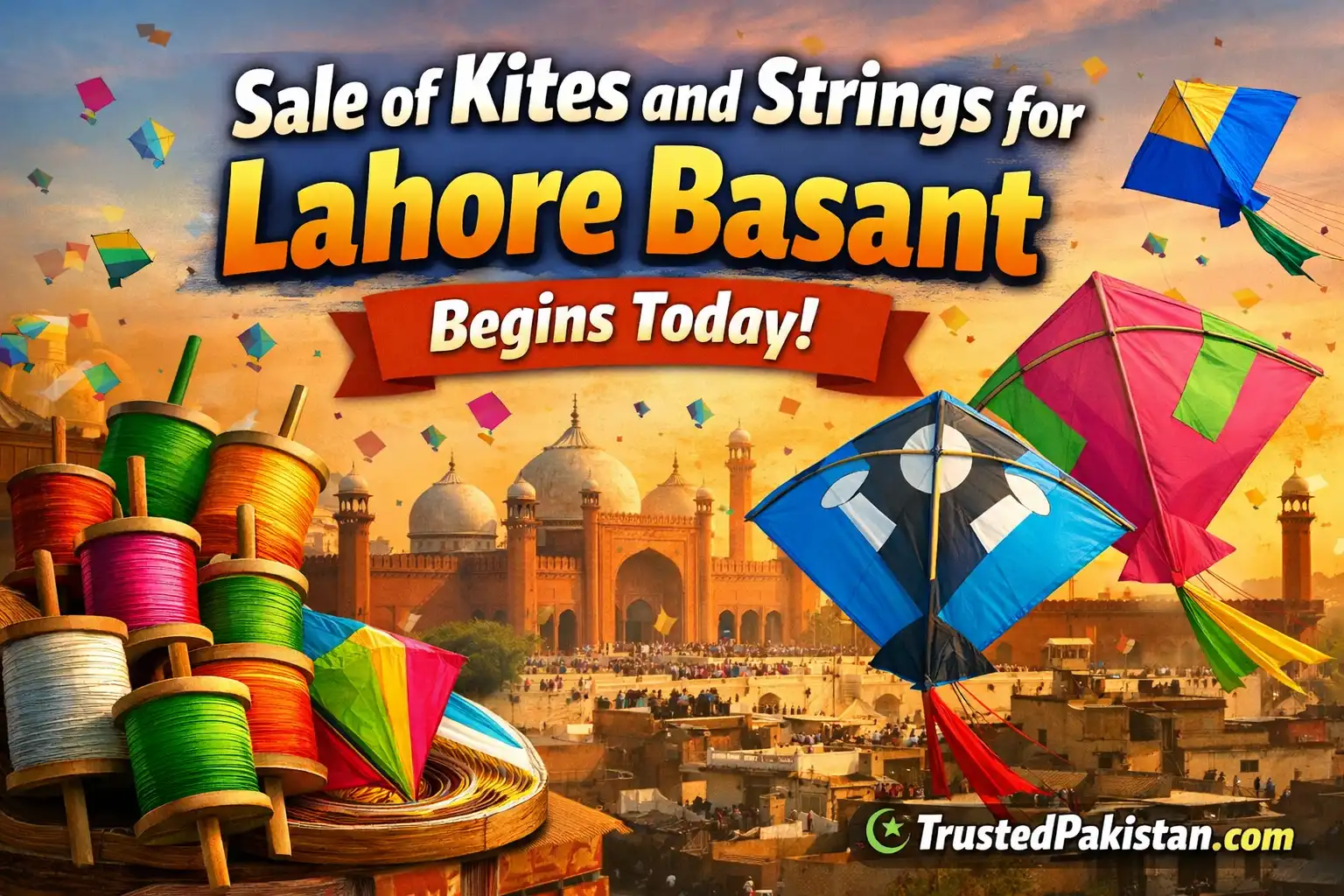
Sale of Kites and Strings for Lahore Basant Begins Today
The sale of kites and strings for Lahore Basant begins today as seasonal excitement slowly returns to markets across the city. Despite the official ban on Basant celebrations, kite-related business activity is being closely monitored under strict government regulations. Authorities have allowed limited sales under controlled conditions to curb illegal practices, especially the use of hazardous kite strings.
Lahore, once known worldwide for its colorful Basant festival, has seen years of restrictions due to safety concerns. However, the renewed sale of kites and strings for Lahore Basant has again sparked debate between cultural revival and public safety.
Background of Basant and Kite Flying in Lahore
Basant was historically celebrated as a spring festival symbolizing joy, freedom, and cultural heritage. The skies of Lahore would turn vibrant with thousands of kites, while rooftops echoed with festive music.
However, repeated incidents involving sharp chemical strings resulted in fatal accidents, forcing authorities to impose a ban. Since then, the sale of kites and strings for Lahore Basant has remained a sensitive issue, balancing tradition with law enforcement.
Government Regulations on Kite and String Sales
The Punjab government has clarified that only plain cotton string is permitted. The use, sale, or storage of metallic, glass-coated, or chemical strings remains a criminal offense.
According to official instructions:
- Chemical or metallic strings are strictly banned
- Unlicensed sellers face heavy fines and arrests
- Markets are under constant surveillance
- Storage beyond approved limits is illegal
Role of District Administration and Police
The Lahore district administration has deployed inspection teams to ensure compliance. Shops involved in the sale of kites and strings for Lahore Basant are required to display licenses openly.
Police officials have warned that violators may face:
- FIR registration
- Sealing of shops
- Imprisonment under Punjab Kite Flying Act
These steps aim to prevent past tragedies while allowing controlled economic activity.
Why Kite String Safety Is a Serious Concern
The most dangerous element of Basant has never been the kite—but the string. Sharp strings have previously caused:
- Fatal throat injuries to motorcyclists
- Power outages due to tangled wires
- Injuries to birds and animals
That is why the sale of kites and strings for Lahore Basant is now tied directly to public safety compliance.


Market Response and Trader Concerns
Local traders welcomed the partial relaxation but expressed concerns over unclear policies. Many shopkeepers say they are ready to follow legal rules but fear sudden crackdowns.
Despite challenges, markets such as Shah Alam Market and Anarkali have reported increased footfall after news of the sale of kites and strings for Lahore Basant spread.
Public Opinion on Basant Revival
Citizens remain divided. Cultural activists argue Basant should return under strict safety laws, while others believe risks still outweigh benefits.
Surveys show:
- Youth favor regulated revival
- Families demand stricter enforcement
- Road safety groups oppose open kite flying
This debate keeps the sale of kites and strings for Lahore Basant under constant public scrutiny.
Economic Impact of Kite Sales
The controlled sale of kites and strings for Lahore Basant provides temporary relief to small traders, artisans, and wholesalers. Thousands of families depend on seasonal kite-related businesses.
Economists note that:
- Regulated sales support local employment
- Cultural tourism could benefit if safety improves
- Illegal trade must be eliminated to sustain growth
What Lies Ahead for Basant in Lahore
Authorities have hinted that future decisions will depend on compliance levels. If traders and citizens follow safety laws, gradual cultural revival may be possible.
Until then, the sale of kites and strings for Lahore Basant remains a controlled experiment—testing whether tradition and responsibility can coexist in modern Lahore.
Final Word
Lahore’s identity is deeply tied to Basant, but lives matter more than tradition. Responsible behavior, strict enforcement, and public awareness will determine whether the sale of kites and strings for Lahore Basant becomes a step toward revival—or another warning from history.
