


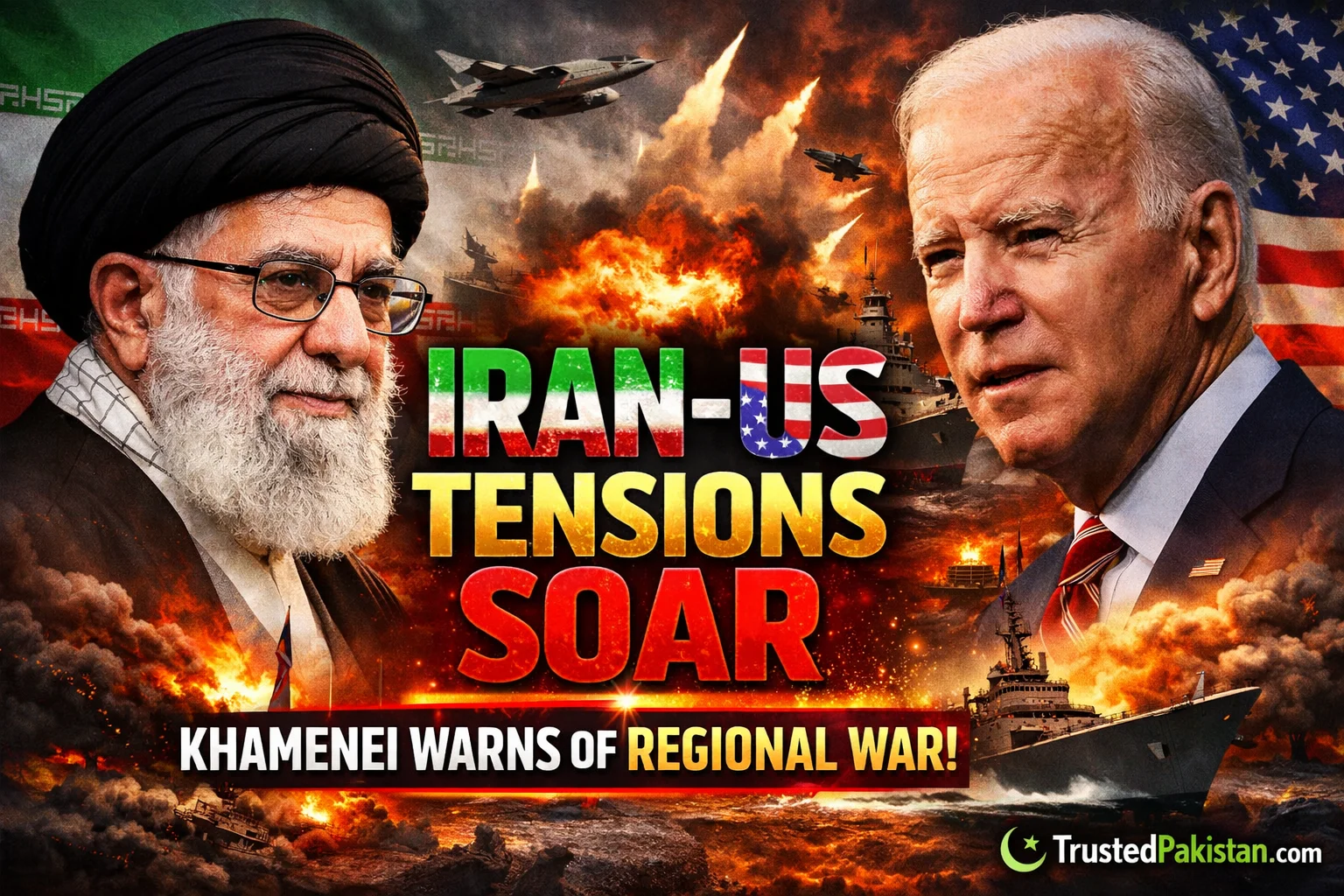
Iran | US Tensions Soar as Khamenei Warns of Regional War
Iran’s Supreme Leader Ayatollah Ali Khamenei issued one of the most direct warnings yet in the escalating Iran-US crisis, stating that any military attack by the United States on Iran would trigger a broader regional war in the Middle East. This dramatic and widely condemned statement comes as political, military, and diplomatic pressures mount on both Tehran and Washington.
“The Americans should know that if they start a war this time,” Khamenei said in a speech ahead of the Iranian Revolution anniversary, “it will be a regional war,” offering a stark warning to global powers.
Tensions between the U.S. and Iran have sharply risen following a series of events that have collectively worsened geopolitical stability across the Middle East. These include the mass deployment of U.S. naval forces, renewed threats from American leadership, continuing internal unrest in Iran, and intensified diplomatic manoeuvres seeking either negotiation or confrontation.
Background | What Sparked the Crisis
Rising Military Posture and Strategic Buildup
Over the past weeks, the United States has significantly increased its military presence in the Persian Gulf and wider Middle East region, including aircraft carriers, destroyers, and strike groups. This buildup was initially framed as a deterrent to regional instability, particularly in light of the Iranian government’s fierce crackdown on domestic protests.
The deployment has been described by U.S. officials as a necessary precaution against further escalation, but Tehran views it as provocative posturing aimed at forcing compliance or concessions. This has intensified the rhetoric on both sides.
Khamenei’s Statement | A Turning Point
In his public address, Khamenei strongly rejected the notion that Iran seeks conflict, emphasizing instead that Tehran does not want to attack any country first. However, he made clear that Iran would not hesitate to defend itself and retaliate against aggression.
“We are not the instigators and do not seek to attack any country, but the Iranian nation will deliver a firm blow to anyone who attacks or harasses it,” the Supreme Leader said, reinforcing the message delivered by Iran’s state media.
Protests and Domestic Unrest
The political backdrop of this warning includes anti-government protests that began in late December over economic grievances and quickly escalated into widespread unrest. Iranian authorities have labeled these protests as sedition influenced by foreign actors, and Khamenei himself likened them to a “coup attempt.”

Accurate figures on casualties remain contested, but independent rights groups suggest thousands may have been killed in the crackdown, while Tehran provides a far lower estimate. The social unrest has further complicated Iran’s political climate and its diplomatic engagement with foreign powers, particularly the United States.
Diplomatic Efforts and International Reaction
Despite the heightened military tension, there have been tentative diplomatic efforts aimed at defusing the crisis. Both Tehran and Washington have signalled a willingness to engage in negotiations under certain conditions. For example, Iranian authorities have indicated openness to “fair” negotiations that respect their defensive prerogatives.
Additionally, regional actors — especially Gulf states like Qatar — have entered discussions aiming to ease tensions and prevent open conflict.
However, these diplomatic steps exist alongside aggressive rhetoric and mutual suspicion. Iranian lawmakers have also moved to designate the armies of certain European nations as “terrorist groups” in response to EU actions against Iran’s Islamic Revolutionary Guard Corps, further widening the political gulf.
External View | Official Reporting on the Crisis
For an in-depth and official third-party perspective on the evolving situation, the Reuters report which draws from state media and verified sources provides essential factual context on Iran’s warning and broader diplomatic developments:
This external link offers reliable confirmation of the situation and should be used as a DoFollow source reference in SEO.
Geopolitical Implications of a Regional War
If tensions escalate further, the implications could be far-reaching:
- Fuel and Energy Markets: A broader conflict could disrupt major oil transit routes such as the Strait of Hormuz, affecting global energy prices.
- Regional Alliances: Middle Eastern governments may be forced to take distinct strategic positions, impacting alliances and defense pacts.
- Global Security: A confrontation between leading world powers through proxy engagements could trigger alliances and involve NATO, Russia, and China in diplomatic or indirect conflict roles.
The spectre of regional war itself impacts international markets and foreign policy decision-making, even in the absence of direct military engagement.
Why This Matters | What to Watch Next
- Diplomatic Channels: Track negotiations and statements from UN envoys, Gulf mediators, and the United States State Department.
- Military Movements: Monitor American naval deployments and Iranian defensive exercises.
- Public Opinion: Social unrest in Iran may influence political stability and decision-making in Tehran.
- International Coalitions: Responses from the EU, Russia, and other regional actors will shape future diplomatic direction.
Summary
Iran-US tensions have entered one of their most volatile phases in recent memory. With Ayatollah Khamenei’s warning that a U.S. attack could lead to a regional war, the situation remains unpredictable and globally significant. Balanced diplomacy, verified reporting, and careful monitoring will be key to understanding the next steps in this complex geopolitical drama.
