


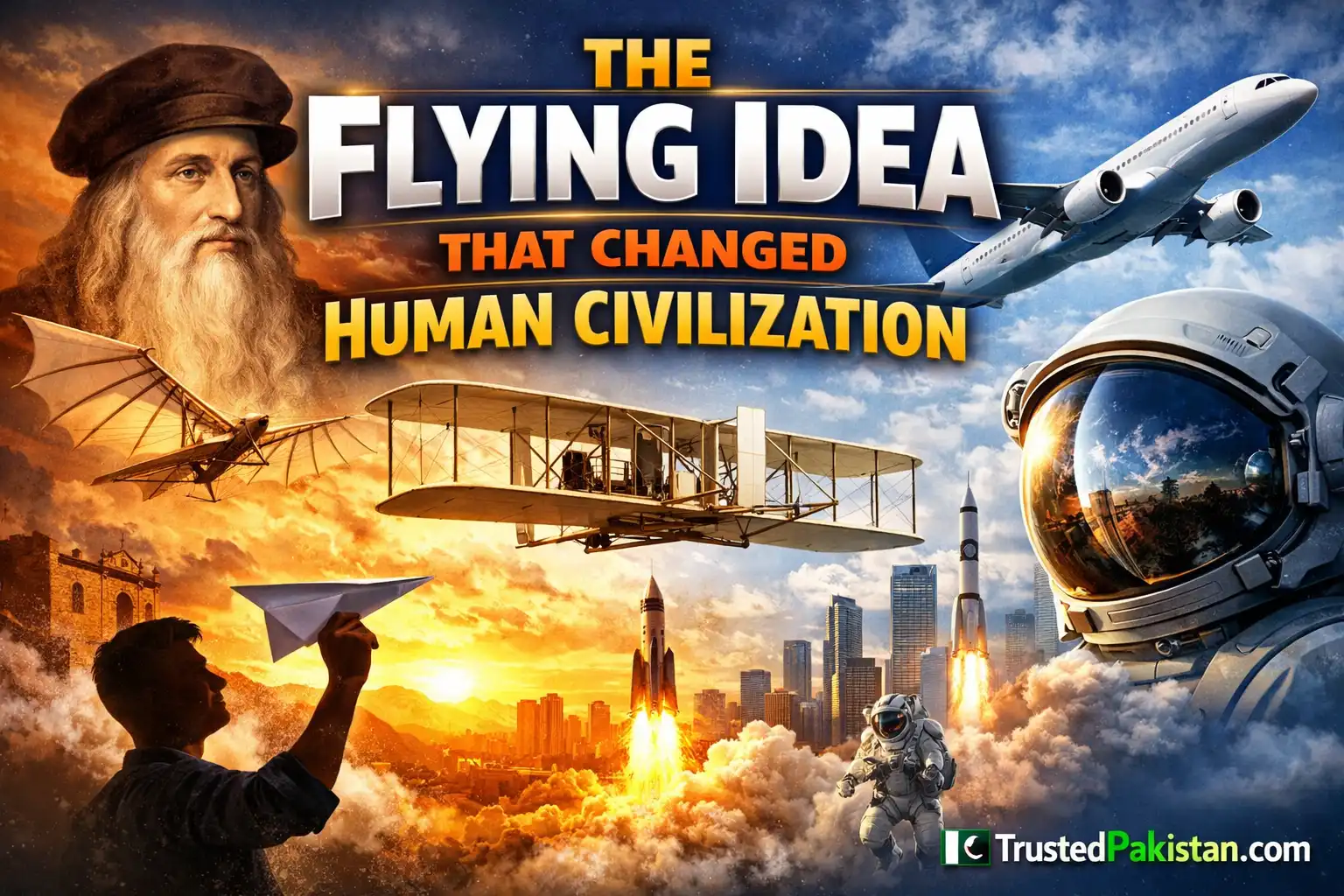
The Flying Idea That Changed Human Civilization
The History of Kite Invention begins with a simple human dream: the desire to touch the sky. What started as a lightweight frame covered with paper or cloth eventually became a tool that shaped wars, inspired religious and cultural festivals, and even laid the foundation for modern aviation and airplanes. This flying object, often seen today as a toy, once played a serious role in science, communication, and military strategy.
Origins of the History of Kite Invention in Ancient China
The History of Kite Invention dates back more than 2,500 years to ancient China. Historians widely agree that the first kites were created during the Warring States Period (475–221 BC). Chinese inventors used bamboo frames and silk fabric, materials that were light yet strong enough to fly.
Early Chinese kites were not meant for entertainment. Instead, they were used for:
- Measuring distances
- Sending military signals
- Testing wind patterns
- Scaring enemies during wartime
According to historical records preserved by cultural institutions like the Smithsonian National Air and Space Museum, kites were among the earliest human-made flying devices and directly influenced later aerodynamic discoveries.
History of Kite Invention and Its Role in Ancient Wars
One of the most fascinating chapters in the History of Kite Invention is its connection to warfare. Chinese generals used kites to:
- Calculate how far tunnels should be dug under enemy fortresses
- Deliver psychological warfare by attaching whistles that produced terrifying sounds
- Send coded messages across battlefields
Later, in Korea and Japan, military kites were used to lift observers into the air to spy on enemy movements. This strategic use of kites proves that they were far more than harmless flying toys.
History of Kite Invention and the Birth of Cultural Festivals
As the use of kites spread across Asia, the History of Kite Invention took a cultural turn. In China, kites became symbols of:
- Good luck
- Spiritual freedom
- Connection between earth and sky
This tradition spread to India, Pakistan, Afghanistan, and Iran, where kite flying became part of seasonal celebrations. In South Asia, kite festivals such as Basant became deeply rooted in local culture.
In Pakistan, kite flying has historically been associated with joy and community bonding. You can explore how traditional celebrations evolved in the region through cultural features published on TrustedPakistan:




History of Kite Invention in the Islamic World and Europe
The History of Kite Invention did not remain limited to Asia. Through trade routes and cultural exchange, kites reached the Islamic world and later Europe around the 13th and 14th centuries.
Muslim scientists showed interest in kites for studying:
- Wind resistance
- Air pressure
- Balance and motion
By the 18th century, European scientists were experimenting with kites for weather observation and scientific discovery.
History of Kite Invention and Its Direct Link to Aviation
Perhaps the most important contribution of the History of Kite Invention is its role in the development of airplanes. Many aviation pioneers openly acknowledged that kites inspired their work.
Key figures influenced by kite technology:
- Benjamin Franklin – Used a kite experiment to prove that lightning is electricity
- Sir George Cayley – Studied lift and drag using kite-like gliders
- The Wright Brothers – Tested wing designs using kites before building powered aircraft
Without the aerodynamic principles learned from kites, the modern airplane might not exist today.
History of Kite Invention in Modern Science and Technology
Even in modern times, the History of Kite Invention continues to evolve. Today, kites are used for:
- Atmospheric research
- Aerial photography
- Renewable energy experiments (kite-based wind power systems)
What began as a bamboo-and-silk structure is now influencing future energy solutions.
Why the History of Kite Invention Still Matters Today
The History of Kite Invention teaches us that innovation does not always begin with complex machines. Sometimes, a simple idea can reshape the world. From ancient battlefields to joyful festivals and from early science to modern aviation, the kite’s journey is proof of human creativity and curiosity.
Instead of ending with a traditional conclusion, it is worth reflecting on one powerful idea:
Every time a kite rises into the sky, it carries thousands of years of human history, discovery, and imagination with it.
