


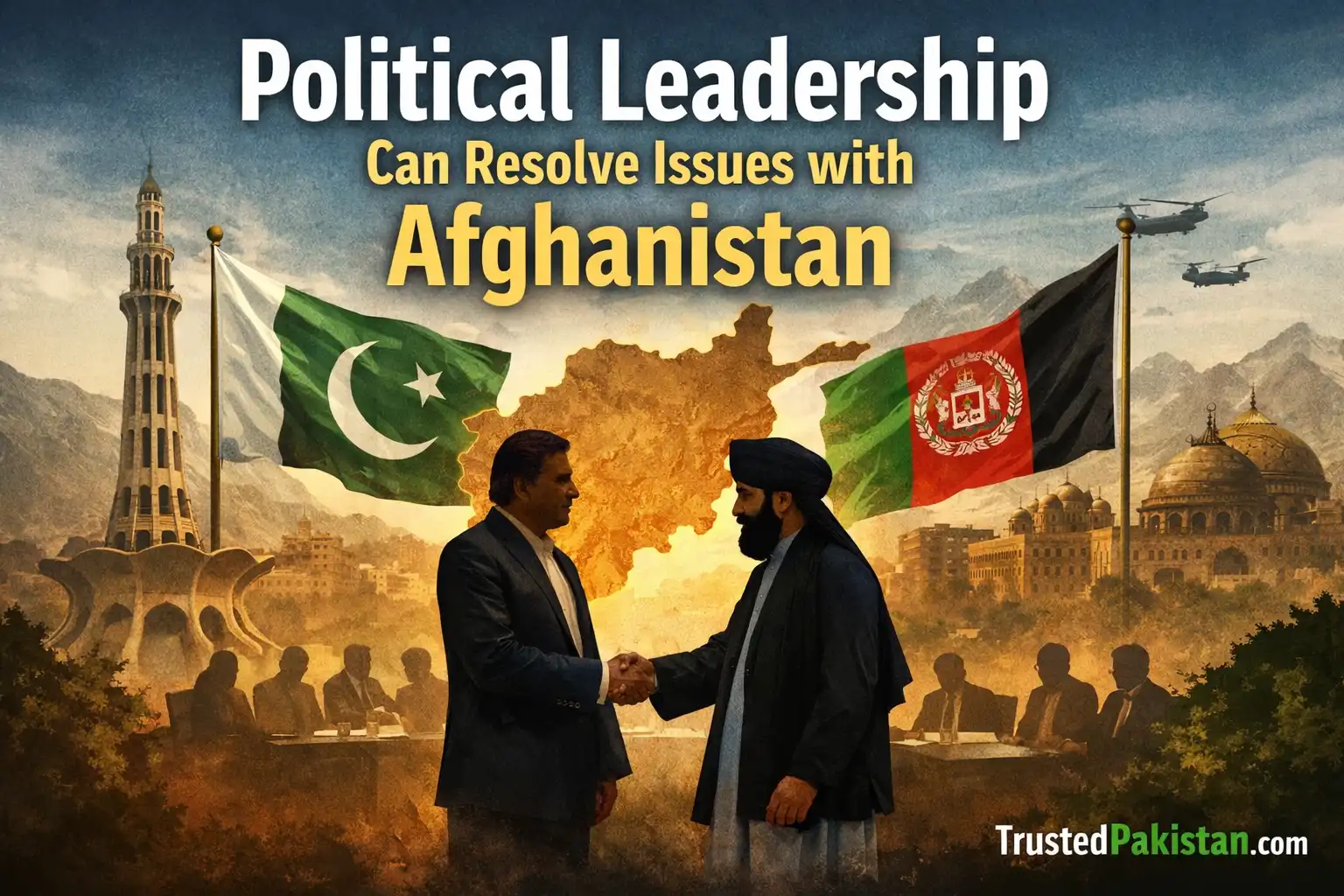
Political Leadership Can Resolve Issues with Afghanistan
Political leadership can resolve issues with Afghanistan, according to Kundi, who believes that long-term stability is only possible through strong political decisions and cooperation. Afghanistan has faced decades of war, economic collapse, and political uncertainty. These challenges have affected not only Afghans but also neighboring countries and global security.
Effective leadership is essential for resolving the deep-rooted problems Afghanistan continues to experience. Political leaders must focus on peacebuilding, governance reforms, and regional partnerships to bring sustainable solutions.
Political Leadership and Afghanistan’s Crisis
Afghanistan’s crisis is complex, involving conflict, poverty, displacement, and weak institutions. The absence of consistent political direction has worsened instability. Many analysts agree that political leadership can resolve issues with Afghanistan if leaders adopt responsible strategies rather than short-term political interests.
Strong leadership means creating national unity, strengthening institutions, and ensuring that Afghanistan does not remain isolated from the international community.
Without political will, no peace agreement or development plan can succeed.
Kundi’s Perspective on Regional Cooperation
Kundi has emphasized that Afghanistan’s problems cannot be solved in isolation. Regional countries must play a constructive role. He argues that political leadership can resolve issues with Afghanistan when neighboring states work together for peace rather than competition.
Regional cooperation is necessary in areas such as trade, refugee management, border security, and counterterrorism. Political leaders must prioritize dialogue and shared interests.
International support can only be effective when regional leadership is united.
For more insight into Afghanistan’s regional challenges, visit the external resource:
United Nations Afghanistan Overview
The Role of Strong Governance in Peacebuilding
One major reason Afghanistan has struggled is weak governance. Corruption, lack of accountability, and political fragmentation have damaged public trust.
Kundi believes that political leadership can resolve issues with Afghanistan by establishing transparent systems and inclusive governance. Leaders must ensure that all ethnic and social groups feel represented in political processes.
Peace cannot be achieved without justice and equal participation.
Strong governance also means investing in law enforcement and rebuilding institutions that can deliver services to citizens.
Diplomatic Engagement as a Key Solution
Diplomacy is one of the most powerful tools available. Afghanistan needs engagement with global powers, neighboring states, and humanitarian organizations.
Political leadership can resolve issues with Afghanistan when leaders choose negotiation over confrontation. Diplomatic engagement can help reduce sanctions, attract development aid, and create frameworks for stability.
Political leaders must also support peace talks that include all relevant Afghan stakeholders.
The future of Afghanistan depends on political maturity and international cooperation.




Economic Stability Through Political Leadership
Afghanistan’s economy has suffered due to conflict and isolation. Poverty and unemployment remain widespread. Economic collapse fuels instability and migration.
Kundi stresses that political leadership can resolve issues with Afghanistan through economic reforms and regional trade integration.
Leaders should focus on:
- Reviving agriculture and local industries
- Encouraging foreign investment
- Developing trade corridors with Central and South Asia
- Supporting infrastructure projects
Economic growth will reduce dependence on foreign aid and improve daily life for Afghan citizens.
You can also explore related discussions on stability policies through this internal link:
Afghanistan Peace Strategy
READ:15 Shocking Fatal Attacks | More Than a Dozen Killed in Bomb Blasts
Combating Terrorism with Political Unity
Terrorism remains a serious challenge linked to Afghanistan’s instability. Extremist groups exploit weak governance and poverty.
Political leadership can resolve issues with Afghanistan by building strong security frameworks and ensuring regional intelligence cooperation.
Counterterrorism efforts must be balanced with human rights and social development. Military force alone cannot eliminate extremism.
Political unity among Afghan factions and neighboring states is essential for long-term security.
A peaceful Afghanistan will contribute to global counterterrorism success.
Afghanistan’s Future and Youth Development
Instead of ending with a traditional conclusion, it is important to highlight Afghanistan’s future through youth empowerment.
Afghanistan has one of the youngest populations in the region. Investing in youth education, skills, and employment can reshape the country’s direction.
Kundi believes that political leadership can resolve issues with Afghanistan by focusing on long-term human development rather than temporary political gains.
Key priorities should include:
- Expanding access to schools and universities
- Supporting women’s participation in society
- Creating job opportunities for young people
- Promoting technology and innovation
Youth development is the foundation for a stable and peaceful Afghanistan.
Political leadership that invests in the next generation will ensure that Afghanistan moves away from conflict and toward progress.
