


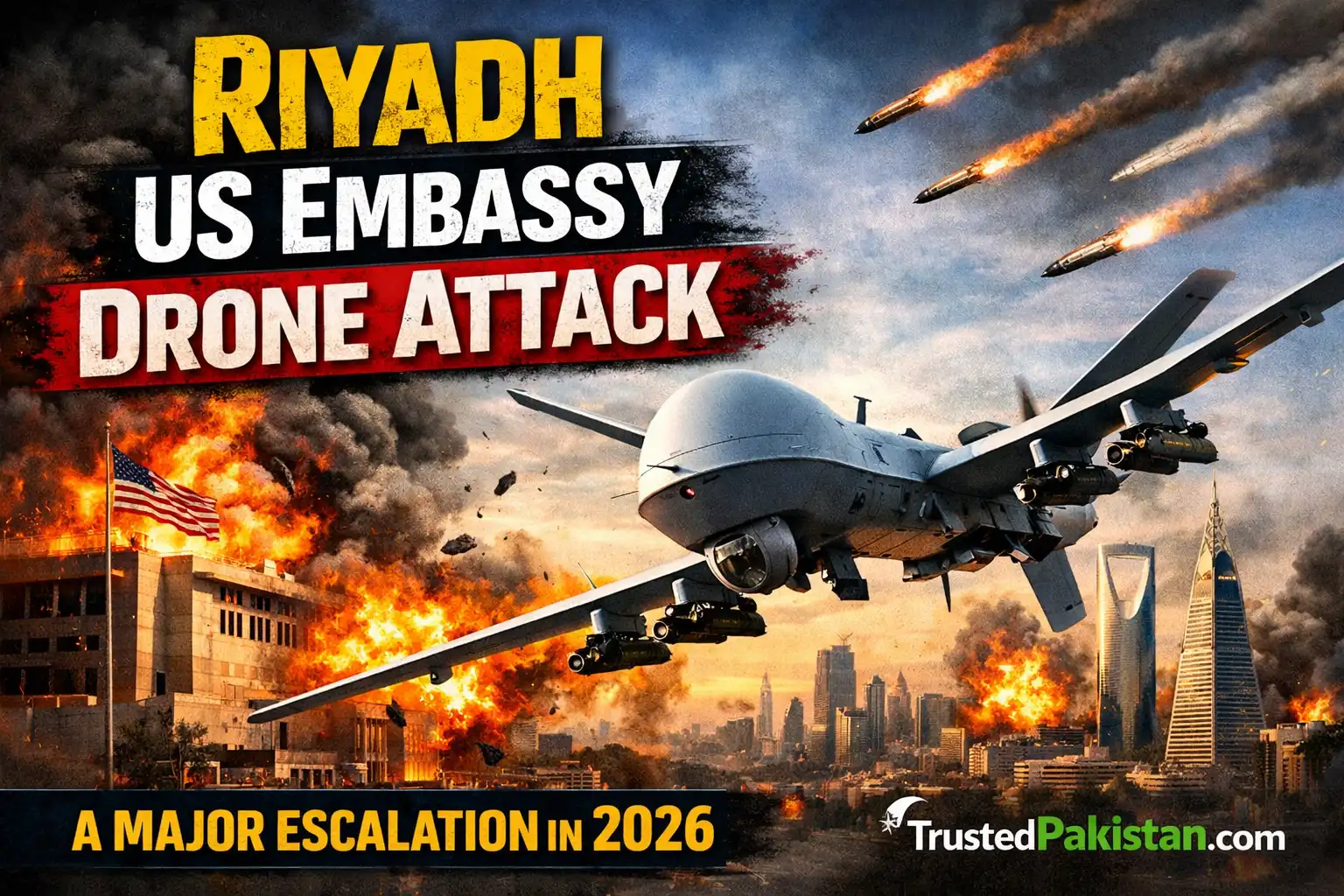
Riyadh US Embassy Drone Attack | A Major Escalation in 2026
The Riyadh US Embassy Drone Attack has triggered serious geopolitical concerns across the Middle East and beyond. In a dramatic development, a drone strike reportedly targeted the United States Embassy in Riyadh, Saudi Arabia’s capital, heightening fears of a broader regional conflict. Shortly after the incident, Iran issued a warning to ships passing through the strategic Strait of Hormuz, further intensifying tensions in the Gulf region.
This unfolding crisis is not just a bilateral issue but a matter with global security and economic implications.
What Happened in Riyadh?
The Riyadh US Embassy Drone Attack reportedly occurred during heightened regional tensions. According to early reports, a drone approached the vicinity of the US diplomatic compound in Riyadh. Saudi defense systems responded quickly, intercepting the drone before it caused major structural damage.
While no casualties were officially confirmed, the symbolic nature of targeting a diplomatic mission significantly escalated the situation. Attacks on embassies are considered violations of international law, specifically the Vienna Convention on Diplomatic Relations.
The incident raised critical questions:
- Who was responsible for the drone strike?
- Was it a state-sponsored operation or conducted by proxy groups?
- Could this spark a broader military confrontation?
Investigations are ongoing, but the political consequences are already visible.
Immediate Response from Saudi Arabia and the US
Following the Riyadh US Embassy Drone Attack, Saudi authorities condemned the act as a “dangerous escalation.” The United States described the incident as a “reckless and unacceptable attack on diplomatic security.”
Security around diplomatic missions in Riyadh was immediately tightened. The US Department of State reiterated its commitment to protecting American personnel and interests abroad. You can review diplomatic security guidelines through the official US Department of State website at which provides detailed policy frameworks regarding embassy protection.
Both governments emphasized coordination and intelligence sharing to identify the source of the drone.
Iran’s Warning Over the Strait of Hormuz
Shortly after the Riyadh US Embassy Drone Attack, Iran reportedly issued a warning to vessels traveling through the Strait of Hormuz. The Strait is one of the world’s most vital oil transit chokepoints, with nearly 20% of global petroleum passing through it daily.
Iran’s statement cautioned ships against “provocative activities” and hinted at possible inspections or security operations in the area. Though no immediate maritime blockade was announced, the message was interpreted as a strategic signal to regional rivals and Western powers.
The Strait of Hormuz has historically been a flashpoint during times of US-Iran tension. Any disruption in this corridor could severely impact global energy markets.
Regional and Global Impact
The Riyadh US Embassy Drone Attack is not an isolated event. It comes amid ongoing conflicts, proxy rivalries, and diplomatic strains in the Middle East.
Political Impact
- Increased diplomatic friction between Gulf states and Iran
- Emergency consultations among US allies in the region
- Potential UN Security Council discussions
Military Impact
- Heightened air defense alert levels
- Naval deployments near the Strait of Hormuz
- Expanded surveillance operations
Regional powers are carefully watching developments to avoid a direct confrontation that could destabilize the entire Gulf.
Security Implications for the Middle East
The Riyadh US Embassy Drone Attack underscores the growing use of drones in asymmetric warfare. Low-cost unmanned aerial vehicles are increasingly being used to target high-profile installations.
Security experts argue that:


- Drone defense systems need upgrading
- Intelligence coordination must improve
- Diplomatic compounds require advanced counter-UAV technology
Saudi Arabia has already invested heavily in air defense systems, but this incident demonstrates that threats continue to evolve.
Economic and Oil Market Reactions
The Riyadh US Embassy Drone Attack and Iran’s Strait of Hormuz warning caused immediate reactions in global markets.
Oil prices experienced short-term volatility as traders assessed the risk of potential supply disruptions. Insurance premiums for vessels navigating the Gulf may also increase if tensions persist.
Financial analysts warn that:
- Even minor disruptions in the Strait of Hormuz can spike crude prices
- Investor confidence may weaken in emerging Gulf markets
- Shipping routes could face temporary rerouting
Energy security remains one of the most critical concerns tied to this crisis.
What This Means for Global Diplomacy
The Riyadh US Embassy Drone Attack has broader diplomatic consequences beyond the Middle East. Major world powers including the United States, China, Russia, and European Union members maintain significant strategic interests in Gulf stability.
Key diplomatic questions include:
- Will backchannel negotiations reduce tensions?
- Could sanctions intensify?
- Is there a risk of retaliatory strikes?
International observers emphasize de-escalation to prevent miscalculation. Historically, even limited incidents in the Gulf have spiraled into prolonged crises.
Future Outlook for Gulf Stability
While the Riyadh US Embassy Drone Attack did not result in large-scale casualties, its symbolic and strategic implications are substantial. The coupling of a drone strike with Iran’s warning regarding the Strait of Hormuz signals a dangerous phase of regional brinkmanship.
Possible future scenarios include:
- Diplomatic de-escalation through mediated talks
- Increased military posturing without direct confrontation
- Cyber or proxy-level retaliatory actions
- Temporary maritime restrictions
The coming weeks will determine whether this episode becomes a turning point or another chapter in ongoing Gulf tensions.
TAP FOR MORE NEWS HERE
Emerging Drone Warfare Trends in the Middle East
Beyond immediate political consequences, the Riyadh US Embassy Drone Attack highlights a growing global security trend: the normalization of drone warfare.
Non-state actors and regional powers alike are investing in:
- Long-range drones
- Swarm technology
- Precision-guided UAV systems
The accessibility of drone technology lowers the barrier for asymmetric attacks, making embassies, oil facilities, and strategic infrastructure increasingly vulnerable.
Security analysts predict that future conflicts may rely more on unmanned systems than traditional ground warfare. Governments worldwide are now prioritizing counter-drone capabilities as part of national defense strategies.
The Riyadh US Embassy Drone Attack serves as a stark reminder that modern geopolitical conflicts are evolving rapidly, blending technology, diplomacy, and strategic messaging in ways that reshape global security dynamics.
