


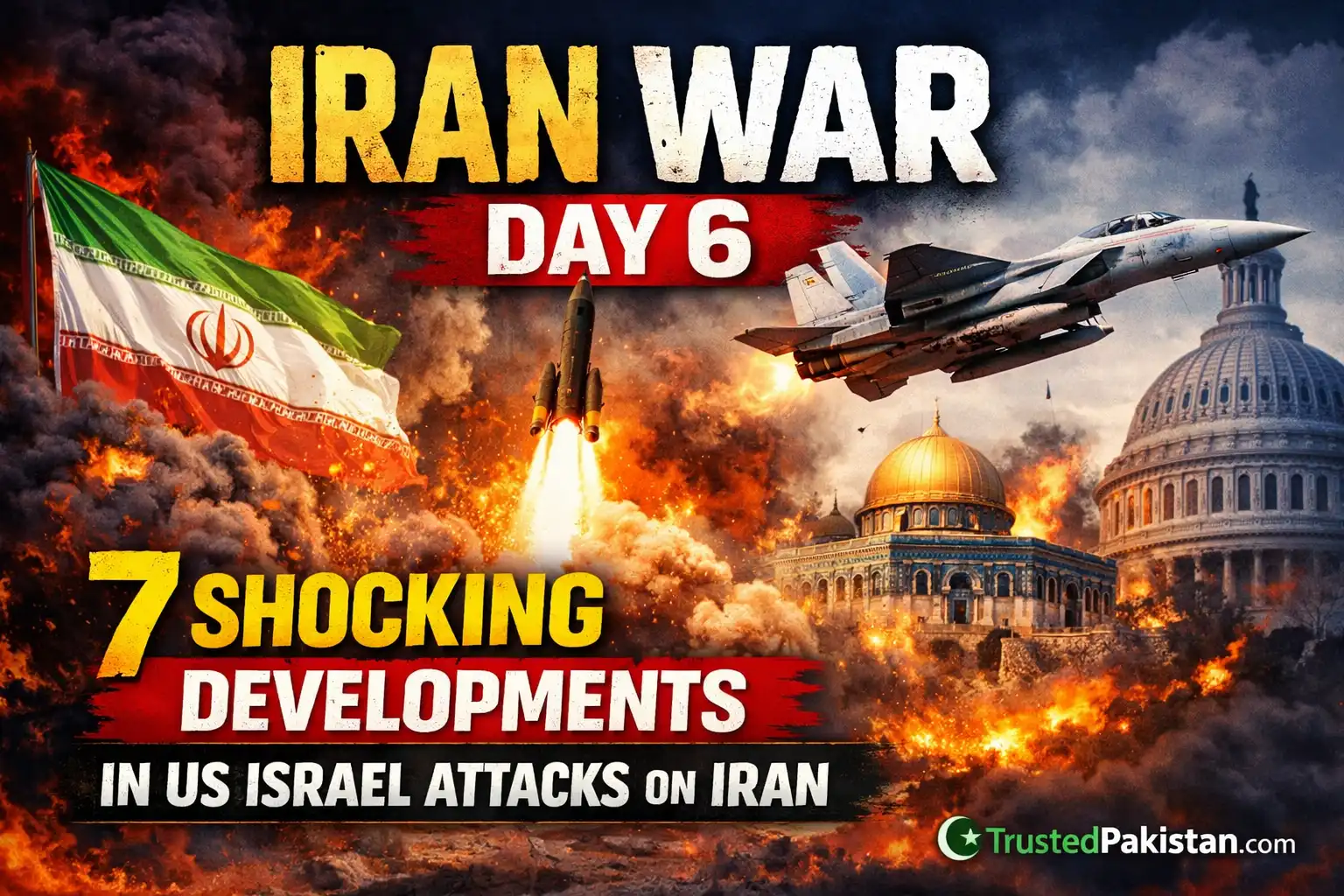
Iran War Day 6 | 7 Shocking Developments in US Israel Attacks on Iran
The Iran War Day 6 marks another intense phase in the escalating conflict between Iran, the United States, and Israel. The joint military campaign has entered its sixth day with continued airstrikes, retaliatory missile launches, and rising regional tensions. The conflict began after coordinated US-Israeli strikes targeted Iranian military and government infrastructure. Since then, the situation has rapidly expanded beyond Iran’s borders, affecting several countries in the Middle East and threatening global energy markets. Reports indicate that hundreds of targets have already been hit, including missile facilities, naval assets, and command centers across Iran. The events of Iran War Day 6 show that the conflict is intensifying rather than slowing down.
Background of the Iran War
The current conflict started after the United States and Israel launched large-scale strikes on Iranian military installations. The operation aimed to weaken Iran’s missile systems and military infrastructure. According to reports, more than 1,000 targets across Iran have been attacked since the start of the campaign. These include missile launch sites, air defense systems, intelligence centers, and naval bases. The initial strikes also resulted in the death of several senior Iranian leaders, which created a major power vacuum and intensified Iran’s response. By the time Iran War Day 6 arrived, the conflict had already spread across multiple fronts in the Middle East.
Major Military Actions on Iran War Day 6
The sixth day of the war has seen some of the most aggressive attacks since the conflict began. Israeli forces reportedly launched another wave of airstrikes targeting military infrastructure in Tehran and other strategic locations. These strikes focused on missile storage sites, security headquarters, and logistics hubs. Meanwhile, the United States continued naval operations in the region, targeting Iranian naval assets and military vessels. Explosions have been reported in several Iranian cities as air defenses attempted to intercept incoming strikes. Military officials say the goal remains to dismantle Iran’s missile capabilities and prevent future attacks. The events unfolding during Iran War Day 6 suggest that both sides are escalating their military strategies rather than seeking immediate negotiations.
Iran’s Retaliation and Regional Impact
Iran has responded to the attacks with missile and drone strikes targeting Israeli positions and US military bases in the region. Several Gulf countries have also reported intercepting missiles and drones as the conflict expands beyond Iran and Israel. Air defense systems in nearby countries have been activated multiple times to counter possible threats. Iranian officials have warned that further escalation could include attacks on strategic infrastructure or international shipping routes. These retaliatory operations have turned Iran War Day 6 into a wider regional crisis rather than a limited military confrontation.


Civilian Casualties and Infrastructure Damage
One of the most concerning aspects of the conflict is the rising number of civilian casualties. Human rights organizations claim that hundreds of civilians have been killed since the beginning of the bombing campaign, while thousands more have been injured. Several residential areas in Tehran have suffered heavy damage due to airstrikes. Hospitals and emergency services are struggling to cope with the increasing number of injured civilians. Infrastructure across the country has also been severely affected. Power outages, communication disruptions, and damaged transportation networks have made rescue operations more difficult. The humanitarian impact continues to grow as Iran War Day 6 unfolds.
Global Economic and Political Reactions
The war has already begun affecting the global economy. One of the biggest concerns is the potential disruption of the Strait of Hormuz, a key shipping route for global oil supplies. Any disruption in this region could significantly impact international energy markets. Oil prices have already risen as traders anticipate supply shortages. Financial markets around the world are reacting cautiously to the uncertainty created by the conflict. Several world leaders have called for immediate de-escalation and diplomatic talks. Governments and international organizations are urging all sides to avoid actions that could further destabilize the region during Iran War Day 6.
Leadership Crisis Inside Iran
Another major issue emerging during Iran War Day 6 is the political uncertainty inside Iran. After the death of several senior leaders, Iranian officials have activated constitutional procedures to establish temporary leadership arrangements. This transitional leadership structure is responsible for maintaining stability and coordinating military responses. However, disagreements over succession and political authority could create internal divisions within the Iranian government. Such instability could influence Iran’s strategic decisions in the coming days and affect the direction of the conflict.
What Could Happen Next in the Iran War
The future of the conflict remains uncertain as Iran War Day 6 continues to unfold. Military analysts believe that the war could continue for several weeks if both sides maintain their current strategies. Continued airstrikes, naval operations, and missile exchanges may further escalate tensions across the Middle East. Another possibility is increased involvement from regional allies, which could transform the conflict into a larger international crisis. For readers interested in related geopolitical updates, you can also explore our internal coverage on /iran-middle-east-conflict-updates. As the situation evolves, the world is closely watching whether diplomatic efforts can prevent the conflict from expanding further.
