


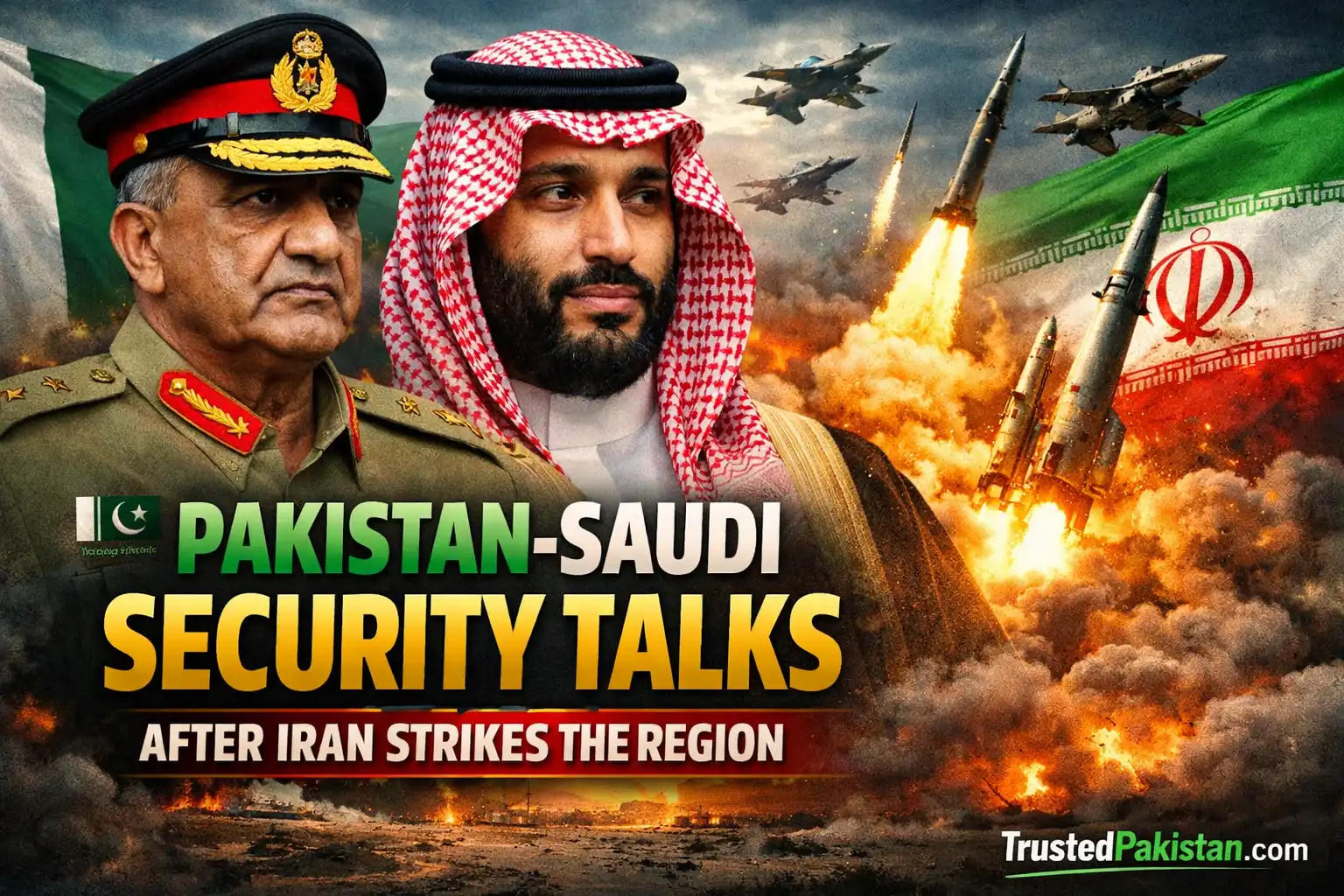
Pakistan Saudi Security Talks After Iran Strikes the Region
Pakistan Saudi Security Talks have become a central diplomatic focus after Iran carried out missile and drone strikes across parts of the Gulf region. These attacks significantly increased regional tensions and prompted urgent communication between Islamabad and Riyadh. Officials from both countries have emphasized the importance of monitoring developments and coordinating security responses. Pakistan Saudi Security Talks are also aimed at preventing the situation from escalating into a broader regional conflict that could threaten stability in the Middle East.
Regional Conflict Escalates Across the Gulf
The regional conflict intensified after Iran launched attacks targeting strategic locations across the Gulf. Oil facilities and military positions were reportedly among the targets. Iran described the strikes as retaliation for previous attacks on its territory and leadership. These developments have created new security concerns across the region and triggered emergency diplomatic discussions among several governments. Pakistan Saudi Security Talks have therefore focused on evaluating the rapidly changing situation and exploring possible diplomatic solutions to reduce tensions. The crisis has also affected global markets, particularly energy markets, as investors worry about disruptions to oil supply routes.
Pakistan Balances Relations With Saudi Arabia and Iran
Pakistan faces a complex diplomatic challenge during this crisis. While Pakistan maintains a strong alliance with Saudi Arabia, it also shares a long border and historical ties with Iran. Government officials have repeatedly called for restraint and dialogue among all parties involved in the conflict. Pakistan Saudi Security Talks reflect this balanced approach, as Islamabad seeks to support regional stability while maintaining constructive relations with neighboring countries. Analysts believe Pakistan is attempting to avoid being drawn directly into the conflict while still fulfilling its commitments to strategic partners.



Saudi Arabia’s Strategic Importance for Pakistan
Saudi Arabia plays a crucial role in Pakistan’s economic and political landscape. Millions of Pakistani workers live and work in the Gulf region, with Saudi Arabia hosting a large share of this expatriate community. Remittances sent back by these workers represent a significant source of income for Pakistan’s economy. Because of these economic ties, Pakistan Saudi Security Talks also include discussions about protecting Pakistani citizens working in the Gulf and ensuring their safety if the conflict escalates further. Maintaining stability in Saudi Arabia is therefore directly connected to Pakistan’s economic security.
Defense Pact and Security Coordination
Pakistan and Saudi Arabia have strengthened their military partnership through defense cooperation agreements that emphasize mutual security support. These agreements include provisions for military training, intelligence sharing, and strategic coordination. During the current crisis, Pakistan Saudi Security Talks have addressed how both countries can cooperate to maintain regional stability. Officials have also discussed the importance of avoiding actions that could escalate tensions further. External analysis of the crisis can be found while our internal coverage on Middle East security developments provides further context.
Economic and Political Implications for Pakistan
The ongoing crisis carries serious economic and political implications for Pakistan. Rising tensions in the Gulf region could affect oil supply routes, potentially increasing global energy prices. Higher oil prices would place additional pressure on Pakistan’s economy, which already faces energy import challenges. Pakistan Saudi Security Talks therefore include discussions on economic stability and regional trade security. Political considerations are also important, as different groups within Pakistan have varying perspectives on the conflict. Policymakers are therefore prioritizing diplomatic solutions that can help stabilize the region and prevent further escalation.
Future Geopolitical Risks in the Middle East
The evolving crisis has also raised broader questions about the future geopolitical landscape of the Middle East. The involvement of several global and regional powers has increased the complexity of the situation. Pakistan Saudi Security Talks are likely to remain an important diplomatic channel as governments attempt to manage tensions and avoid a wider war. Another emerging topic is how regional alliances may change in response to the crisis. Countries across the Middle East are reassessing their security strategies and defense partnerships. These shifts could shape new political alignments and security frameworks in the region, influencing both Middle Eastern and South Asian geopolitics in the coming years.
