


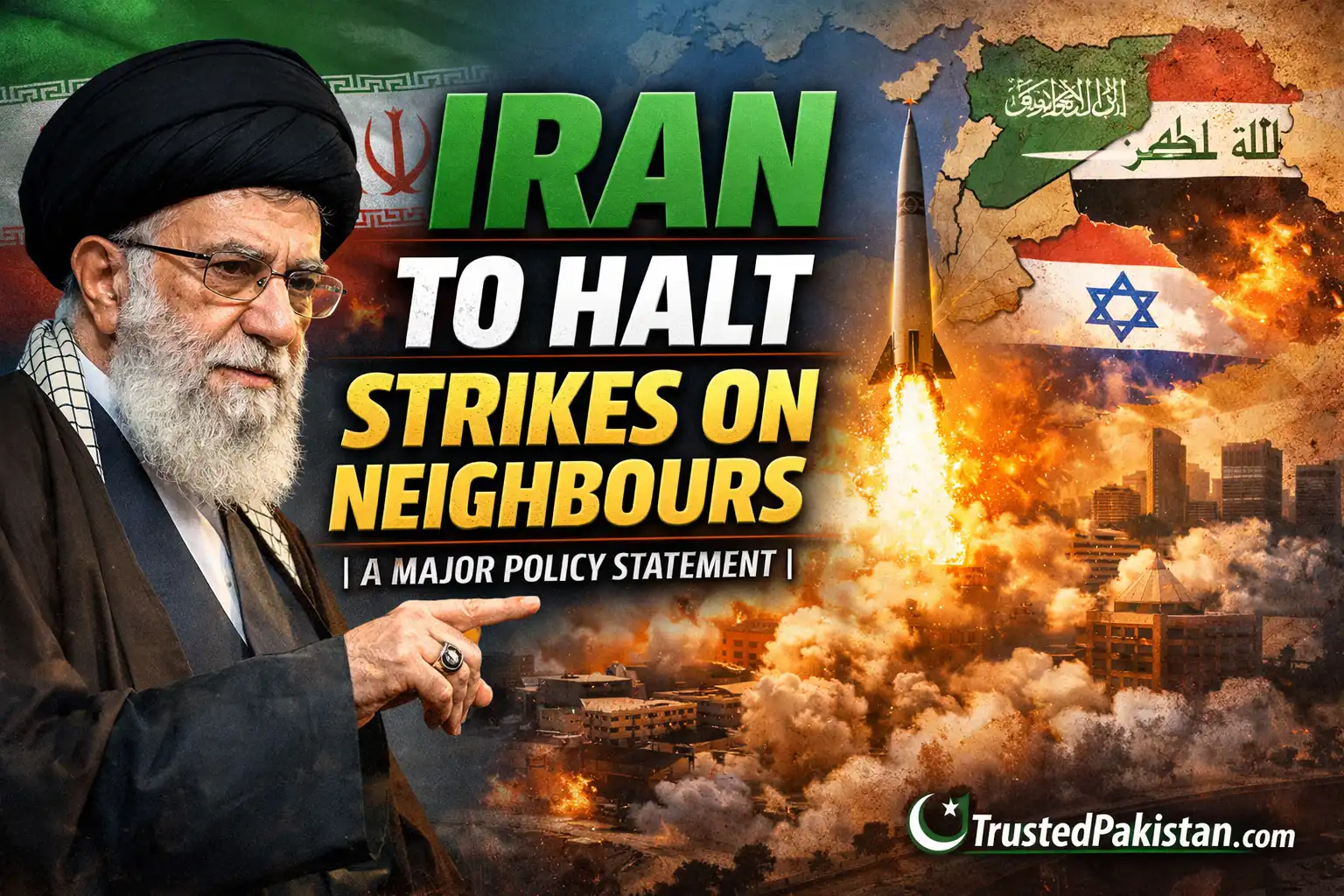
Iran to Halt Strikes on Neighbours | A Major Policy Statement
Iran to Halt Strikes on Neighbours unless attacks are launched from their territory, according to Iranian President Masoud Pezeshkian. The statement represents a significant diplomatic signal aimed at reducing tensions across the Middle East while maintaining Iran’s right to self-defense.
Speaking during a regional security discussion, Pezeshkian emphasized that Iran has no intention of targeting neighboring countries without clear provocation. However, he warned that Iran would respond firmly if hostile groups used neighboring territories as launching points for attacks.
The announcement comes at a time when tensions in the Middle East remain high due to ongoing conflicts and geopolitical rivalries. Iran’s declaration could potentially reshape how neighboring states perceive Tehran’s military posture.
For Iran, the message appears designed to balance deterrence with diplomacy.
Pezeshkian Strategic Message to Regional States
President Pezeshkian remarks underline Iran’s attempt to reassure neighboring countries while maintaining a strong security doctrine.
The Iran to Halt Strikes on Neighbours policy communicates two clear points.
First, Iran claims it does not seek conflict with regional governments. Tehran repeatedly argues that its disputes are primarily with militant groups or hostile actors rather than sovereign states.
Second, Iran is sending a warning to countries where anti-Iranian groups might operate. According to Iranian officials, those governments must prevent their territory from being used to launch attacks.
This dual message serves both diplomatic and military objectives.
On the diplomatic side, it portrays Iran as a country willing to cooperate with its neighbors. On the military side, it reinforces Iran’s readiness to retaliate if threats emerge.
Security Concerns Behind Iran Military Posture
Iran’s regional security strategy has long been influenced by concerns about hostile actors operating near its borders.
Several incidents in recent years have shaped Tehran’s security outlook. Iranian authorities frequently accuse militant organizations and foreign intelligence networks of launching operations from neighboring territories.
Because of these concerns, the Iran to Halt Strikes on Neighbours policy includes a clear exception. If attacks originate from a neighboring country, Iran reserves the right to respond.
Analysts say this approach reflects Iran’s broader doctrine of forward defense.
Instead of waiting for threats to reach its territory, Iran often attempts to neutralize them at their source. At the same time, the government is trying to avoid unnecessary escalation with neighboring states.
This balance is central to Tehran’s current strategy.



Diplomatic Impact on Middle East Stability
The announcement that Iran to Halt Strikes on Neighbours may contribute to lowering tensions in an already fragile region.
Many Middle Eastern countries have expressed concern about cross-border strikes and proxy conflicts. Iran’s pledge could therefore open space for renewed diplomatic dialogue.
Regional governments often fear being drawn into larger confrontations between rival powers. By clarifying its conditions for military action, Iran may be attempting to reassure these countries.
Improved communication between Iran and neighboring states could also reduce misunderstandings during periods of crisis.
Diplomatic channels remain essential in preventing localized incidents from escalating into broader conflicts.
International Reactions to Iran Announcement
International observers are closely monitoring the implications of Iran’s policy shift.
Some analysts view the Iran to Halt Strikes on Neighbours statement as a constructive step toward regional de-escalation. They argue that clear rules about military responses can help reduce uncertainty and miscalculation.
Others remain skeptical. Critics suggest that Iran’s interpretation of “attacks originating from neighboring territory” could still allow for military action beyond its borders.
Global powers and international organizations are therefore evaluating how this policy will be implemented in practice.
What This Means for Regional Security
The declaration that Iran to Halt Strikes on Neighbours could influence several key dynamics in the Middle East.
First, neighboring countries may feel increased pressure to monitor militant activity within their borders. Governments that fail to control armed groups could face diplomatic friction with Iran.
Second, the statement could encourage more security cooperation between regional states.
Finally, Iran’s message may be directed not only at neighboring governments but also at international audiences.
By presenting itself as committed to defensive rather than offensive actions, Tehran may be seeking to improve its diplomatic image.
Future of Iran Regional Strategy
Looking ahead, the Iran to Halt Strikes on Neighbours policy may become a central element of Iran’s foreign and defense strategy.
If consistently applied, the approach could reduce cross-border tensions and encourage dialogue between Iran and its neighbors.
However, the policy’s success will depend on how both Iran and regional governments handle future security incidents.
Military restraint, transparent communication, and effective border security will all play crucial roles in determining whether this announcement leads to lasting stability in the region.
For now, Pezeshkian’s message signals an attempt to redefine Iran’s regional posture while preserving its ability to respond to perceived threats.
