


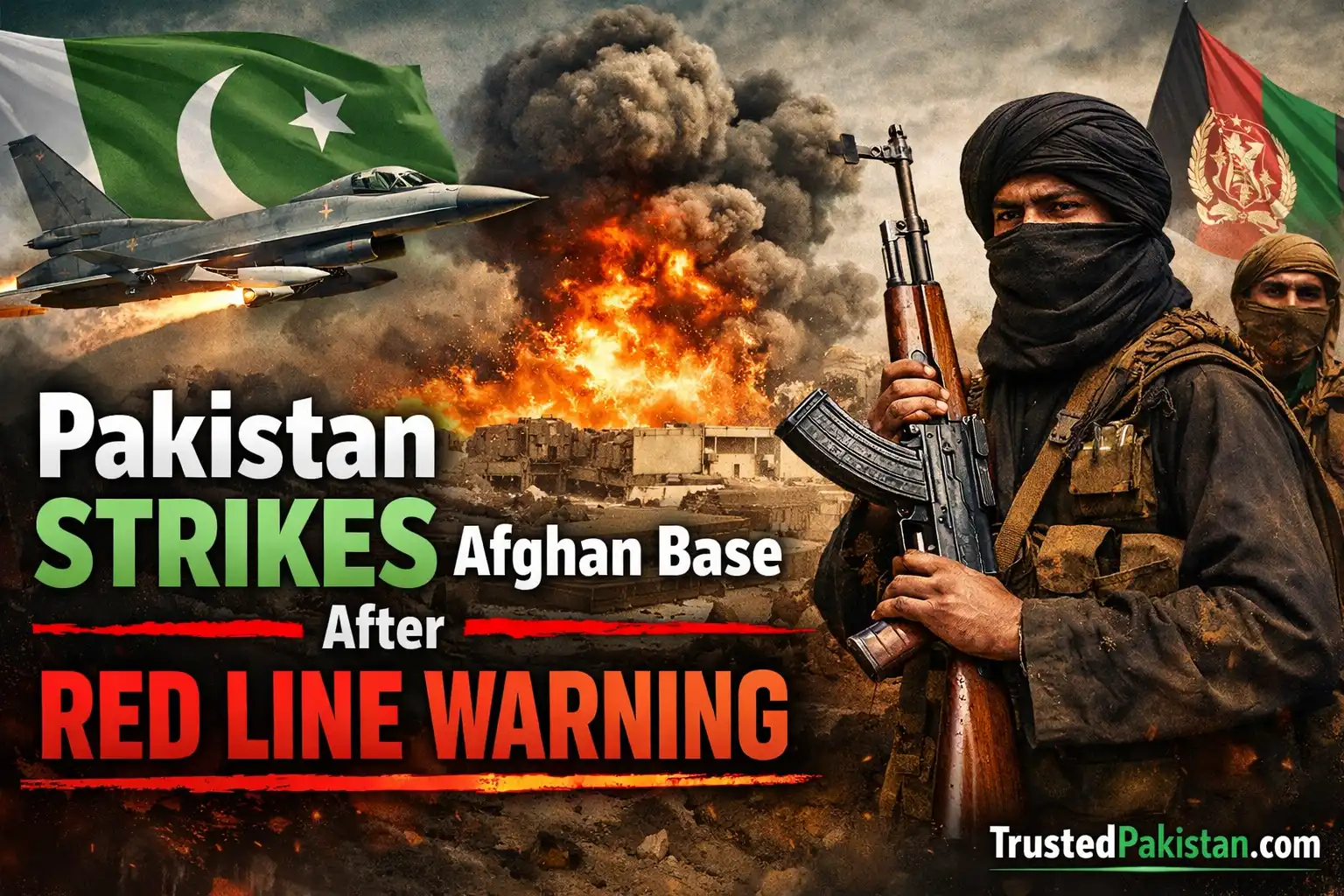
Pakistan Strikes Afghan Base After Red Line Warning
Pakistan strikes Afghan base after the country’s leadership warned that Afghanistan had crossed a “red line” by allegedly launching drone attacks into Pakistani territory. The latest military action has significantly raised tensions between the two neighboring countries and triggered fears of a broader regional conflict. According to reports, Pakistan’s military conducted airstrikes on a facility in Kandahar province believed to be linked to drone launches targeting Pakistani cities. Officials stated that the strikes were aimed at preventing further attacks and sending a clear message that cross-border aggression would not be tolerated. The development marks one of the most serious escalations in recent years between Pakistan and Afghanistan.
Why Pakistan Strikes Afghan Base
The decision as Pakistan strikes Afghan base is closely tied to ongoing accusations that militant groups are using Afghan territory to launch attacks inside Pakistan. Islamabad has repeatedly claimed that the Tehreek-e-Taliban Pakistan operates from bases across the border. Pakistani officials say these militants cross the frontier to conduct attacks on security forces and civilians before retreating back into Afghanistan. Recent incidents, including drone activity and militant attacks in Pakistan’s western regions, intensified these concerns. When Pakistani authorities detected what they described as cross-border drone operations targeting civilian areas, the government declared that a strategic threshold had been crossed. As a result, Pakistan strikes Afghan base operations were launched to neutralize alleged militant infrastructure and prevent future attacks.
Escalating Tensions Between Pakistan and Afghanistan
The moment Pakistan strikes Afghan base did not occur in isolation. Instead, it is part of a broader pattern of rising hostilities along the Pakistan-Afghanistan border. The border, known as the Durand Line, has long been a source of dispute between the two countries. While Pakistan recognizes it as the official boundary, successive Afghan governments have historically rejected it. In recent months, both sides have exchanged accusations and military responses. Afghan authorities have claimed that Pakistani airstrikes caused civilian casualties, while Pakistan insists its operations target militant hideouts rather than civilian areas. This continuing cycle of accusation and retaliation has pushed relations between Islamabad and Kabul to one of their lowest points in recent decades.




Regional and International Reactions
The situation where Pakistan strikes Afghan base has attracted attention from regional powers and the international community. Several countries have urged both sides to exercise restraint and resolve their differences through diplomatic channels. Analysts believe that prolonged confrontation could destabilize the wider South Asian region. Some governments and international observers have also expressed concern about potential humanitarian consequences in border areas where civilians often face the greatest risk during military operations. The international community continues to monitor developments closely as tensions remain high.
Impact on Regional Security
The decision as Pakistan strikes Afghan base could have significant implications for regional security. One major concern is that continued cross-border strikes could escalate into a prolonged military confrontation between the two countries. Another concern is the possibility that militant organizations may exploit instability in the border region. The mountainous terrain and complex security situation already make it difficult for authorities to fully control militant movements. In addition, communities living near the border could face increasing economic hardship and displacement if tensions continue to rise.
Future Outlook for the Pakistan-Afghanistan Conflict
The event where Pakistan strikes Afghan base highlights the fragile nature of relations between the two countries. Political observers believe that without diplomatic dialogue and stronger cooperation on border security, the cycle of retaliation could continue. Experts suggest that both governments will eventually need to engage in meaningful negotiations to address security concerns and reduce tensions. Improved intelligence sharing, coordinated counterterrorism efforts, and clearer border management policies may be essential steps toward stabilizing the situation.
Understanding the Durand Line Dispute
To fully understand why Pakistan strikes Afghan base incidents occur, it is important to examine the historical background of the Durand Line dispute. The Durand Line was established in 1893 during the British colonial period to define the boundary between British India and Afghanistan. After the creation of Pakistan in 1947, the new state inherited this border. However, Afghanistan has historically questioned the legitimacy of the line, creating ongoing political and security tensions. This unresolved boundary issue continues to influence relations between the two countries and plays a major role in the recurring conflicts along the border. Readers interested in deeper regional analysis can also explore our internal coverage on South Asia security developments while reviewing international assessments published by the United Nations.
