


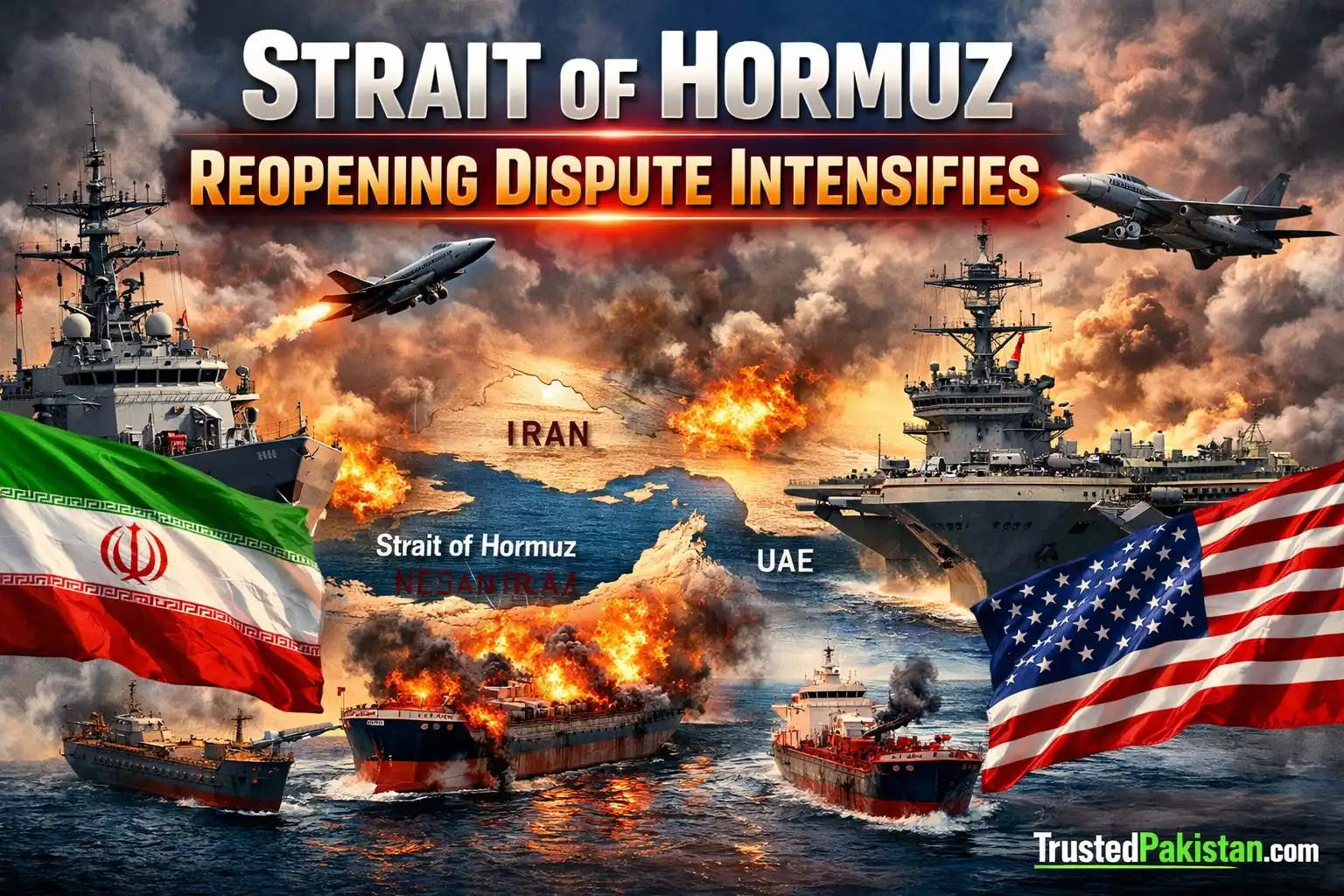
Strait of Hormuz Reopening Dispute Intensifies
The Strait of Hormuz reopening dispute has become a significant geopolitical issue after the United Kingdom and Australia reportedly rejected a request from the United States to assist in a mission related to the strategic waterway. The Strait of Hormuz is one of the world’s most critical oil transit routes, carrying nearly one-fifth of global petroleum shipments. Any disruption or diplomatic disagreement regarding this corridor immediately raises concerns about international trade, energy markets, and regional security.
Recent developments indicate that the United States sought additional military and diplomatic cooperation from allied countries to ensure stability in the region. However, the responses from the UK and Australia suggest a cautious approach toward deeper involvement.
Importance of the Strait of Hormuz
The Strait of Hormuz reopening dispute highlights the strategic significance of this narrow maritime passage located between Iran and Oman. The strait connects the Persian Gulf with the Gulf of Oman and the Arabian Sea, making it a vital route for oil exports from Gulf nations.
Every day, millions of barrels of crude oil and liquefied natural gas pass through this corridor. Because of this heavy dependence on the route, even minor tensions can trigger fluctuations in global energy prices and increase shipping insurance costs.
International organizations frequently monitor the situation in the strait because any prolonged disruption could affect economies worldwide. According to reports from the International Energy Agency, the stability of this route is closely linked with global energy supply chains.
US Request for Allied Support
The United States reportedly approached several allied nations as part of an initiative aimed at maintaining maritime security in the region. The request involved cooperation in monitoring shipping activity and ensuring safe passage for commercial vessels.
In the context of the Strait of Hormuz reopening dispute, Washington emphasized the need for collective action to prevent potential disruptions. American officials argued that multinational participation would strengthen deterrence and demonstrate international unity in safeguarding global trade routes.
However, the response from key partners revealed that not all allies share the same level of urgency regarding direct involvement in the matter.
UK and Australia’s Decision Explained
Both the United Kingdom and Australia have historically been strong security partners of the United States. Despite this close relationship, the two countries reportedly declined the request for additional involvement related to the Strait of Hormuz reopening dispute.
Several analysts believe that domestic political considerations and strategic priorities may have influenced the decision. Governments often weigh the risks of military commitments against diplomatic consequences and economic interests.




Officials in London and Canberra have emphasized that they remain committed to regional stability but prefer diplomatic engagement and coordination through broader international frameworks rather than unilateral or narrowly focused operations.
This cautious approach reflects a broader trend among Western allies who increasingly evaluate foreign policy decisions through the lens of national interest and long-term regional stability.
Impact on Global Energy Markets
The Strait of Hormuz reopening dispute has also drawn attention from global energy markets. Traders closely monitor developments in the region because uncertainty around the strait can cause fluctuations in oil prices.
Energy analysts warn that prolonged tensions could lead to:
- Increased oil price volatility
- Higher shipping and insurance costs
- Disruptions in global supply chains
- Greater reliance on alternative transport routes
Financial markets tend to react quickly to geopolitical tensions, particularly when they involve critical energy infrastructure. Even speculation about potential disruptions in the Strait of Hormuz can influence investor sentiment.
Strategic and Diplomatic Implications
The broader implications of the Strait of Hormuz reopening dispute extend beyond energy markets. The situation reflects shifting diplomatic dynamics among Western allies and raises questions about how multinational security initiatives will be coordinated in the future.
If major allies hesitate to participate in certain operations, it may lead to a reassessment of international security frameworks. At the same time, diplomatic channels remain active as governments attempt to balance deterrence with dialogue.
Experts argue that sustained diplomatic engagement among regional and global powers will be essential to prevent escalation and ensure safe maritime navigation.
Future Outlook for Middle East Maritime Security
Looking ahead, the Strait of Hormuz reopening dispute could shape future policy discussions about maritime security and international cooperation. Governments may explore new frameworks that combine military readiness with diplomatic initiatives to reduce tensions.
Regional dialogue, economic partnerships, and confidence-building measures could play an important role in stabilizing the situation. As global energy demand continues to grow, the importance of secure maritime routes will remain a central concern for policymakers.
The evolving developments surrounding the Strait of Hormuz will likely continue to influence international relations, energy markets, and strategic planning in the months ahead.
