


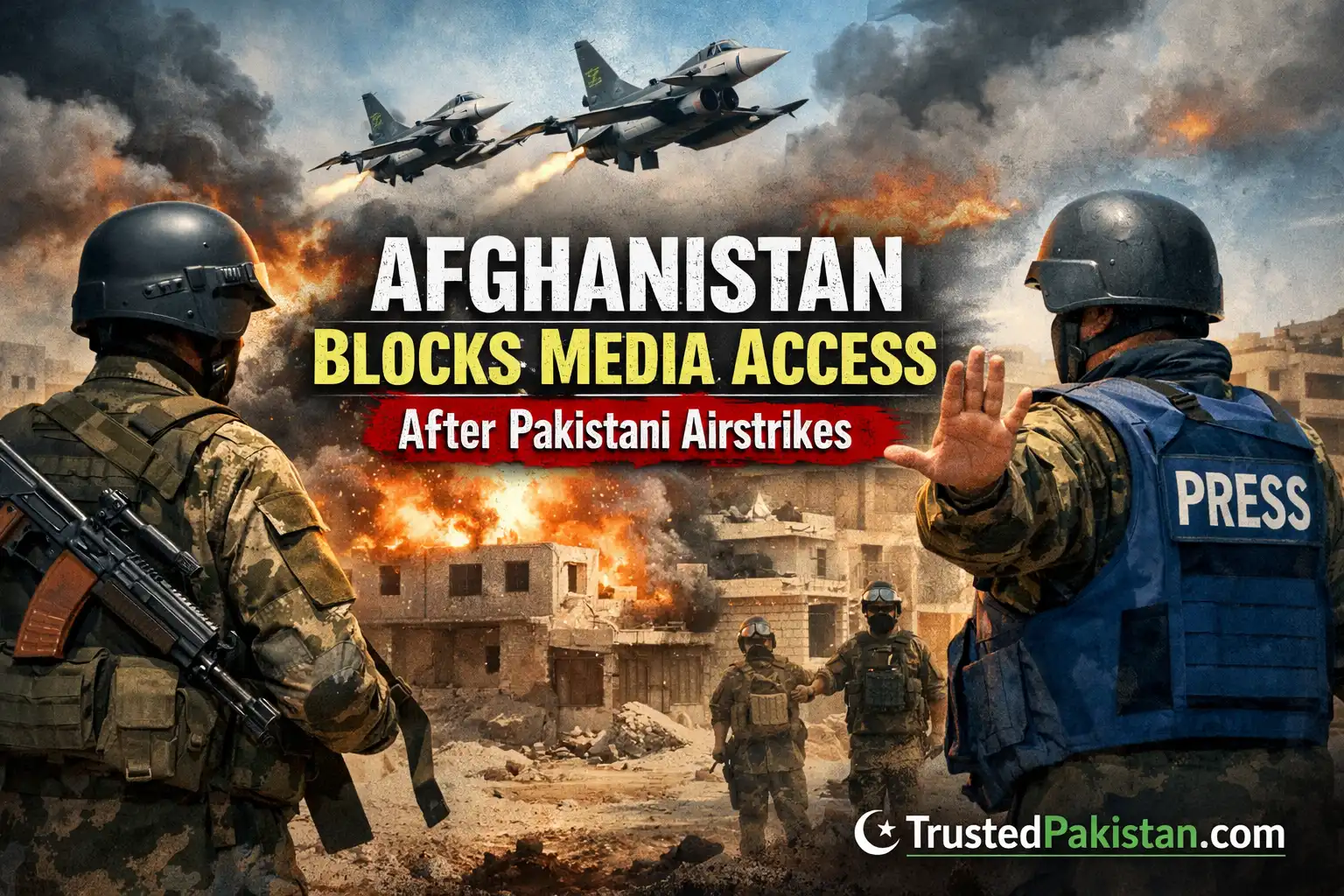
Afghanistan Blocks Media Access After Pakistani Airstrikes
Afghanistan blocks media access to areas recently hit by Pakistani airstrikes, creating widespread concern among journalists, human rights groups, and international observers. The restrictions reportedly prevent local and foreign reporters from entering specific border regions where airstrikes allegedly targeted militant hideouts.
Security officials stated that the measures were introduced to maintain order and protect ongoing operations. However, critics argue that when Afghanistan blocks media access, it limits independent verification of facts on the ground.
The move has sparked debates about transparency, accountability, and the right to information during military operations.
Why Afghanistan Blocks Media Access After Airstrikes
When Afghanistan blocks media access following Pakistani airstrikes, officials often cite national security reasons. Authorities claim that restricting journalists helps prevent misinformation and ensures that sensitive security details do not fall into the wrong hands.
Security Concerns
Officials argue that the affected zones remain volatile. Military operations may still be ongoing, and the presence of journalists could complicate security efforts.
Information Control
Another reason Afghanistan blocks media access could be to control the narrative. In conflict situations, governments frequently attempt to manage public perception by limiting independent reporting.
While national security is important, restricting press access raises legitimate concerns about accountability.
Impact on Press Freedom and Transparency
Afghanistan blocks media access at a time when press freedom in the region is already under scrutiny. Media watchdog organizations have repeatedly emphasized that independent reporting is critical during military conflicts.
Limiting access:
- Prevents verification of casualty figures
- Restricts coverage of humanitarian conditions
- Reduces transparency in military operations
According to international press freedom standards outlined by organizations such as Committee to Protect Journalists, access to conflict zones plays a vital role in ensuring accountability.
When Afghanistan blocks media access, it not only affects local journalists but also shapes global understanding of the situation.
Regional Tensions Between Afghanistan and Pakistan
Afghanistan blocks media access amid heightened tensions with Pakistan. Relations between the two neighboring countries have long been complicated due to border disputes and militant activity.
Pakistani authorities have previously stated that airstrikes target militant groups operating near the border. Afghan officials, however, have often criticized such actions as violations of sovereignty.
By restricting coverage, Afghanistan blocks media access during a critical diplomatic moment. This may further complicate bilateral discussions and regional security cooperation.
Humanitarian Concerns in Affected Areas
When Afghanistan blocks media access, humanitarian organizations face challenges in assessing the real impact of airstrikes on civilian populations.


Civilian Casualties
Independent media reporting is essential to confirm casualty numbers. Without access, it becomes difficult to determine how many civilians may have been affected.
Displacement and Aid
Conflict zones often experience displacement of families. If Afghanistan blocks media access, information about urgent humanitarian needs may be delayed.
This lack of visibility can slow international response efforts and limit public awareness.
International Reactions
Afghanistan blocks media access at a time when global attention on regional security is increasing. International observers have expressed concern about transparency.
Some analysts argue that restricting journalists could damage Afghanistan’s international image. Others believe the government is prioritizing security over media freedom.
Diplomatic circles continue to monitor developments closely. Transparency in such situations often influences foreign policy decisions and international support.
What This Means for the Future of Media in Conflict Zones
When Afghanistan blocks media access, it highlights a broader issue faced by journalists worldwide. Governments frequently impose restrictions during military crises.
Risk to Independent Journalism
Independent reporting becomes harder when access is denied. Journalists must rely on official statements, which may not provide the full picture.
Public Trust
Transparency builds trust. If Afghanistan blocks media access repeatedly, public confidence in official reports may decline.
Conflict reporting is already dangerous. Additional restrictions further complicate the role of journalists working to inform the public.
For more analysis on regional security developments, visit our internal coverage here: Regional Security Analysis.
Broader Implications for Regional Stability
Afghanistan blocks media access during a sensitive period in South Asian geopolitics. The long-term implications extend beyond press freedom.
Diplomatic Strain
Limited transparency may fuel speculation and misinformation, increasing diplomatic tensions between Afghanistan and Pakistan.
Security Narratives
Control over information shapes national and international narratives. When Afghanistan blocks media access, it directly influences how events are interpreted globally.
Strategic Communication
Governments increasingly recognize that information management is part of modern conflict strategy. Media restrictions can be seen as an attempt to maintain strategic advantage.
As tensions evolve, the balance between security and transparency will remain a defining challenge for policymakers, journalists, and international observers alike.
