


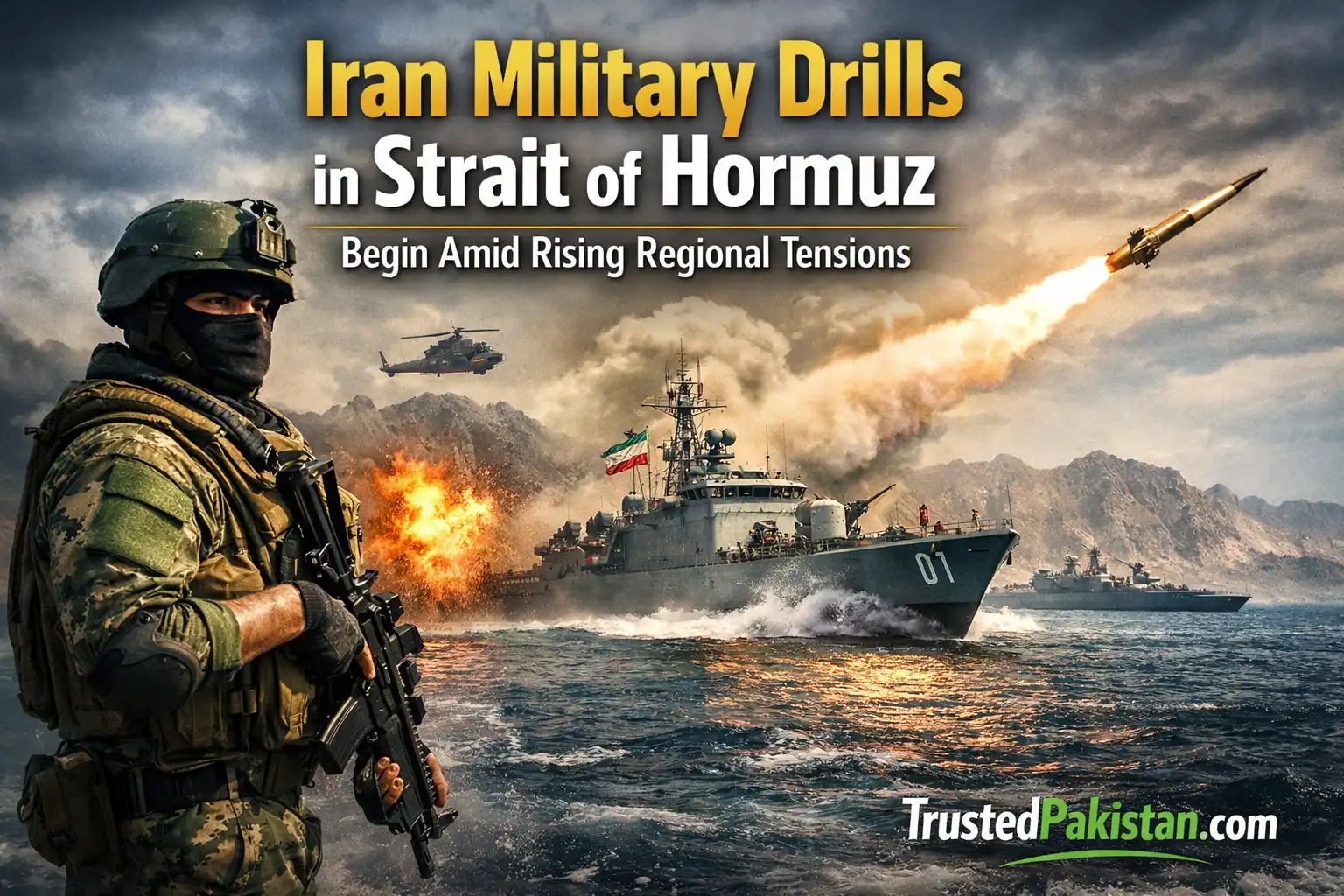
Iran Military Drills in Strait of Hormuz Begin Amid Rising Regional Tensions
Iran Military Drills in Strait of Hormuz have officially commenced, drawing global attention due to the strategic importance of this narrow waterway, through which nearly one-fifth of the world’s oil supply passes daily. The large-scale exercises, announced by Iranian naval authorities, are being conducted at a time of heightened geopolitical friction in the Middle East.
According to Iranian officials, the drills aim to enhance defensive readiness, maritime security, and coordination among naval units. However, international observers view the move as a strong strategic signal to regional rivals and Western powers.
Strategic Importance of the Strait of Hormuz
The Strait of Hormuz is one of the world’s most critical maritime chokepoints, connecting the Persian Gulf with the Gulf of Oman and the Arabian Sea. Any military activity in this region has immediate implications for:
- Global energy markets
- International shipping routes
- Regional security dynamics
Iran Military Drills in Strait of Hormuz therefore carry significance far beyond Iran’s borders, influencing oil prices and diplomatic calculations worldwide.
Details of the Iranian Military Exercises
Iranian naval forces, including units from the Islamic Revolutionary Guard Corps (IRGC) Navy and the regular navy, are participating in the drills. The exercises reportedly involve:
- Missile boat maneuvers
- Naval mine deployment simulations
- Drone surveillance operations
- Air-sea coordination drills
Iranian commanders stated that the drills are purely defensive and designed to protect Iran’s territorial waters and commercial shipping.
Regional and Global Reactions
The launch of Iran Military Drills in Strait of Hormuz has triggered swift reactions from regional states and global powers. Gulf countries are closely monitoring the situation, while the United States and European allies have reiterated their commitment to freedom of navigation.
International shipping companies have also increased vigilance, though no disruption to commercial traffic has been reported so far.
Impact on Global Oil Markets
Historically, even the announcement of Iran Military Drills in Strait of Hormuz has caused fluctuations in oil prices. Energy analysts note that:
- Any perceived threat to shipping raises crude oil futures
- Insurance premiums for tankers may increase
- Strategic reserves discussions intensify
While markets remain stable for now, continued military activity could elevate economic uncertainty.




Iran’s Strategic Messaging Through Military Drills
Analysts believe Iran Military Drills in Strait of Hormuz serve multiple strategic objectives:
- Deterrence: Signaling readiness against external threats
- Domestic Messaging: Demonstrating military strength
- Diplomatic Leverage: Influencing negotiations and sanctions discourse
These drills reinforce Iran’s long-standing position that it will not tolerate threats near its maritime borders.
International Maritime Law and Freedom of Navigation
Under international maritime law, the Strait of Hormuz is recognized as an international waterway. Iran maintains that its military activities comply with legal norms, while foreign navies stress the importance of uninterrupted navigation.
Past incidents in the region make Iran Military Drills in Strait of Hormuz especially sensitive, prompting continuous surveillance by international naval coalitions.
Pakistan’s Perspective on Regional Stability
Pakistan has consistently called for restraint and dialogue in the Gulf region. As a country with strong diplomatic ties across the Middle East, Pakistan emphasizes peaceful conflict resolution and regional stability.
For broader geopolitical analysis related to Middle East security developments, read this related report on TrustedPakistan:
Military Preparedness and Future Implications
Defense experts suggest that Iran Military Drills in Strait of Hormuz could become more frequent amid ongoing sanctions and regional rivalries. Increased militarization, even for defensive purposes, raises the risk of miscalculation.
Naval confidence-building measures and diplomatic engagement remain crucial to avoiding escalation in such a strategically sensitive corridor.
Strategic Outlook | What Lies Ahead
Rather than concluding, it is important to look ahead. Iran Military Drills in Strait of Hormuz are likely to shape upcoming regional security dialogues, influence naval deployments, and remain a key factor in global energy security discussions.
As long as geopolitical tensions persist, the Strait of Hormuz will continue to be a focal point where military preparedness and international diplomacy intersect.
