


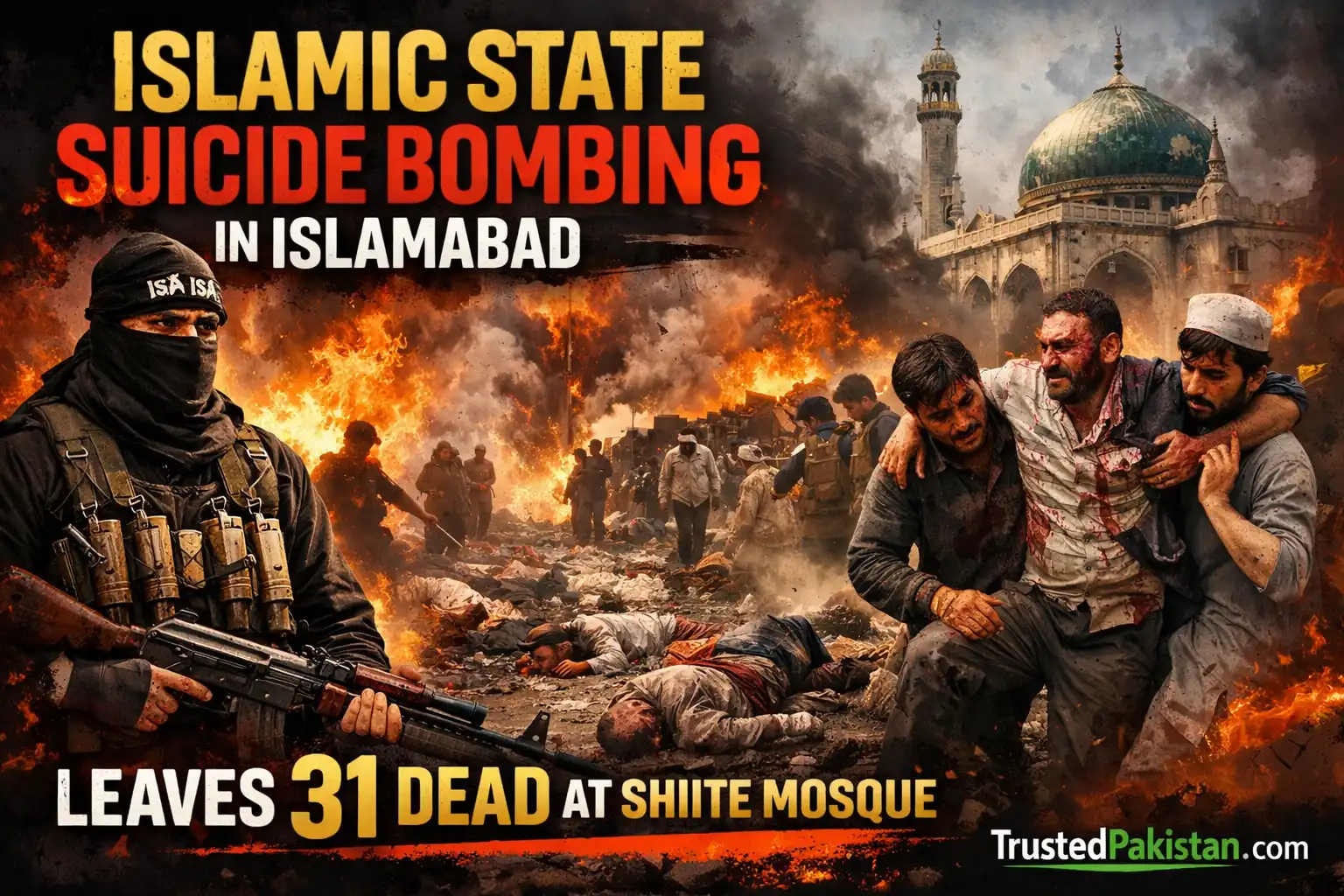
Islamic State Suicide Bombing in Islamabad Leaves 31 Dead at Shiite Mosque
The Islamic State suicide bombing in Islamabad has once again exposed the persistent threat of extremist violence in Pakistan, as at least 31 worshippers were killed and dozens more injured after a devastating explosion ripped through a Shiite mosque in the federal capital. The attack, which occurred during a crowded prayer gathering, has shocked the nation and drawn strong condemnation from political leaders, religious scholars, and the international community.
According to initial reports from security officials, a suicide bomber entered the mosque premises and detonated explosives at close range, causing massive destruction and panic among worshippers. Emergency services rushed to the scene, while hospitals in Islamabad were placed on high alert to treat the injured.
Islamic State Suicide Bombing in Islamabad: What Happened
Authorities confirmed that the attacker targeted a Shiite place of worship during peak prayer time, a tactic frequently used by extremist groups to maximize casualties. Witnesses described scenes of chaos, with shattered glass, collapsed sections of the building, and injured people crying for help.
Within hours of the blast, an Islamic State (IS) affiliate claimed responsibility through its propaganda channels, stating that the attack was aimed at the Shiite community — a group repeatedly targeted by the organization across the region.
Security agencies believe the attacker may have received logistical support from facilitators operating within or outside the capital, prompting immediate intelligence-based operations across Islamabad and nearby districts.
Islamic State Suicide Bombing in Islamabad and Pakistan’s Security Challenge
The Islamic State suicide bombing in Islamabad highlights the evolving security challenges Pakistan faces despite years of counterterrorism operations. While militant violence had declined in major cities over the past decade, recent attacks suggest extremist networks are attempting to regroup and reassert their presence.
Islamic State’s regional branch has increasingly focused on sectarian violence, targeting Shiite mosques, religious processions, and community gatherings. Analysts warn that such attacks are designed not only to cause mass casualties but also to fuel sectarian tensions and destabilize society.
Government Response After the Islamic State Suicide Bombing in Islamabad
Following the attack, the federal government ordered heightened security measures across Islamabad and other major cities. Police patrols were increased around mosques, imambargahs, and sensitive religious sites, especially ahead of upcoming religious events.
The Interior Ministry strongly condemned the bombing, calling it an “attack on humanity and Islam itself.” Officials reaffirmed Pakistan’s commitment to eradicating terrorism and vowed that those responsible would be brought to justice.
An official statement from Pakistan’s security authorities emphasized continued cooperation with intelligence agencies to dismantle sleeper cells linked to extremist organizations.




Islamic State Suicide Bombing in Islamabad Sparks National Mourning
As news of the attack spread, grief and anger swept across the country. Religious leaders from all sects condemned the violence, urging unity and restraint. Political parties temporarily suspended campaign activities as a mark of respect for the victims.
Prime Minister and senior officials visited hospitals to meet the injured and announced compensation packages for affected families. Flags were flown at half-mast in several government buildings, reflecting the scale of the tragedy.
Islamic State Suicide Bombing in Islamabad and Sectarian Targeting
The Islamic State suicide bombing in Islamabad fits a disturbing pattern of attacks aimed at Pakistan’s Shiite population. Experts say such incidents are part of a broader ideological campaign by extremist groups that reject religious coexistence.
Security analysts stress that combating this threat requires not only military and intelligence operations but also counter-extremism narratives, community engagement, and strict monitoring of online radicalization channels.
Impact on Islamabad’s Image and Public Safety
Islamabad has long been considered one of Pakistan’s most secure cities. However, the Islamic State suicide bombing has raised serious concerns about public safety even in heavily guarded areas.
Residents expressed fear but also resilience, with many citizens stating that terrorism would not deter them from practicing their faith or living their daily lives. Civil society organizations organized blood donation drives and relief efforts for victims.
Regional and International Reaction
The attack drew condemnation from multiple countries and international organizations, including calls for stronger global cooperation against terrorism. Observers note that militant groups operating in South Asia often exploit instability in neighboring regions, making regional intelligence sharing critical.
Pakistan has repeatedly urged the international community to address safe havens and financial networks that allow extremist groups to operate across borders.
What Lies Ahead After the Islamic State Suicide Bombing in Islamabad
Instead of a traditional conclusion, it is important to recognize that the Islamic State suicide bombing in Islamabad represents more than a single tragic incident. It is a reminder of the ongoing ideological battle against extremism and the need for sustained vigilance.
Pakistan’s response in the coming weeks — through arrests, intelligence breakthroughs, and policy decisions — will shape the future security landscape. While the loss of innocent lives cannot be undone, collective resilience, unity across sects, and decisive action remain the strongest tools against terror.
