


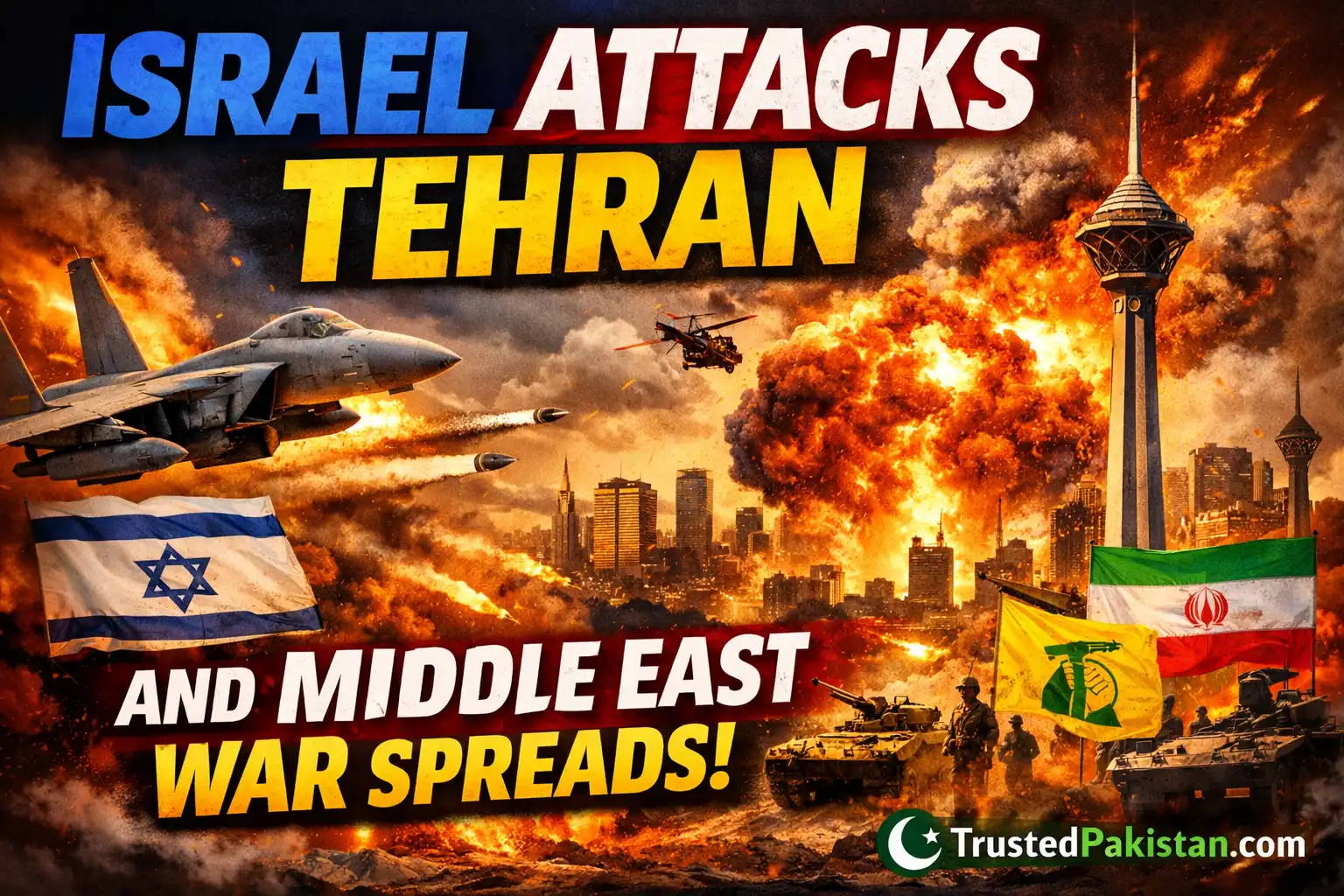
Israel Attacks Tehran and Middle East War Spreads
Israel attacks Tehran, marking one of the most dramatic escalations in the ongoing Middle East conflict. The strike targeted strategic military facilities near Iran’s capital, according to early regional reports. The operation has significantly intensified tensions between Israel and Iran, two longtime adversaries in the region. Analysts say the decision to strike Tehran directly represents a major shift in Israel’s military posture. For years, confrontations between the two countries have taken place indirectly through proxy groups and covert operations. However, as Israel attacks Tehran, the conflict appears to be moving into a direct confrontation. Security experts warn that such actions could trigger a broader regional conflict involving multiple countries. Military readiness has increased across several Middle Eastern states following the incident.
Regional Tensions Rise in Lebanon
The impact of Israel attacks Tehran is already being felt beyond Iran. Lebanon has become a major area of concern as Hezbollah, the powerful Iran-backed militant group, signals readiness to respond.
Israeli defense forces have reportedly increased their military presence along the northern border with Lebanon. Air defense systems have also been placed on high alert to counter potential retaliatory attacks.
Regional observers believe that Hezbollah could open a new front against Israel if the situation escalates further. This possibility has raised fears that the ongoing war could expand significantly across the region.
Iraq Becomes a New Flashpoint
As Israel attacks Tehran, Iraq has also emerged as a potential battlefield in the expanding crisis. Several militia groups in Iraq maintain strong ties with Iran and have condemned the Israeli strike.
Reports indicate that some armed factions have threatened retaliation against Israeli interests and allied military bases in the region. Iraq’s government has urged restraint and called for diplomatic solutions to prevent the situation from spiraling out of control.
Military analysts note that Iraq’s geographic location and political landscape make it a crucial arena in the broader conflict. If tensions continue to rise, Iraq could become a key front in the regional power struggle.
Global Reactions to Israel Attacks Tehran
International reaction to the news that Israel attacks Tehran has been swift and divided. Western governments have called for de-escalation while emphasizing the need for stability in the Middle East.
Several countries have urged both Israel and Iran to avoid further military confrontation. The United Nations has also expressed concern about the possibility of a wider regional war.
Global security organizations are closely monitoring developments, as instability in the Middle East often carries significant implications for international security and energy markets.




Military and Strategic Implications
The fact that Israel attacks Tehran directly has profound military implications. Strategic analysts suggest the strike may have targeted key facilities related to Iran’s defense or nuclear infrastructure.
If confirmed, the operation could alter the balance of power in the region. Iran has previously warned that direct attacks on its territory would trigger strong retaliation.
The move also demonstrates Israel’s willingness to conduct long-range operations against high-value targets. This capability significantly changes the strategic calculations of regional powers.
Economic Impact of the Conflict
Beyond military consequences, the escalation following Israel attacks Tehran could also have major economic effects. Global oil markets are particularly sensitive to instability in the Middle East, which is one of the world’s most important energy-producing regions.
Energy analysts warn that if the conflict spreads further, oil prices could rise sharply due to concerns over supply disruptions.Businesses and governments around the world are closely watching developments as the situation evolves.
What Could Happen Next in the Middle East
The situation remains highly unpredictable after Israel attacks Tehran, with multiple scenarios possible in the coming weeks.
One possibility is a cycle of retaliatory strikes between Israel and Iran. Another scenario involves the expansion of hostilities through allied militant groups operating in Lebanon, Iraq, and other parts of the region.
Diplomatic efforts may also intensify as global powers attempt to prevent the crisis from turning into a full-scale regional war. The next steps taken by both Israel and Iran will likely determine the direction of the conflict.
Emerging Cyber Warfare in the Israel–Iran Conflict
Another developing dimension of the crisis following Israel attacks Tehran is the increasing role of cyber warfare. Both Israel and Iran possess advanced cyber capabilities and have previously engaged in digital operations targeting infrastructure and security systems.
Experts suggest that cyber attacks could become a major component of the conflict if direct military confrontations continue. These digital operations may target energy networks, financial systems, and communication infrastructure.
As technology becomes more central to national security, the cyber domain may play a decisive role in shaping the future of conflicts in the Middle East.
