


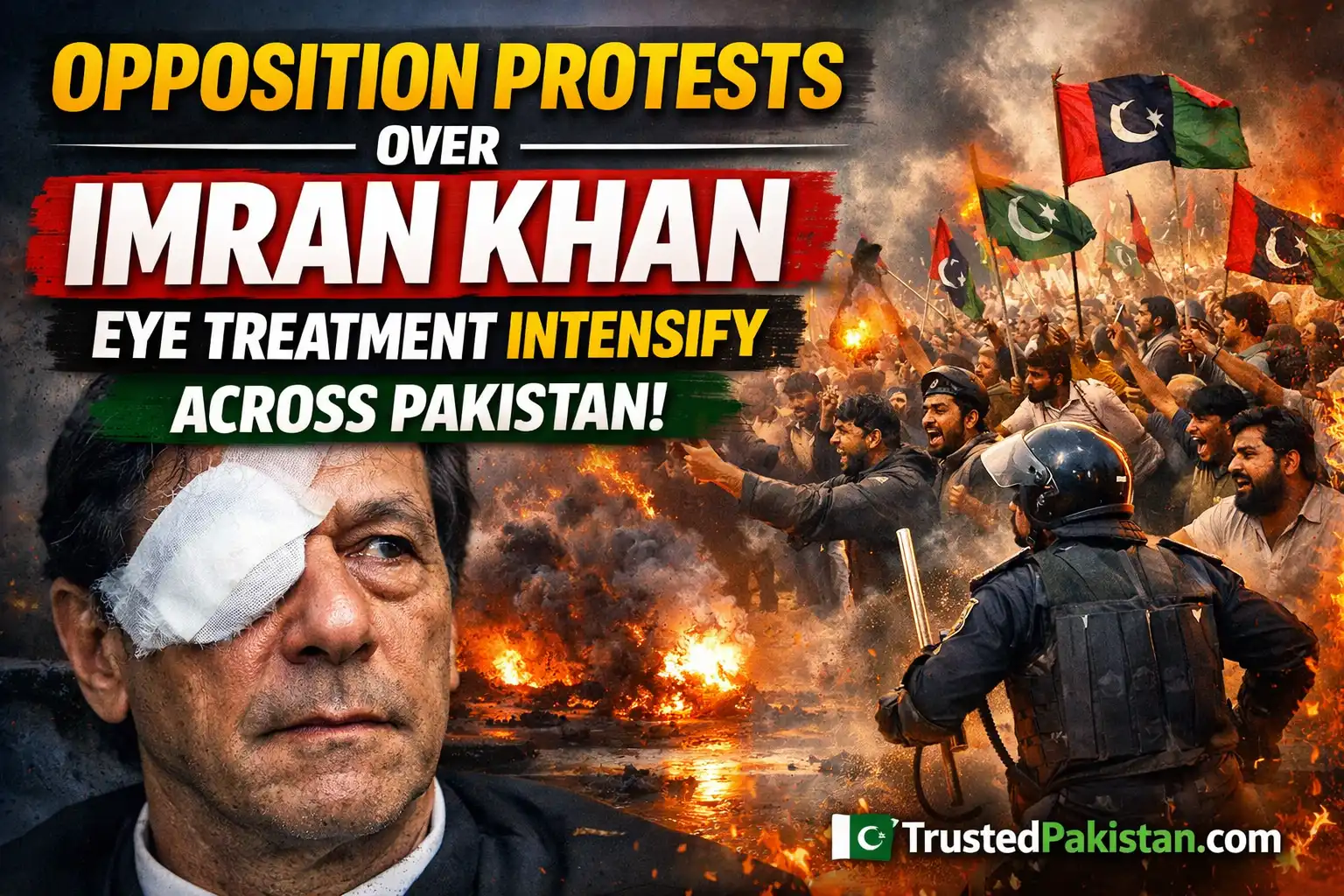
Opposition Protests Over Imran Khan Eye Treatment Intensify Across Pakistan
Opposition Protests Over Imran Khan’s Eye Treatment have sparked a new wave of political tension in Pakistan, as leaders from various opposition parties staged demonstrations demanding immediate and transparent medical care for former Prime Minister Imran Khan. The controversy emerged after reports suggested that Khan was experiencing serious discomfort related to his eyesight while in custody.
Opposition figures argue that access to proper medical treatment is a constitutional right, regardless of political status. They insist that any delay or negligence could worsen his health condition and create unnecessary political instability. On the other hand, the government has maintained that it is fully prepared to provide specialist care under strict medical supervision.
Political observers note that the issue of medical treatment for political detainees has historically been a sensitive subject in Pakistan, often leading to heightened public debate and legal scrutiny.
Background | Why Opposition Protests Over Imran Khan’s Eye Treatment Began
The situation escalated when close associates of Imran Khan claimed that he was facing severe eye-related complications. According to party representatives, his condition required examination by an independent eye specialist rather than standard jail medical facilities.
Supporters of the former prime minister argued that transparent medical access is not merely a humanitarian issue but a legal requirement. They expressed concerns that limited medical resources inside detention facilities may not adequately address specialized health issues such as ophthalmic treatment.
These developments triggered Opposition Protests Over Imran Khan’s Eye Treatment in major cities including Lahore, Karachi, and Islamabad, where party workers gathered to demand immediate intervention.
Government’s Position on Opposition Protests Over Imran Khan’s Eye Treatment
The federal government responded firmly, stating that there was no denial of medical care. Officials clarified that arrangements had been made for specialist consultation if required and that all procedures were being conducted according to prison rules.
According to statements from the Ministry of Interior, detainees are entitled to medical examinations, and any necessary specialist treatment can be arranged upon medical recommendation. Government representatives accused opposition leaders of politicizing a medical issue for public sympathy.
Political Reactions to Opposition Protests Over Imran Khan’s Eye Treatment
Leaders from Pakistan Tehreek-e-Insaf (PTI) strongly condemned what they described as “medical negligence.” They insisted that the former prime minister should be allowed consultation with private specialists without bureaucratic delays.
Several opposition leaders addressed rallies, stating that Opposition Protests Over Imran Khan’s Eye Treatment reflect broader concerns about political fairness and transparency. They warned that any deterioration in his health could further deepen political divisions in the country.
Meanwhile, members of the ruling coalition reiterated that no discrimination was being practiced and that medical reports were being reviewed professionally.


Legal and Constitutional Context
Under Pakistan’s legal framework, prisoners retain certain fundamental rights, including access to healthcare. Legal experts argue that Opposition Protests Over Imran Khan’s Eye Treatment highlight the need for transparent medical protocols in detention facilities.
Article 14 of the Constitution of Pakistan emphasizes human dignity, which legal analysts interpret as including the right to adequate medical care. If a specialist evaluation is medically necessary, authorities are obligated to facilitate it.
Independent legal commentators suggest that a court-monitored medical examination could potentially reduce tensions and restore confidence among stakeholders.
Public Sentiment and Media Coverage
Media coverage of Opposition Protests Over Imran Khan’s Eye Treatment has been extensive, with televised debates and social media discussions amplifying the issue nationwide. Supporters view the protests as a legitimate demand for healthcare transparency, while critics argue that the matter is being exaggerated for political gain.
Political analysts believe that such health-related controversies often carry emotional weight among the public, especially when involving high-profile leaders.
Broader Political Implications
The controversy surrounding Opposition Protests Over Imran Khan’s Eye Treatment comes at a time when Pakistan’s political environment remains highly polarized. The issue could potentially influence public perception, party mobilization, and legal proceedings.
Some analysts argue that resolving the matter quickly through an independent medical board could de-escalate tensions. Others suggest that the episode reflects deeper institutional mistrust between political parties and state authorities.
Regardless of political alignment, ensuring transparent and professional medical care remains essential for maintaining public trust.
The Road Ahead
Moving forward, both the opposition and the government will likely continue monitoring medical updates closely. If a specialist evaluation confirms serious concerns, arrangements for advanced treatment may be made promptly.
Observers emphasize that depoliticizing health matters is crucial to prevent unnecessary escalation. Transparent communication from relevant authorities, combined with verified medical reporting, can help reduce speculation and misinformation.
As Opposition Protests Over Imran Khan’s Eye Treatment continue to shape political discourse, the coming days will determine whether this issue becomes a turning point in Pakistan’s evolving political narrative.
