


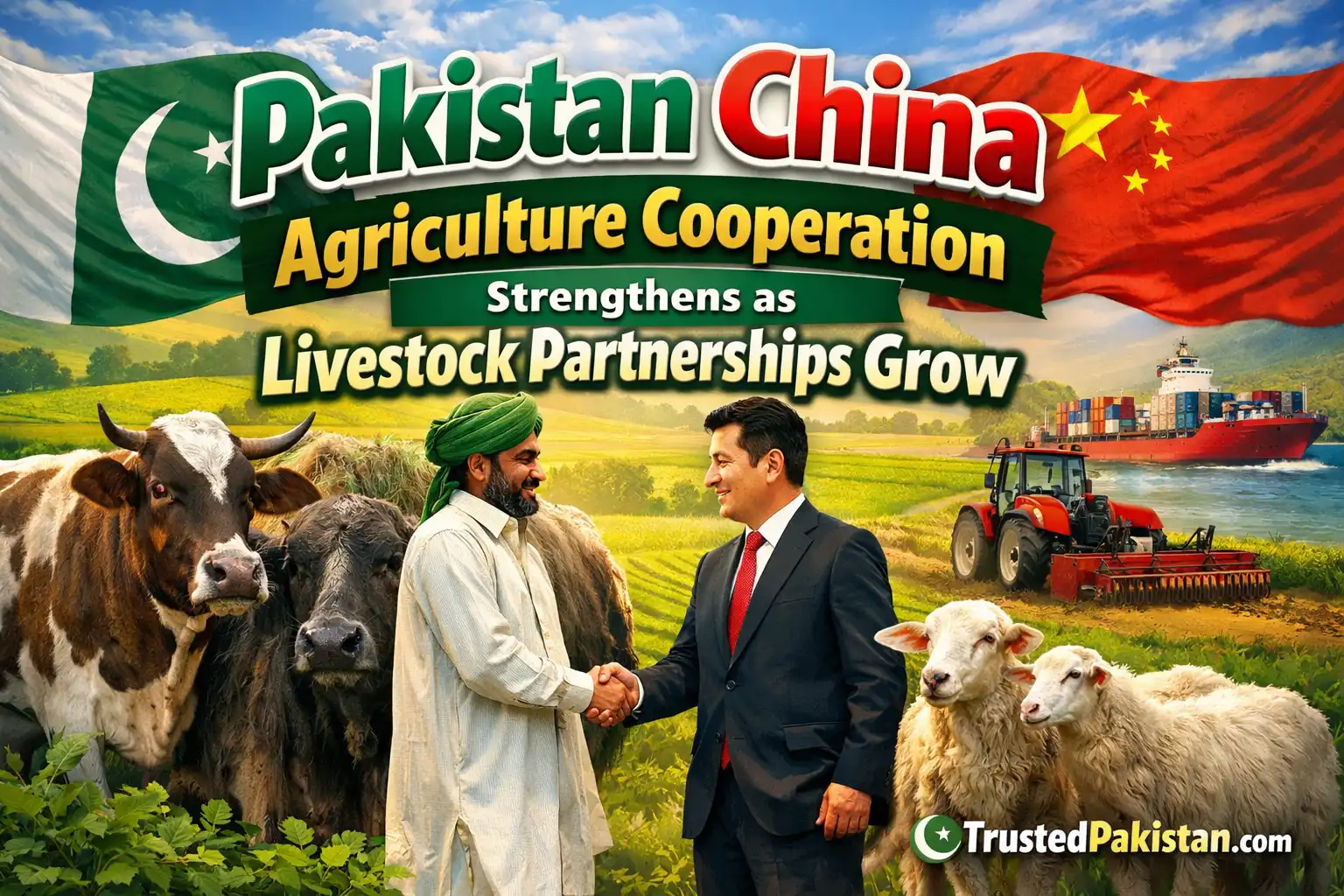
Pakistan China Agriculture Cooperation
Pakistan and China have taken another important step toward strengthening their bilateral partnership by expanding cooperation in the agriculture and livestock sectors. The development reflects the growing emphasis on economic collaboration, technological exchange, and sustainable growth under the evolving framework of China–Pakistan Economic Corridor (CPEC) Phase II.
Recent engagements between Pakistani stakeholders and a visiting Chinese delegation have highlighted the strategic importance of modernizing agricultural systems, improving livestock productivity, and introducing advanced farming technologies. Both countries view agricultural cooperation as a key driver of long-term economic stability and rural development.
Agriculture remains one of Pakistan’s most vital sectors, employing a large share of the population and contributing significantly to the national economy. Enhanced collaboration with China is expected to support efficiency improvements, technical advancements, and knowledge transfer that could help address longstanding structural challenges within the sector.
For more updates on national affairs and policy developments, readers can explore the latest reports in the TrustedPakistan.com Breaking News section.
Growing Focus on Livestock and Animal Husbandry Development
A major component of the expanding Pakistan–China cooperation involves livestock development and animal husbandry technologies. Discussions between institutions and industry representatives have emphasized the need for improved breeding practices, veterinary expertise, and scientific advancements to enhance productivity in Pakistan’s dairy and meat industries.
Collaborative initiatives are expected to facilitate technical training, professional capacity building, and research partnerships. Such efforts may enable Pakistani professionals and students to gain exposure to modern techniques that can directly benefit livestock management and animal health systems.
Experts believe that advancements in livestock breeding, disease prevention, and farm management could significantly increase output while improving the overall efficiency of Pakistan’s livestock sector. These developments hold particular significance for rural communities, where livestock plays a central economic role.



Agricultural Modernization Under CPEC Phase II
The expansion of agricultural cooperation also aligns with the broader transformation of China–Pakistan Economic Corridor priorities. While earlier phases primarily focused on infrastructure and energy projects, CPEC Phase II increasingly emphasizes industrial cooperation, sector-specific investments, and technology-driven development.
Agriculture has emerged as a strategic area within this new framework. Pakistan continues to face challenges related to water management, productivity gaps, outdated farming methods, and supply chain inefficiencies. Chinese expertise in mechanization, smart farming, and precision agriculture presents valuable opportunities for modernization.
Observers note that Pakistan’s agricultural potential remains substantial, supported by diverse climatic conditions and a large agricultural workforce. Strengthened partnerships and technology transfer initiatives could contribute to higher yields, improved resource utilization, and better income prospects for farmers.
Economic and Food Security Implications
Enhanced cooperation in agriculture and livestock sectors may generate broader economic benefits for Pakistan. Increased productivity, improved farm practices, and technological adoption could help reduce reliance on imports, strengthen domestic production, and expand export opportunities in agricultural commodities.
Food security considerations further underscore the importance of such initiatives. Global supply chain disruptions, climate variability, and rising food prices have intensified the need for resilient and efficient agricultural systems. Bilateral collaboration may help Pakistan adapt to these emerging challenges.
Analysts caution, however, that the ultimate success of these initiatives will depend on effective implementation, institutional coordination, and consistent policy support. Investment agreements and cooperative frameworks must be complemented by regulatory reforms, infrastructure upgrades, and capacity-building measures.
Strengthening Knowledge Exchange and Technical Capacity
Another critical dimension of Pakistan–China cooperation involves human resource development and knowledge exchange. Training programs, joint research projects, and academic collaborations are expected to enhance technical capabilities across agriculture-related disciplines.
Developing a modern, skilled workforce is widely regarded as essential for long-term sectoral transformation. Exposure to advanced technologies and contemporary agricultural practices could help equip Pakistani professionals with the expertise required for evolving global standards.

