


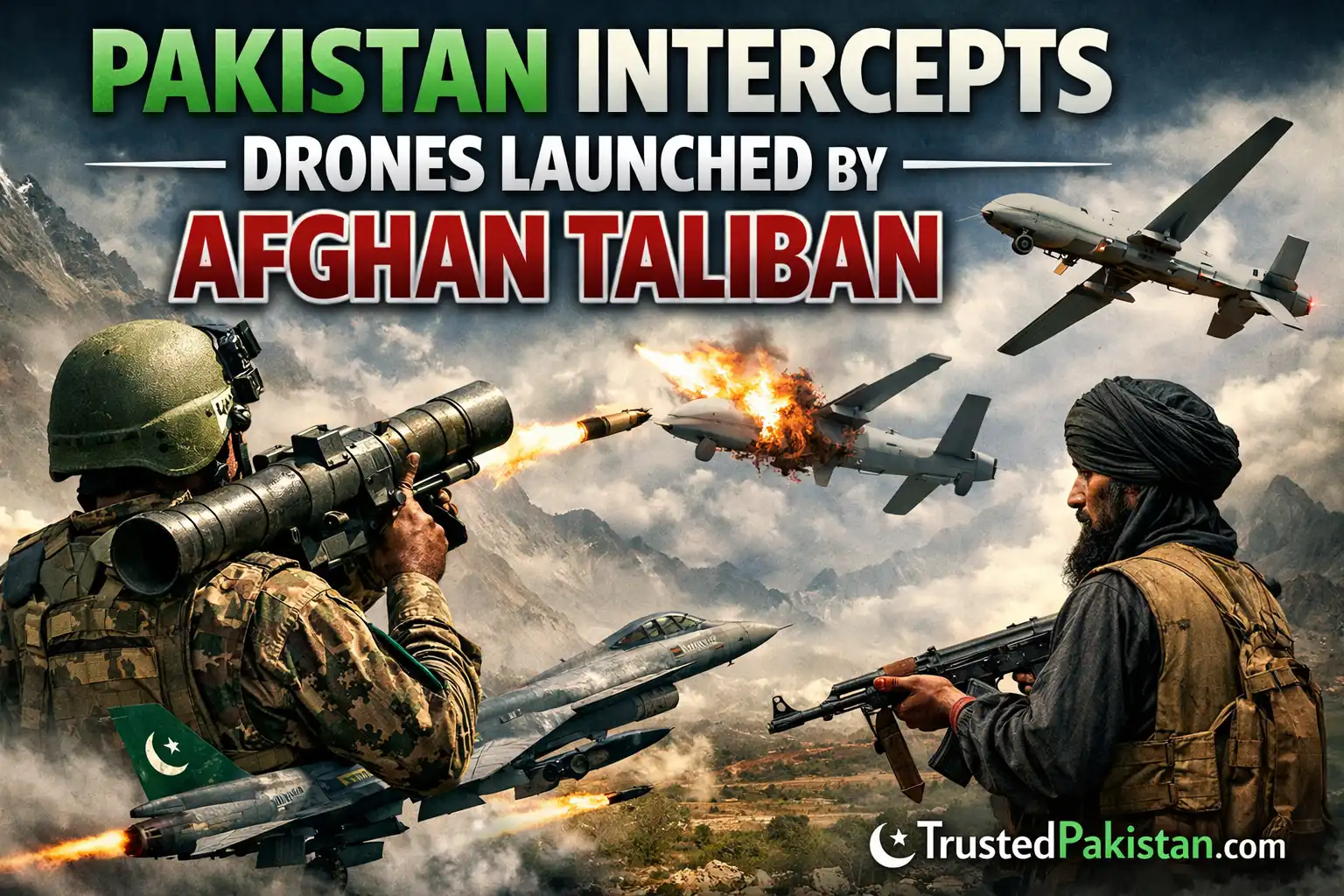
Pakistan Intercepts Drones Launched by Afghan Taliban
In a significant development highlighting rising security concerns along the Pakistan–Afghanistan border, Pakistan’s military has announced that it successfully intercepted multiple drones allegedly launched by the Afghan Taliban. According to a statement issued by the Inter-Services Public Relations (ISPR), Pakistan’s armed forces detected and neutralized the drones before they could cause any damage. The incident has sparked renewed debate over border security, cross-border militancy, and the stability of the region.
The interception reflects Pakistan’s increasing vigilance against aerial threats and underscores the importance of maintaining strong surveillance systems along its western frontier.
Detection and Interception of the Drones
According to ISPR, Pakistan’s air defense systems detected suspicious drone activity near the border region late at night. Military radar systems identified several unmanned aerial vehicles (UAVs) entering Pakistani airspace from the Afghan side. Upon detection, the Pakistan Air Force and ground defense units immediately activated defensive protocols.
Within minutes, security forces tracked the movement of the drones and successfully intercepted them before they could penetrate deeper into Pakistani territory. ISPR confirmed that the drones were shot down using advanced anti-drone technology and air defense measures.
Military officials stated that the swift response prevented any potential damage to civilian areas or sensitive installations. The wreckage of the drones was recovered from remote border areas, and authorities have begun forensic examinations to determine their origin, technology, and possible mission objectives.
ISPR Statement and Official Response
In its official statement, ISPR strongly condemned the incident, describing it as a serious violation of Pakistan’s sovereignty. The military spokesperson emphasized that Pakistan will not tolerate any threats to its territorial integrity and will respond decisively to such provocations.
The statement further noted that Pakistan’s armed forces remain fully prepared to defend the country against emerging security challenges, including drone warfare and hybrid threats. Officials also highlighted that modern surveillance technologies and intelligence networks have significantly strengthened Pakistan’s ability to detect and neutralize such threats.
Government authorities have also raised concerns through diplomatic channels, urging Afghan authorities to investigate the matter and ensure that Afghan territory is not used for hostile activities against Pakistan.
Growing Concerns Over Drone Warfare
The incident reflects a broader trend of increasing drone usage in modern conflicts and cross-border security challenges. Unmanned aerial vehicles are increasingly used for surveillance, smuggling, and even carrying explosive devices.
Security experts warn that militant groups are rapidly adopting drone technology due to its relatively low cost and ability to bypass traditional border defenses. In recent years, Pakistan has reported multiple attempts of drones being used to transport weapons, narcotics, and surveillance equipment across the border.
The latest interception has raised concerns about whether militant groups operating in the region are attempting to develop more advanced drone capabilities. Analysts believe that such developments could pose a serious threat to regional security if not addressed through coordinated international efforts.




Pakistan–Afghanistan Border Tensions
Relations between Pakistan and Afghanistan have remained tense in recent years, particularly regarding border management and militant activities. Pakistan has repeatedly expressed concern over the presence of militant groups operating from Afghan territory, accusing them of carrying out attacks inside Pakistan.
The Afghan Taliban government, however, has often denied these allegations and has stated that it does not allow any group to use Afghan soil against neighboring countries. Despite these assurances, incidents along the border continue to create mistrust between the two nations.
The interception of the drones may further strain diplomatic relations and could lead to renewed discussions about border security cooperation between Islamabad and Kabul.
Importance of Border Security Measures
Pakistan has invested heavily in strengthening its western border defenses. The construction of border fencing, installation of modern surveillance systems, and deployment of advanced radar technology are part of broader efforts to prevent illegal crossings and militant infiltration.
Security officials say these measures have significantly reduced cross-border attacks and smuggling activities. However, the emergence of drone-based threats shows that security strategies must continuously evolve to address new forms of warfare.
Experts recommend enhanced intelligence sharing, improved air defense capabilities, and stronger diplomatic engagement between Pakistan and Afghanistan to prevent future incidents.
Regional and International Implications
The drone interception incident may also draw attention from regional and international observers concerned about stability in South Asia. Continued tensions between Pakistan and Afghanistan could complicate efforts to promote peace and economic cooperation in the region.
International security analysts believe that managing emerging technological threats like drones will require collaboration between governments, security agencies, and global organizations.
If such incidents increase, they could trigger stronger military responses or diplomatic disputes, potentially affecting broader regional stability.
TAP FOR MORE NEWS HERE
Conclusion
The successful interception of drones allegedly launched from Afghan territory demonstrates Pakistan’s readiness to counter emerging security threats. While the swift response by Pakistan’s armed forces prevented any immediate damage, the incident highlights the growing complexity of modern warfare and cross-border security challenges.
Moving forward, both Pakistan and Afghanistan will need to strengthen dialogue and cooperation to prevent escalation and ensure peace along their shared border. Maintaining stability in the region will require vigilance, technological preparedness, and diplomatic efforts aimed at reducing tensions and addressing the root causes of conflict.
