


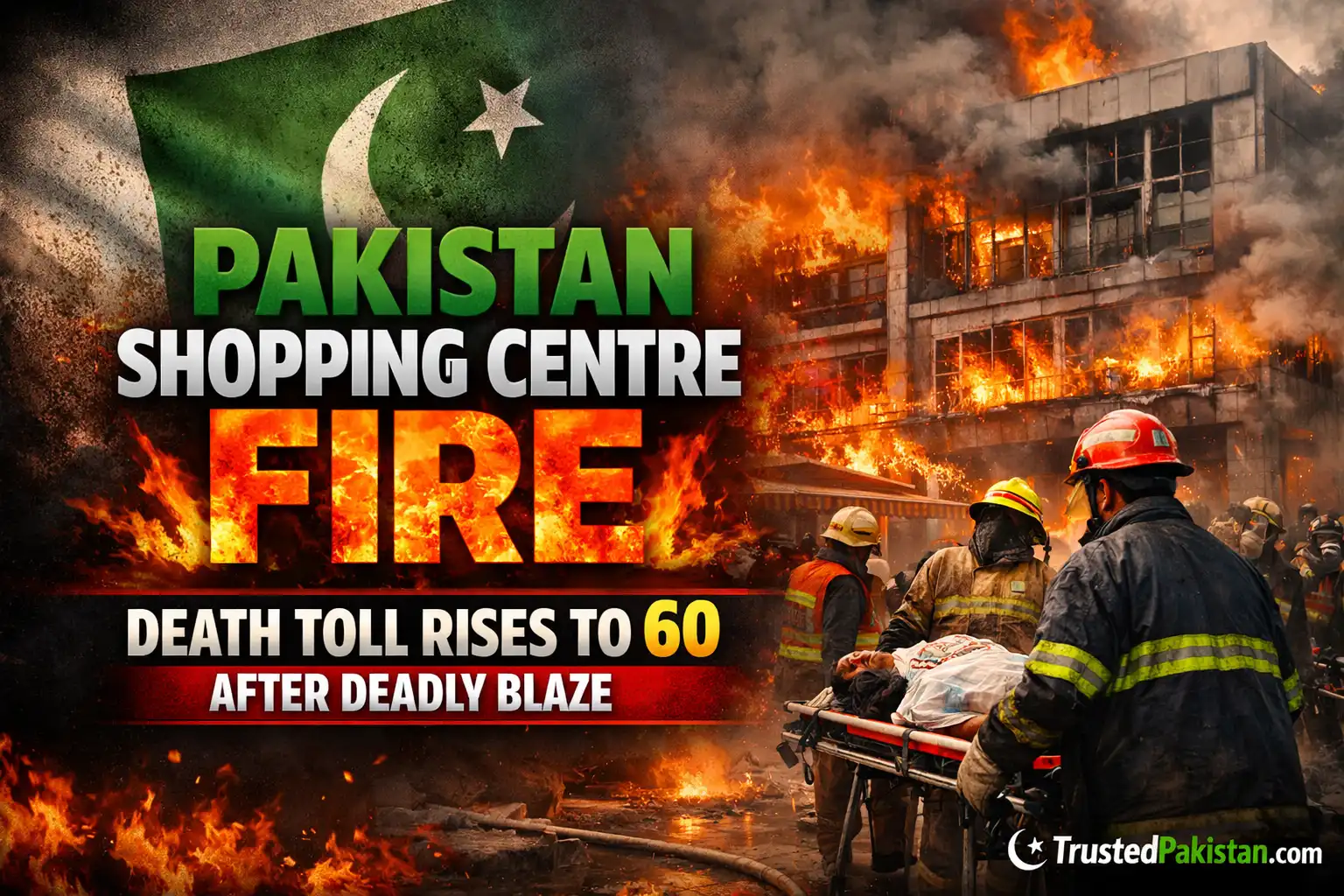
Pakistan Shopping Centre Fire Death Toll Rises to 60 After Deadly Blaze
The Pakistan shopping centre fire death toll has climbed to at least 60, following a devastating blaze that ripped through a crowded commercial complex, turning a routine shopping day into one of the country’s deadliest urban fire disasters in recent years. The incident has triggered nationwide grief, renewed debates on building safety laws, and urgent calls for accountability.
According to initial reports, the fire broke out suddenly and spread rapidly due to poor emergency exits, blocked stairways, and flammable interior materials. Many victims were trapped inside as thick smoke filled the building within minutes.
Timeline of the Pakistan Shopping Centre Fire
The fire reportedly started during peak business hours when dozens of families and workers were inside the shopping centre. Eyewitnesses said sparks were seen near an electrical panel before flames spread to upper floors.
Emergency response teams arrived swiftly, but rescuers faced multiple obstacles:
- Locked emergency exits
- Absence of functional fire alarms
- Poor ventilation causing suffocation
- As a result, the Pakistan shopping centre fire death toll continued to rise even after the fire was extinguished.
Victims and Casualties | A Human Tragedy
Authorities confirmed that many victims died due to smoke inhalation rather than burns, highlighting the lack of proper evacuation systems. Several injured individuals remain in critical condition at nearby hospitals.
Families gathered outside hospitals overnight, desperately searching for loved ones. Many victims were daily wage earners, shop workers, and visitors who had no escape route once the fire intensified.
Government Response and Official Investigation
Pakistan’s federal and provincial authorities ordered an immediate investigation into the tragedy. Officials stated that strict action would be taken against those responsible for negligence.
An inquiry committee has been formed to examine:
- Building approval violations
- Fire safety certification failures
- Electrical wiring standards
The Pakistan shopping centre fire death toll has once again exposed weak enforcement of safety regulations in commercial buildings.



Fire Safety Failures Behind the Disaster
Experts say the tragedy could have been avoided if basic safety protocols were followed. Investigations suggest:
- No operational sprinkler system
- Fire extinguishers were either missing or expired
- Emergency exits were sealed or blocked
Pakistan has experienced multiple deadly fires in recent years, and each incident reveals similar patterns of negligence.
Pakistan Shopping Centre Fire Death Toll and Urban Safety Concerns
The rising Pakistan shopping centre fire death toll has intensified public criticism of municipal authorities and building owners. Social media users and civil society groups are demanding:
- Mandatory fire drills
- Regular safety audits
- Heavy fines and jail terms for violations
Urban planners warn that rapid commercial construction without oversight has turned many shopping plazas into “death traps.”
Eyewitness Accounts Paint a Grim Picture
Survivors described scenes of chaos as smoke engulfed the building. Some people attempted to break windows, while others collapsed in stairways due to lack of oxygen.
One survivor said, “There was no alarm, no announcement. We only realized something was wrong when smoke filled the floor.”
Key Safety Lessons and Policy Changes Needed
Instead of treating each tragedy as an isolated incident, experts urge long-term reforms:
- Digitised safety inspections
- Public disclosure of fire safety compliance
- Training for shop owners and staff
The Pakistan shopping centre fire death toll must serve as a turning point to prevent future disasters rather than becoming another forgotten statistic.
Why This Tragedy Matters
This incident is not just about numbers—it reflects systemic failure. As cities grow vertically and commercially, safety infrastructure must grow with them. Without strict enforcement, tragedies like this will continue to claim innocent lives.
Public trust in safety authorities depends on transparent investigations and real consequences—not temporary outrage.
