


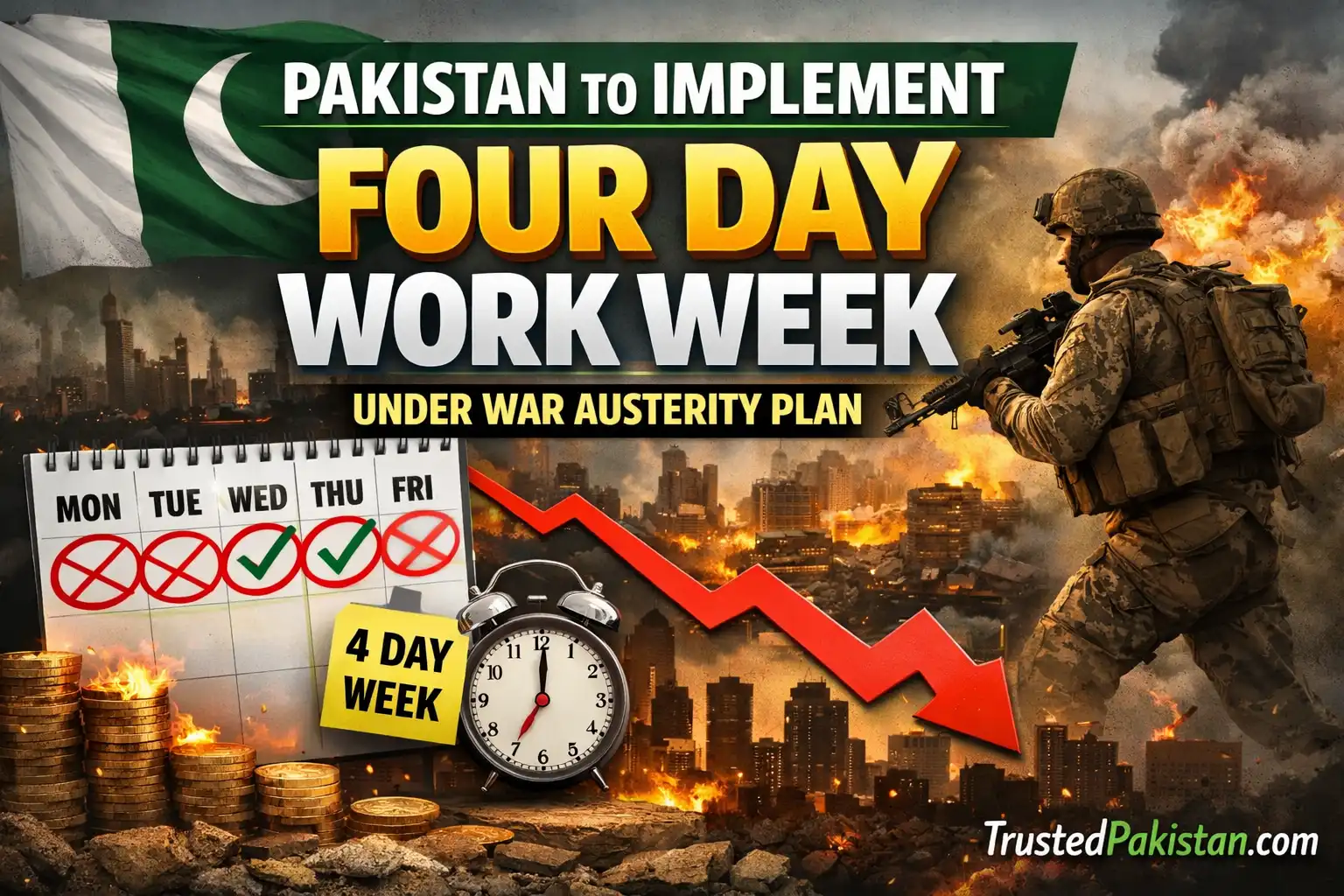
Pakistan to Implement Four Day Work Week Under War Austerity Plan
Pakistan is reportedly considering a four-day work week as part of a broader “war austerity plan” aimed at reducing government spending and conserving national resources. The proposal comes at a time when the country faces economic pressures, rising energy costs, and increasing security concerns. By shortening the working week, the government hopes to cut operational expenses, particularly electricity and fuel consumption, while maintaining productivity. The plan has sparked debate among policymakers, economists, and workers regarding its feasibility and potential impact on the national economy.
Background of the Austerity Plan
The austerity plan emerged as a response to Pakistan’s ongoing financial challenges. The country has been dealing with high inflation, mounting debt, and pressure on foreign exchange reserves. In such circumstances, governments often introduce cost-cutting measures to stabilize the economy.
The proposed “war austerity plan” is intended to reduce unnecessary government expenditures. Officials argue that operating public offices for one less day each week could significantly lower utility costs, transportation expenses, and administrative overheads. Similar steps have been taken in the past during economic crises, including reduced office hours and limits on official travel.
What the Four-Day Work Week Means
Under the proposal, government offices would operate four days a week instead of the traditional five-day schedule. Employees would either work longer hours on working days or follow a compressed schedule to complete their weekly tasks.
The idea is not entirely new. Several countries and organizations worldwide have experimented with shorter work weeks to improve efficiency and employee well-being. In Pakistan’s case, however, the primary motivation is economic austerity rather than workplace reform.
Economic Reasons Behind the Move
One of the key motivations for introducing a four-day work week is energy conservation. Government offices consume large amounts of electricity for lighting, air conditioning, computers, and other equipment. Closing offices for an additional day each week could significantly reduce energy demand, particularly during peak seasons.
Another reason is the rising cost of fuel and transportation. Many government employees commute long distances daily. Fewer commuting days could lead to lower fuel consumption and reduced traffic congestion in major cities.




Potential Benefits of the Policy
Supporters of the plan argue that the four-day work week could bring several benefits beyond cost savings. Employees might experience improved work-life balance, which could enhance morale and productivity. Research in other countries suggests that shorter work weeks can sometimes lead to more focused and efficient working hours.
The policy could also reduce urban traffic congestion and environmental pollution by lowering the number of daily commutes. Fewer working days may also decrease operational wear and tear on government infrastructure.
Concerns and Criticism
Despite the potential benefits, the proposal has raised several concerns. Critics argue that reducing the number of working days might delay administrative processes and public services. Government offices handle essential tasks such as issuing documents, processing licenses, and responding to public complaints. Fewer working days could slow these services if proper planning is not implemented.
There are also concerns about whether employees would face longer working hours during the four working days, which might lead to fatigue. Additionally, some economists question whether the expected financial savings would be significant enough to justify such a structural change.
Implementation Challenges
Implementing a nationwide four-day work week would require careful planning. The government would need to redesign work schedules, ensure essential services remain available, and introduce systems that maintain productivity.
Certain sectors such as healthcare, security, and emergency services would likely continue operating on regular schedules. For these sectors, the government may need alternative arrangements, such as rotating shifts, to ensure uninterrupted services.
Conclusion
The proposal to introduce a four-day work week under Pakistan’s “war austerity plan” reflects the government’s attempt to address economic challenges through cost-saving measures. While the idea could reduce energy consumption and operational expenses, its success will depend on effective implementation and careful management of public services.
If planned properly, the policy could encourage greater efficiency, promote digital transformation, and provide employees with improved work-life balance. However, without adequate preparation, it may also lead to delays and administrative challenges. As discussions continue, policymakers will need to carefully weigh the potential benefits against the practical realities of implementing such a significant change in the country’s working structure.
