


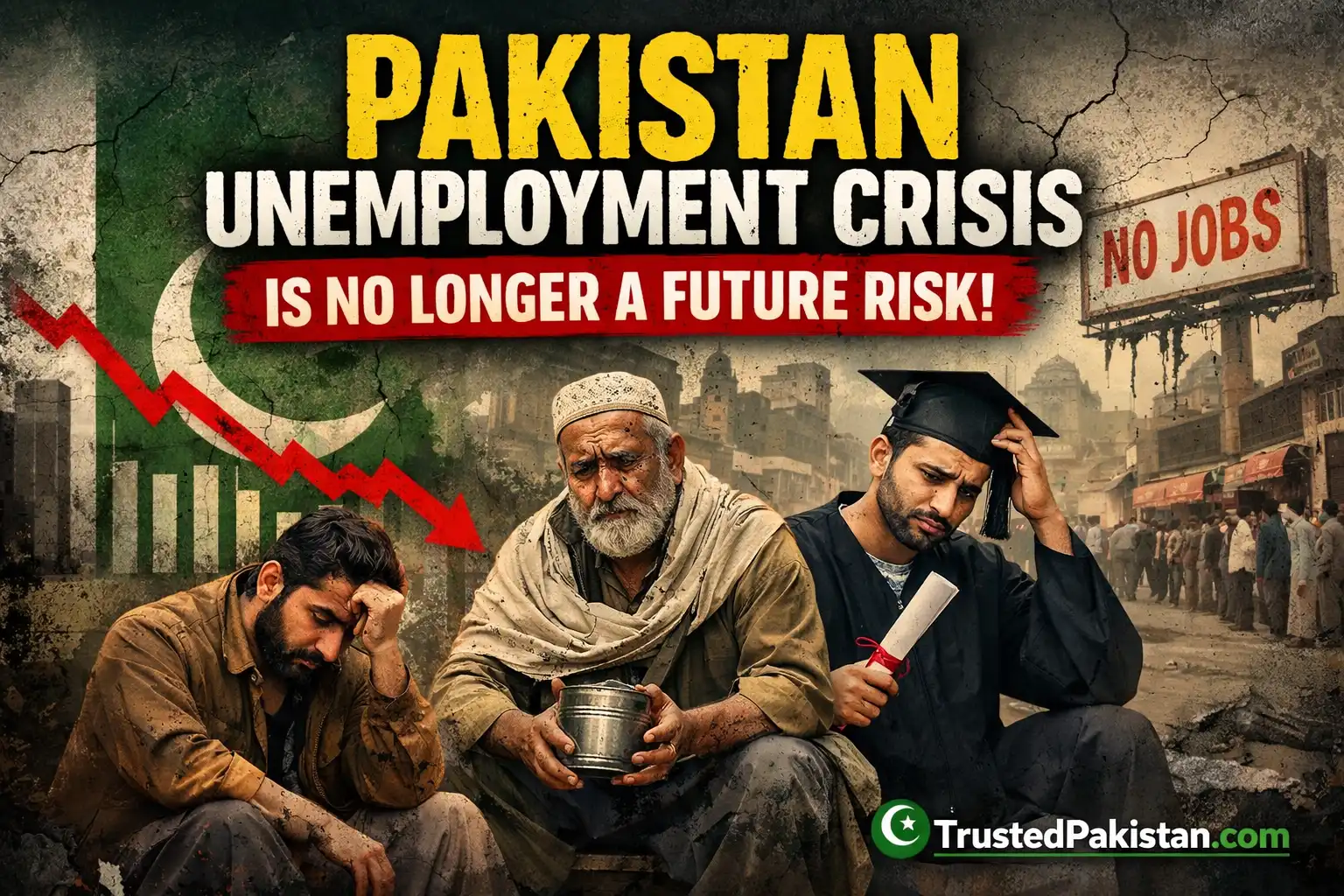
Pakistan unemployment crisis is no longer a future risk
From urban graduates to rural laborers, millions of Pakistanis are struggling to find stable work as inflation, slow growth, and policy uncertainty choke the job market. The Pakistan unemployment crisis has become one of the most serious threats to economic stability, social cohesion, and national development.
According to economists, if corrective measures are not taken urgently, unemployment could turn into a long-term structural disaster for the country.
Pakistan Unemployment Crisis | Current Situation Explained
The Pakistan unemployment crisis has intensified due to overlapping economic shocks. Industries are downsizing, small businesses are closing, and new hiring has slowed dramatically.
Official labor surveys indicate that unemployment is disproportionately affecting:
- Young graduates
- Daily wage earners
- Women entering the workforce
- Skilled workers migrating abroad due to lack of opportunities
For verified labor statistics and employment indicators, Pakistan’s official data source, the Pakistan Bureau of Statistics, regularly publishes labor force surveys and employment reports.
Key Causes Behind the Pakistan Unemployment Crisis
1. Economic Slowdown and Inflation
High inflation has reduced consumer spending, forcing businesses to cut costs and freeze hiring. Manufacturing, construction, and retail sectors are among the worst affected.
2. Shrinking Industrial Output
Energy shortages, rising production costs, and inconsistent policies have pushed many factories to operate below capacity or shut down entirely—directly fueling the Pakistan unemployment crisis.
3. Population Growth Outpacing Job Creation
Every year, over two million young Pakistanis enter the labor market, but job creation remains far below this figure.
Youth at the Center of the Pakistan Unemployment Crisis
Pakistan has one of the youngest populations in the world, yet youth unemployment is rising rapidly. Degree holders face underemployment or long jobless periods, leading to frustration and brain drain.
Many young professionals are now seeking opportunities abroad, weakening Pakistan’s long-term human capital.




Impact of Pakistan Unemployment Crisis on Society
The Pakistan unemployment crisis is not just an economic issue—it is a social emergency.
Major consequences include:
- Rising poverty levels
- Increased crime and social unrest
- Mental health challenges among unemployed youth
- Pressure on already strained families
Women and the Pakistan Unemployment Crisis
Women face unique challenges in the labor market. Cultural barriers, lack of safe workplaces, and limited flexible job options worsen the Pakistan unemployment crisis for female workers.
Without inclusive employment policies, half of the country’s potential workforce remains underutilized.
Regional Disparities in Employment
Urban centers like Karachi and Lahore still offer limited opportunities, while rural areas face near-total job stagnation. Provincial inequality continues to deepen the Pakistan unemployment crisis, especially in underdeveloped regions.
Government Response and Policy Gaps
While government initiatives promise skill development and youth loans, implementation remains slow. Experts argue that without:
- Industrial revival
- Export-led growth
- SME support
- Digital economy expansion
…the Pakistan unemployment crisis will continue to spiral.
What Lies Ahead for Pakistan’s Job Market
Instead of a traditional conclusion, it is important to focus on what must change next.
Pakistan stands at a crossroads. If investments in education, technology, renewable energy, and entrepreneurship are prioritized, the Pakistan unemployment crisis can still be reversed. However, continued delays may push millions into long-term joblessness, threatening economic recovery.
The coming years will determine whether Pakistan transforms its demographic pressure into a workforce advantage—or allows the Pakistan unemployment crisis to become a permanent national burden.
Informal Employment and the Hidden Side of the Pakistan Unemployment Crisis
Another critical dimension of the Pakistan unemployment crisis is the rapid rise of informal and insecure work. As formal jobs disappear, many Pakistanis are forced into low-paying, temporary, or unregulated employment with no social protection, health coverage, or job security. This hidden unemployment distorts official figures while deepening economic vulnerability. Gig work, daily labor, and short-term contracts may provide survival income, but they fail to offer long-term stability. Without reforms to formalize employment and protect workers’ rights, the Pakistan unemployment crisis will continue to widen inequality and trap millions in a cycle of working poverty rather than genuine economic recovery.
