


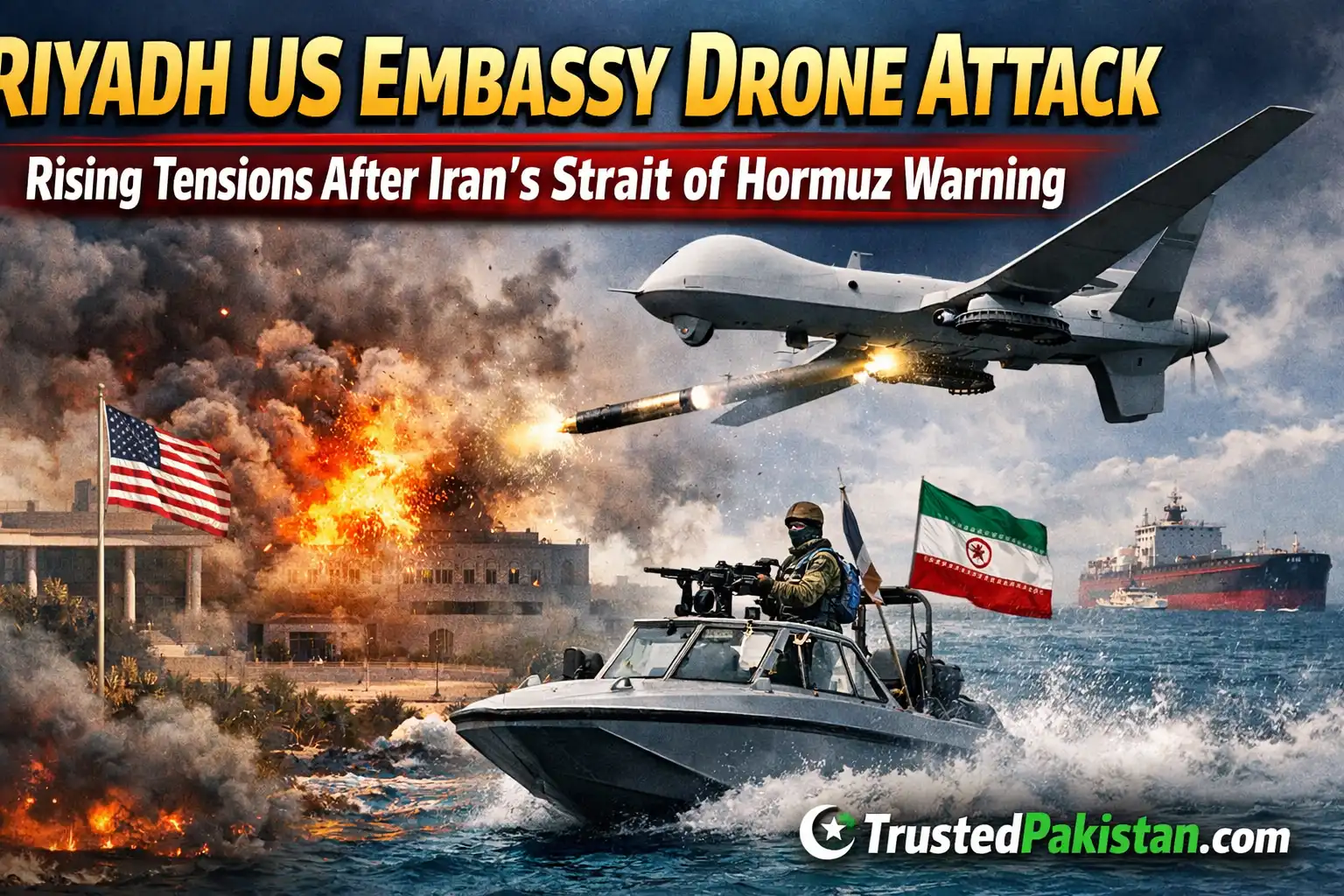
Riyadh US Embassy Drone Attack | Rising Tensions After Iran Strait of Hormuz Warning
The Riyadh US Embassy Drone Attack has triggered fresh geopolitical tensions in the Middle East. Reports indicate that a drone incident near the United States Embassy in Saudi Arabia’s capital has intensified regional security concerns. At the same time, Iran has reportedly issued a warning to vessels passing through the Strait of Hormuz, raising alarms across global energy markets.
This developing situation has not only affected diplomatic relations but also heightened fears regarding maritime security in one of the world’s most strategically important waterways.
1. Overview of the Riyadh US Embassy Drone Attack
The Riyadh US Embassy Drone Attack marks a significant moment in ongoing Middle Eastern tensions. According to early security reports, a drone was intercepted near the diplomatic zone in Riyadh. Saudi defense systems reportedly responded immediately, preventing major damage or casualties.
Drone-related incidents have become increasingly common in the region, often linked to proxy conflicts and broader geopolitical rivalries. The latest Riyadh US Embassy Drone Attack underscores the evolving nature of modern warfare, where unmanned aerial vehicles play a central role.
2. Security Response in Saudi Arabia
Following the Riyadh US Embassy Drone Attack, Saudi authorities strengthened security measures around diplomatic missions and critical infrastructure. Surveillance systems were enhanced, and air defense readiness levels were elevated.
The United States Embassy issued a security advisory urging citizens to remain vigilant. Diplomatic missions worldwide often update travel alerts in such scenarios. For official travel advisories, refer to the U.S. Department of State website.
Saudi Arabia has invested heavily in air defense systems in recent years, especially after previous drone and missile incidents targeting oil facilities.
3. Iran’s Warning in the Strait of Hormuz
While the Riyadh US Embassy Drone Attack gained headlines, Iran’s reported warning to ships passing through the Strait of Hormuz added another critical dimension to the crisis.
The Strait of Hormuz is a narrow waterway through which nearly 20% of the world’s oil supply passes daily. Any threat to maritime security in this region can disrupt global energy markets.
Iran has previously warned that regional instability or foreign military presence could impact navigation safety. Such statements often lead to increased naval patrols by international forces.
4. Global Economic and Oil Market Impact
The Riyadh US Embassy Drone Attack combined with tensions in the Strait of Hormuz has immediate economic implications. Oil prices typically react sharply to instability in the Gulf region.
Energy traders closely monitor developments involving Saudi Arabia and Iran, as both countries influence global oil supply. Even minor disruptions or perceived threats can cause volatility in crude oil markets.




Shipping insurance premiums may also rise if maritime risks increase, further impacting international trade.
5. International Reactions
Global leaders have expressed concern over the Riyadh US Embassy Drone Attack and maritime warnings. Diplomatic channels are reportedly active to prevent escalation.
The United Nations has consistently called for restraint in the Gulf region, emphasizing dialogue over confrontation. Western allies have reaffirmed commitments to protecting diplomatic missions and ensuring freedom of navigation.
Heightened tensions could potentially lead to new diplomatic negotiations or international mediation efforts.
6. Regional Security Implications
The Riyadh US Embassy Drone Attack reflects broader regional rivalries involving proxy groups, advanced drone technology, and strategic waterways.
Security analysts suggest that drone warfare is reshaping conflict dynamics in the Middle East. Compared to traditional military strikes, drones offer plausible deniability and lower operational costs.
Meanwhile, the Strait of Hormuz remains a flashpoint. Any prolonged instability could invite expanded international naval presence, increasing the risk of unintended confrontations.
7. Future Outlook for Middle East Stability
The long-term consequences of the Riyadh US Embassy Drone Attack depend on diplomatic efforts and regional power calculations. If tensions escalate, the Gulf could face renewed instability affecting energy supplies and global markets.
However, crisis situations sometimes open doors for negotiations. International stakeholders may push for de-escalation talks to protect economic interests and regional security.
Monitoring developments in Riyadh and the Strait of Hormuz will remain essential for policymakers, investors, and security experts worldwide.
Emerging Cybersecurity Threats in Middle Eastern Conflicts
Beyond the Riyadh US Embassy Drone Attack, cybersecurity threats are becoming a parallel battlefield in regional conflicts. State and non-state actors increasingly target digital infrastructure, including government networks, oil facilities, and financial institutions.
As drone warfare expands physically, cyber warfare grows digitally. Governments across the Gulf region are now investing heavily in cyber defense systems to counter emerging threats.
The evolving nature of both physical and cyber conflict highlights the complexity of modern geopolitical tensions and the importance of coordinated international security strategies.
