


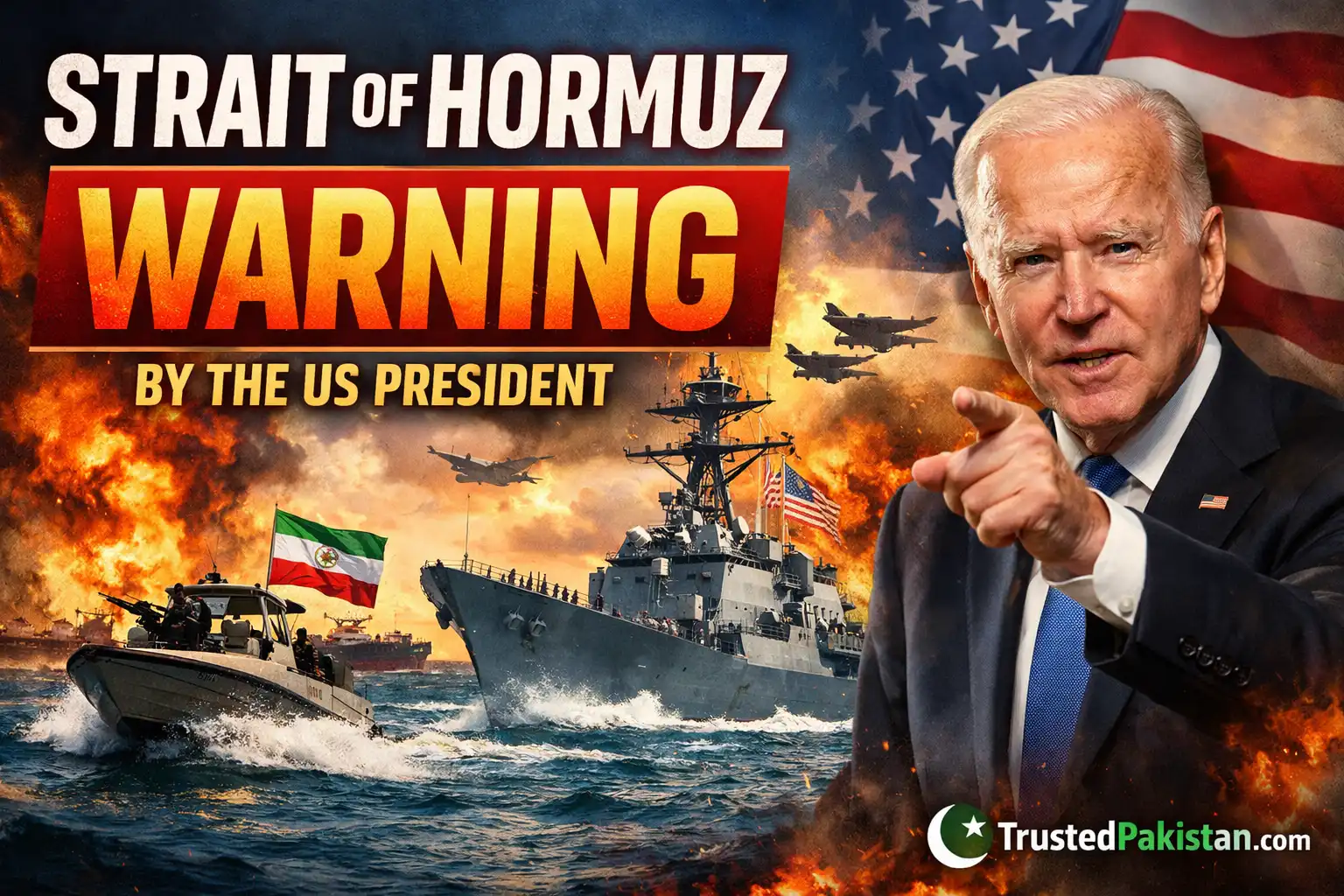
Strait of Hormuz Warning by the US President
The Strait of Hormuz warning issued by the U.S. President has sparked serious discussion in international political circles. According to the statement, if NATO fails to help reopen the Strait of Hormuz and ensure secure maritime passage, the alliance could face severe consequences for its credibility and future role in global security.
The Strait of Hormuz is one of the most strategic waterways in the world. Nearly one-fifth of the global oil supply passes through this narrow passage connecting the Persian Gulf to international markets. Because of its economic and geopolitical importance, any disruption there can immediately affect energy prices, international trade, and global stability.
The recent Strait of Hormuz warning highlights growing concerns that NATO must take a stronger role in protecting international shipping routes. Analysts believe the statement reflects increasing pressure on global alliances to respond quickly to emerging security challenges in the Middle East.
Why the Strait of Hormuz Matters to Global Trade
The Strait of Hormuz plays a crucial role in the international energy market. Countries in the Gulf region, including Saudi Arabia, Kuwait, Iraq, and the United Arab Emirates, rely on this route to export oil and gas to the rest of the world.
If this passage becomes unsafe or blocked, global oil prices could rise dramatically. This would not only affect major economies but also create inflationary pressure in developing nations that rely heavily on imported energy.
The Strait of Hormuz warning therefore signals more than just a military concern. It is also an economic issue that could impact global markets, transportation costs, and industrial production across continents.
Security experts argue that protecting such a vital trade route requires coordinated international action. NATO, as one of the largest military alliances in the world, is often seen as a key player capable of maintaining maritime security in critical regions.
NATO’s Role After the Strait of Hormuz Warning
The Strait of Hormuz warning places NATO at the center of the discussion about maritime security. Traditionally, NATO has focused on collective defense among its member states, mainly in Europe and North America. However, in recent years the alliance has increasingly been involved in protecting global shipping lanes.
If tensions escalate in the Persian Gulf, NATO may face pressure to deploy naval forces to ensure safe passage for commercial vessels. Such missions are not new for the alliance. NATO has previously conducted anti-piracy operations and maritime security patrols in several strategic regions.
Critics argue that NATO must adapt to new global realities. Modern security challenges include energy security, cyber threats, and protection of international trade routes. The Strait of Hormuz warning is therefore viewed as a test of NATO’s ability to respond to these evolving responsibilities.
Geopolitical Tensions Behind the Warning
The Strait of Hormuz warning comes amid rising geopolitical tensions in the Middle East. The region has long been a focal point for global power competition due to its vast energy resources and strategic location.



Conflicts, sanctions, and regional rivalries have repeatedly raised concerns about the safety of shipping routes in the Gulf. When tensions increase, insurance costs for shipping companies rise and energy markets react immediately.
Many analysts believe the recent warning is intended to encourage international cooperation before the situation escalates further. Maintaining open sea lanes is essential not only for energy exports but also for broader economic stability.
Global Reaction to the Strait of Hormuz Warning
The Strait of Hormuz warning has triggered reactions from policymakers, defense analysts, and economic experts around the world. Some believe the statement reflects genuine concerns about maritime security, while others see it as a strategic message aimed at strengthening alliances.
Energy-importing countries are particularly sensitive to developments in the Gulf. Even the possibility of disruptions can lead to fluctuations in global oil prices and financial markets.
International organizations and research institutions continue to study the potential economic impact of any disruption in the Strait of Hormuz. According to reports from the International Energy Agency, global energy security depends heavily on the stability of major shipping routes.
Strategic Importance of Maritime Security in the 21st Century
Beyond the immediate warning, the discussion around the Strait of Hormuz warning also reflects broader changes in global security priorities. In the 21st century, economic security and supply chain stability are becoming as important as traditional military defense.
Major economies now depend on secure maritime routes for transporting oil, natural gas, and industrial goods. As a result, international alliances increasingly focus on protecting these critical lifelines.
The situation also demonstrates how regional tensions can quickly become global issues. A disruption in one narrow waterway can affect fuel prices, transportation networks, and economic growth worldwide.
Future Implications for Global Alliances
The Strait of Hormuz warning highlights how strategic waterways remain central to global politics. Alliances like NATO may increasingly find themselves responsible for safeguarding economic infrastructure beyond their traditional regions.
At the same time, the debate also raises questions about how international institutions should adapt to new geopolitical realities. Energy security, trade stability, and regional conflicts are becoming interconnected challenges that require coordinated responses.
As global competition intensifies and supply chains become more vulnerable, the ability of alliances to maintain stability in critical regions will likely shape international relations for years to come.
