


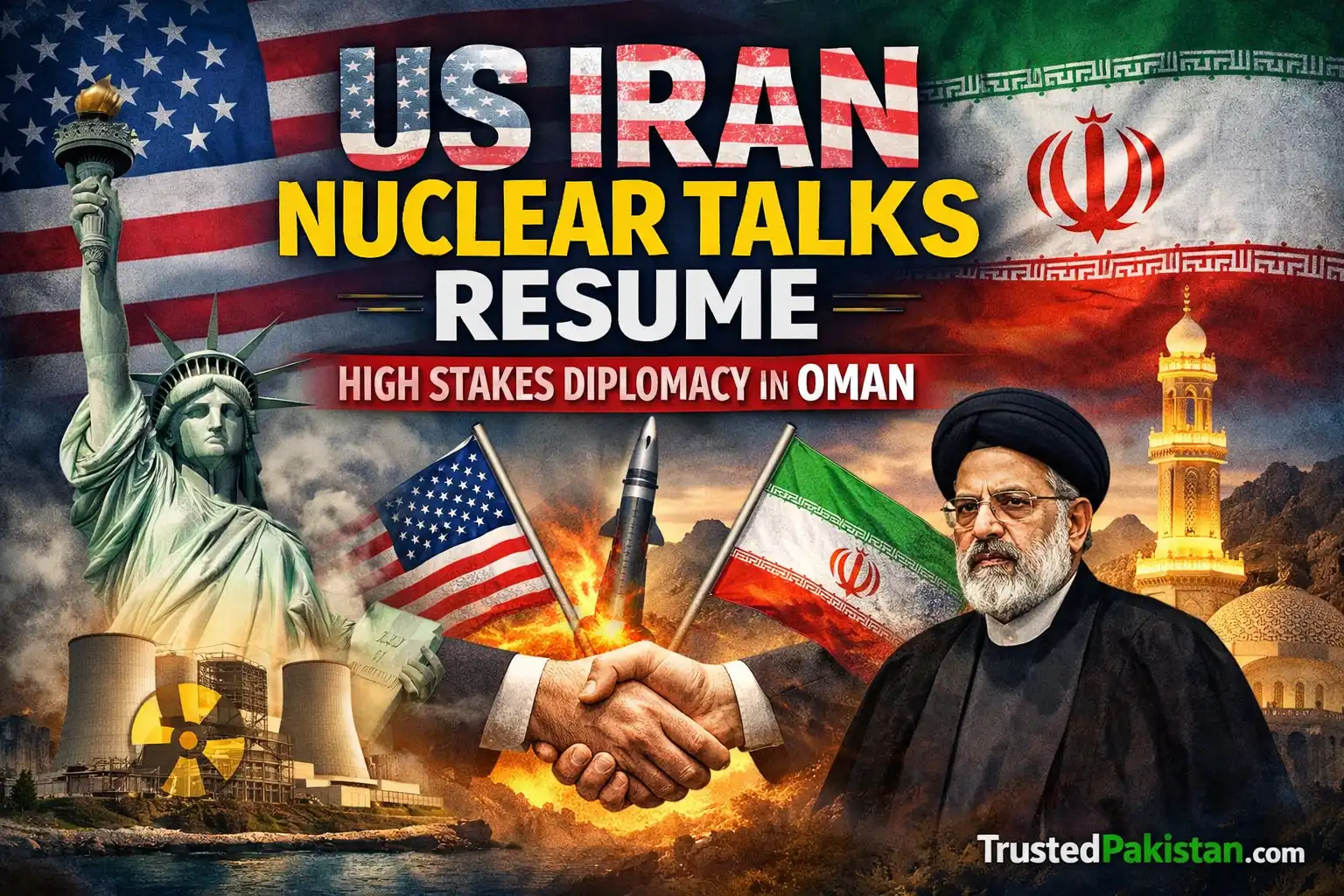
US Iran Nuclear Talks Resume With High Stakes Diplomacy in Oman
US Iran nuclear talks entered a critical new phase this week as senior officials from Washington and Tehran quietly convened in Oman, signaling renewed diplomatic momentum after years of stalled negotiations. The closed-door discussions, facilitated by regional mediators, aim to prevent further escalation over Iran’s nuclear program while reopening channels between two longtime adversaries.
The latest round of US Iran nuclear talks comes at a moment of heightened regional tension, economic pressure on Iran, and growing concern among Western allies about nuclear proliferation in the Middle East. While officials from both sides remain cautious in public statements, diplomatic sources describe the Oman talks as “serious, structured, and consequential.”
Background of US Iran Nuclear Talks
The US Iran nuclear talks trace their roots to the 2015 Joint Comprehensive Plan of Action (JCPOA), an agreement designed to limit Iran’s nuclear activities in exchange for sanctions relief. The deal collapsed in 2018 after the United States withdrew unilaterally, reimposing sweeping economic sanctions on Tehran.
Since then, Iran has expanded uranium enrichment well beyond JCPOA limits, prompting alarm in Washington, Tel Aviv, and European capitals. Multiple efforts to revive the agreement failed between 2021 and 2024, largely due to disputes over sanctions, verification mechanisms, and regional security issues.
The Oman negotiations mark the first sustained diplomatic engagement between the two sides in months, raising cautious optimism among analysts.
Why Oman Is Hosting US Iran Nuclear Talks
Oman has long played a discreet but influential role in Middle East diplomacy. Its neutral foreign policy and trusted relations with both Washington and Tehran make it a preferred venue for sensitive discussions.
Diplomats familiar with the US Iran nuclear talks say Muscat provided secure channels for indirect communication, allowing both sides to test proposals without political pressure at home. Oman previously facilitated secret talks that led to the original JCPOA framework.
Key Issues on the Negotiation Table
1. Uranium Enrichment Limits
At the center of the US Iran nuclear talks is Iran’s enrichment of uranium to near weapons-grade levels. The United States is pressing for immediate caps and international monitoring, while Iran demands guarantees against future US withdrawal from any agreement.
2. Sanctions Relief
Iran insists that meaningful sanctions relief must precede any rollback of its nuclear activities. US negotiators, however, favor a phased approach tied to verifiable compliance.
3. Verification and Inspections
Another sticking point involves access for international inspectors. Washington seeks expanded inspection authority through the International Atomic Energy Agency (IAEA), while Tehran remains wary of intelligence misuse.



US Strategy in the Nuclear Talks
American officials describe the US Iran nuclear talks as pragmatic rather than idealistic. The Biden administration’s successor government has emphasized containment over confrontation, seeking to prevent Iran from crossing the nuclear threshold without igniting regional conflict.
According to US officials, the Oman talks focus on “risk reduction,” not a full revival of the JCPOA. This includes temporary freezes, confidence-building measures, and backchannel agreements designed to buy time.
Iran’s Position and Domestic Pressures
From Tehran’s perspective, the US Iran nuclear talks represent both opportunity and vulnerability. Iran’s economy remains under strain due to sanctions, inflation, and limited oil exports. At the same time, hardline factions within Iran oppose concessions to Washington.
Iranian negotiators reportedly want guarantees that any agreement will deliver tangible economic benefits. Without that assurance, domestic critics could derail the process.
Regional and Global Reactions
The renewed US Iran nuclear talks have triggered mixed reactions across the Middle East. Israel has expressed skepticism, warning that diplomacy must not allow Iran to advance its nuclear capabilities under cover of negotiations.
European governments, meanwhile, have welcomed the talks as a necessary step to avoid escalation. Russia and China are closely monitoring developments, viewing the outcome as a test of US diplomatic credibility.
What Failure or Success Would Mean
If the US Iran nuclear talks succeed, even partially, they could reduce the risk of military confrontation, stabilize oil markets, and open limited diplomatic channels between Tehran and the West.
Failure, however, could accelerate Iran’s nuclear advances and increase the likelihood of unilateral action by regional powers. Analysts warn that the margin for error is shrinking.
Strategic Implications for Pakistan and South Asia
For Pakistan and the broader region, developments in the US Iran nuclear talks carry indirect but significant consequences. Any escalation in the Gulf impacts energy prices, regional security alignments, and trade routes vital to South Asia.
What Comes Next After the Oman Talks
While no formal agreement has been announced, diplomats suggest further rounds of US Iran nuclear talks are likely in the coming weeks. Both sides appear committed—at least for now—to keeping dialogue alive.
Rather than grand declarations, the real measure of progress will be quiet technical steps: slowed enrichment, eased enforcement, and continued communication. In a region shaped by sudden crises, even incremental diplomacy could prove transformative.
