


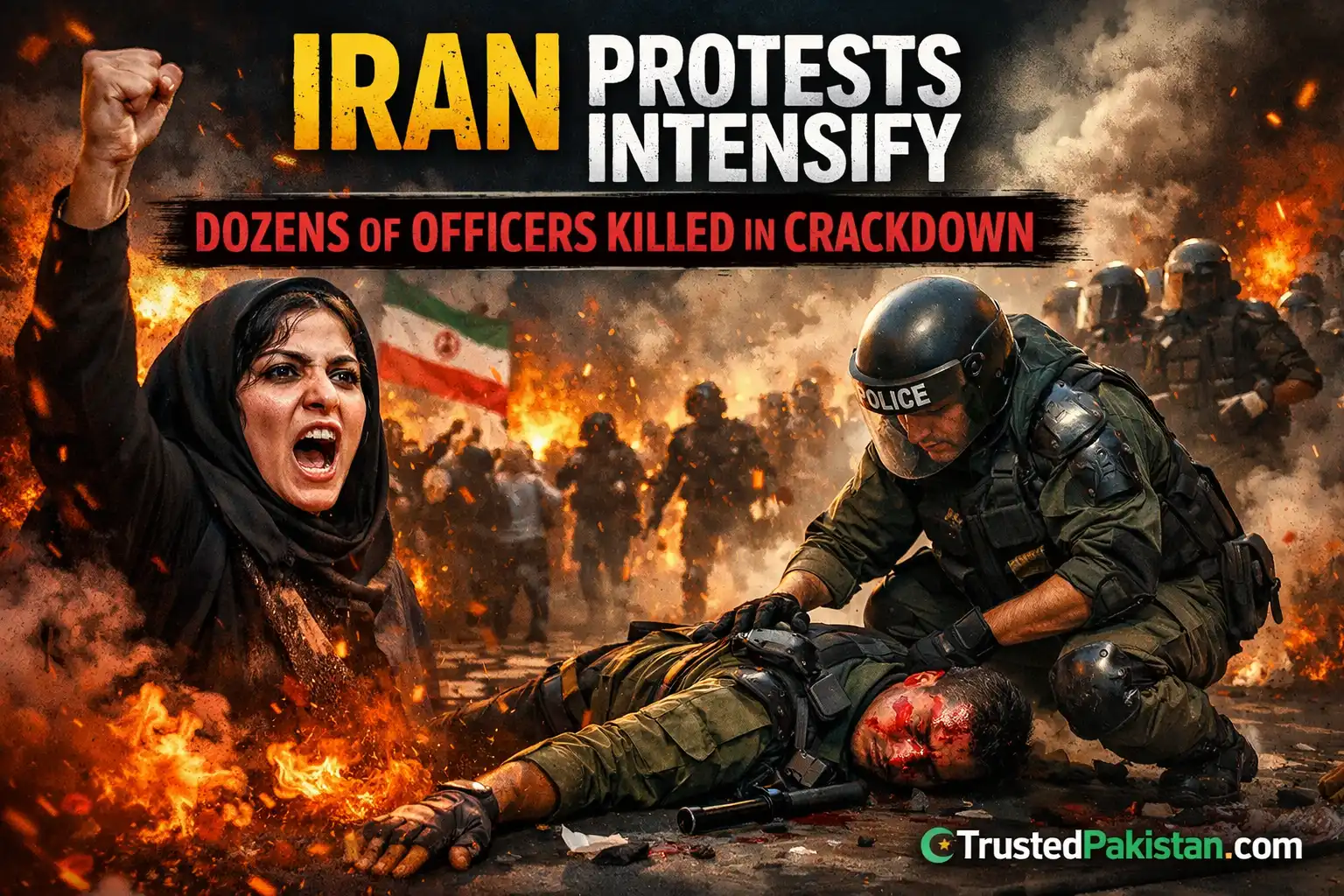
Iran Protests Intensify as Dozens of Officers Are Killed in Crackdown
Iran is facing a renewed wave of nationwide unrest as protests continue to spread despite an aggressive government crackdown. Iranian officials claim that dozens of security officers have been killed during violent clashes with demonstrators, signaling a sharp escalation in tensions. The protests, which began as public anger over worsening economic conditions, have now turned into a broader challenge to state authority across several provinces.
Economic Grievances Turn Into Political Anger
The demonstrations erupted in late December following sharp increases in food prices, fuel costs, and basic living expenses. Years of inflation, unemployment, and a rapidly weakening national currency have pushed many Iranians to the brink. What initially appeared to be economic protests soon transformed into political dissent, with crowds chanting slogans against senior leadership and calling for systemic change.
Security Forces Report Heavy Losses
According to Iranian state media, more than a hundred members of security forces, including police officers and paramilitary personnel, have been killed since the unrest began. Authorities say many officers died while protecting public buildings, police stations, and government infrastructure from attacks. Officials insist the crackdown is necessary to restore law and order and prevent what they describe as organized chaos.
Violence and Arson Mark Escalation
In several cities, protests have gone beyond street demonstrations and turned violent. Reports indicate that government buildings and police vehicles have been targeted during clashes. A similar pattern of unrest was earlier reported in central Iran, where protests led to police vehicles being set on fire and a governor’s office coming under attack, an incident previously covered by TrustedPakistan.com highlighting the growing intensity of the crisis.
Harsh Legal Warnings From Authorities
Iranian officials have adopted increasingly tough rhetoric against protesters. Senior legal figures have warned that individuals involved in violent acts or organizing demonstrations could face the most severe charges under Iranian law. The possibility of labeling protesters as enemies of the state has alarmed human rights groups, who fear that such legal measures are being used to intimidate and silence dissent rather than address public concerns.


Internet Shutdown Deepens Information Blackout
One of the most controversial steps taken by the government has been the widespread shutdown of internet and mobile data services. Authorities argue that communication restrictions are essential to stop coordination among protesters and prevent the spread of what they call misinformation. Critics, however, say the blackout has isolated citizens, disrupted businesses, and made it nearly impossible to verify casualty figures or document events on the ground.
Rising Civilian Casualties and Mass Arrests
While official statements focus on losses among security forces, rights groups and independent observers suggest that civilian casualties may be far higher. Reports point to dozens of deaths, thousands of injuries, and mass arrests across multiple provinces. Families of detained protesters have complained of a lack of information, adding to public anxiety and anger.
International Reaction and Diplomatic Pressure
The unfolding crisis has drawn international attention. Western governments and global human rights organizations have urged Iranian authorities to show restraint and respect the right to peaceful protest. Tehran has rejected these calls, accusing foreign powers of meddling in its internal affairs. As highlighted by Al Jazeera, the standoff continues to deepen as both sides remain entrenched.
Deep-Rooted Causes Behind the Protests
Analysts believe the unrest reflects long-standing structural issues rather than a temporary outburst. Years of economic pressure, political restrictions, and limited social freedoms have created widespread frustration, particularly among young people. Even if the current protests are suppressed, experts warn that unresolved grievances could resurface in the future.
Uncertain Path Ahead for Iran
As protests persist despite arrests, internet shutdowns, and security deployments, Iran stands at a critical crossroads. The government’s reliance on force may restore temporary calm, but it risks deepening public resentment. Whether authorities choose dialogue, reform, or continued repression will shape Iran’s political landscape in the months ahead.
