


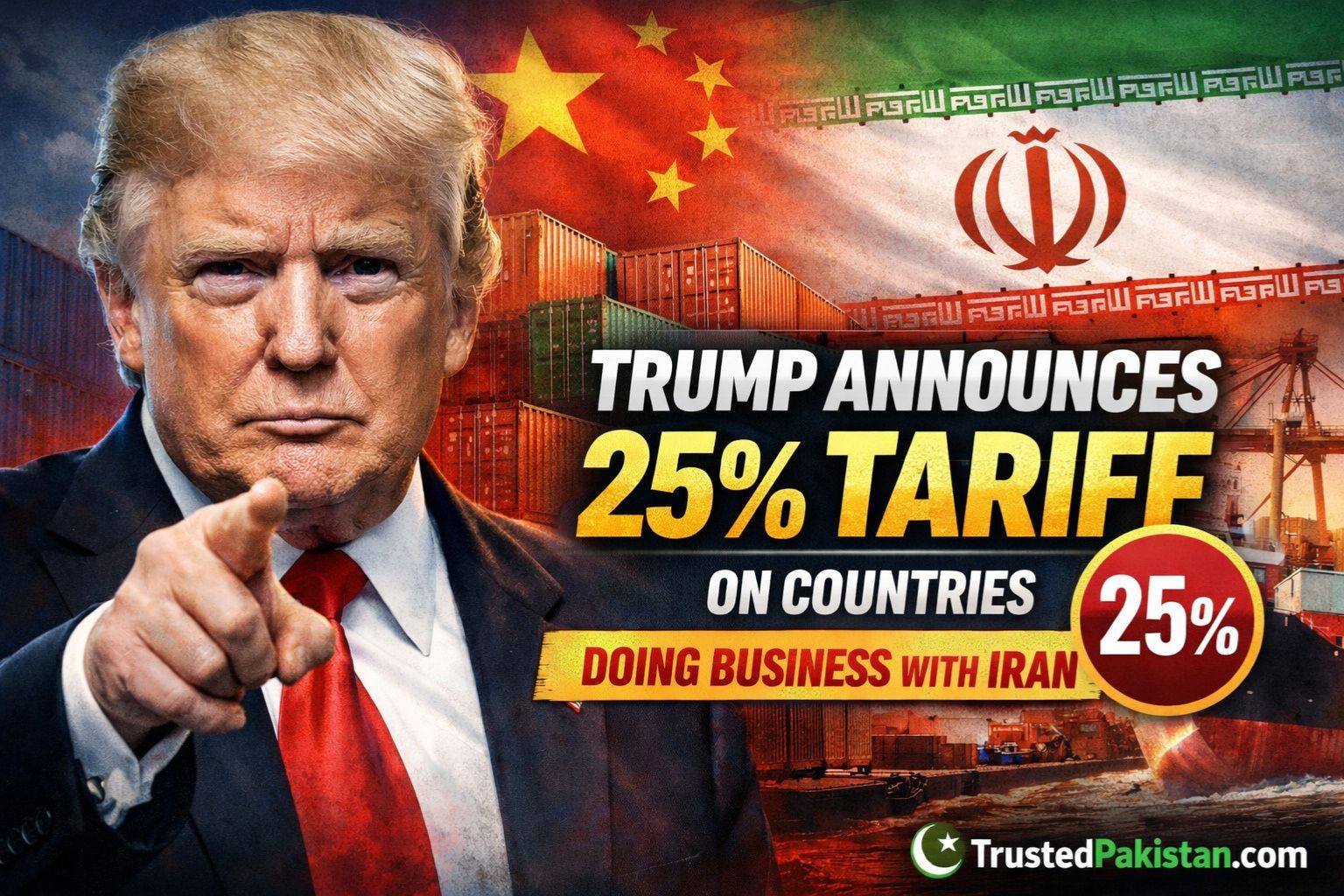
Trump Announces 25% Tariff on Countries Doing Business With Iran
Trump 25% Iran Tariff — President Donald Trump confirmed that any country engaging in business with the Islamic Republic of Iran will now face a 25% tariff on its trade with the United States, a decision announced publicly ahead of formal documentation. This policy has emerged as a direct response to the Iranian government’s violent crackdown on nationwide protests and is intended to increase economic pressure on Tehran’s international partners while isolating the regime diplomatically and financially.
What Is the Trump 25% Iran Tariff Policy
In a post on his social media platform, Trump declared that “effective immediately, any country doing business with the Islamic Republic of Iran will pay a 25% tariff on any and all business with the United States of America.” The tariff requirement is intended to dissuade key trade partners from engaging with Tehran economically, effectively forcing nations to choose between lucrative trade with the U.S. or maintaining economic ties with Iran.
There has been no official executive order published at this time, and the White House has not clarified the legal authorities used to impose the tariff. Observers note that the lack of formal documentation could pose legal challenges and confusion in implementation.
Why This Policy Matters Globally
Connection to Iranian Protest Crackdown
The decision to impose these tariffs comes amid the most significant wave of anti‑government protests in Iran in decades, where human rights organizations have reported hundreds of deaths and mass arrests. These demonstrations began as economic protests and escalated into broad demands for political reform and accountability within the clerical regime.
The Trump administration has cited these human rights abuses as justification for the tariff move, positioning the measure as both an economic and moral stance — meant to punish Tehran and discourage further repression.
Countries Likely Affected by the Trump 25% Iran Tariff
The Trump 25% Iran Tariff will likely impact a broad swath of global partners with ongoing economic ties to Iran. While the full list of affected countries remains unclear, major economies are already reacting:




- China: Iran’s single largest trading partner and importer of Iranian oil.
- India: Substantial bilateral trade with Tehran across commodities and manufactured goods.
- Turkey & United Arab Emirates: Regional partners with historic trade links to Iran.
- Russia & Brazil: Notable trade relations, particularly in energy and agriculture.
Experts warn that these countries will face difficult choices — continue trading with Iran and pay higher tariffs for access to the U.S. market, or pivot away from Tehran to protect bilateral commerce with Washington.
Economic and Diplomatic Impacts of Trump 25% Iran Tariff
Potential for Trade Wars
Imposing a Trump 25% Iran Tariff risks igniting broader trade disputes with allies and partners who are already battling inflation and supply chain pressures. China has historically reacted strongly to unilateral U.S. tariffs, and other nations may pursue reciprocal tariffs that could hurt U.S. exporters. This could further disrupt global trade flows and slow economic growth in already fragile markets.
Effects on U.S. Consumers and Industries
Higher tariffs often lead to higher prices for imported goods, especially if countries decide to pass tariff costs to American importers and consumers. U.S. businesses that rely on global supply chains could face increased input costs, which could ultimately affect prices for everyday products.
Reactions From Around the World
International Responses
World leaders have reacted with caution and concern:
- China: Criticized the move and warned against unilateral economic measures.
- EU and other allies: Urged diplomatic solutions and adherence to international trade norms.
- Iran: Maintained that it is open to dialogue but criticized the tariffs as aggressive economic coercion.
Legal and Political Considerations
The absence of formal published legal authority has raised questions. Analysts suggest that Trump may be relying on past emergency economic powers or trade laws, but without clear documentation, enforcement could be inconsistent and subject to challenge in U.S. courts.
What Comes Next?
Trade experts predict prolonged negotiations and strategic recalibration by the affected countries. There remains the possibility of exemptions or waivers for energy and humanitarian trade, but these have not yet been articulated by the U.S. administration.
The Trump 25% Iran Tariff in Perspective
The Trump 25% Iran Tariff represents a significant escalation in U.S. economic strategy designed to isolate Iran amid severe domestic unrest. While intended to pressure Tehran’s regime, the move also carries the risk of global economic disruption, strained diplomatic ties, and potential legal challenges. Only time will tell how governments around the world respond to this bold new trade policy.
