


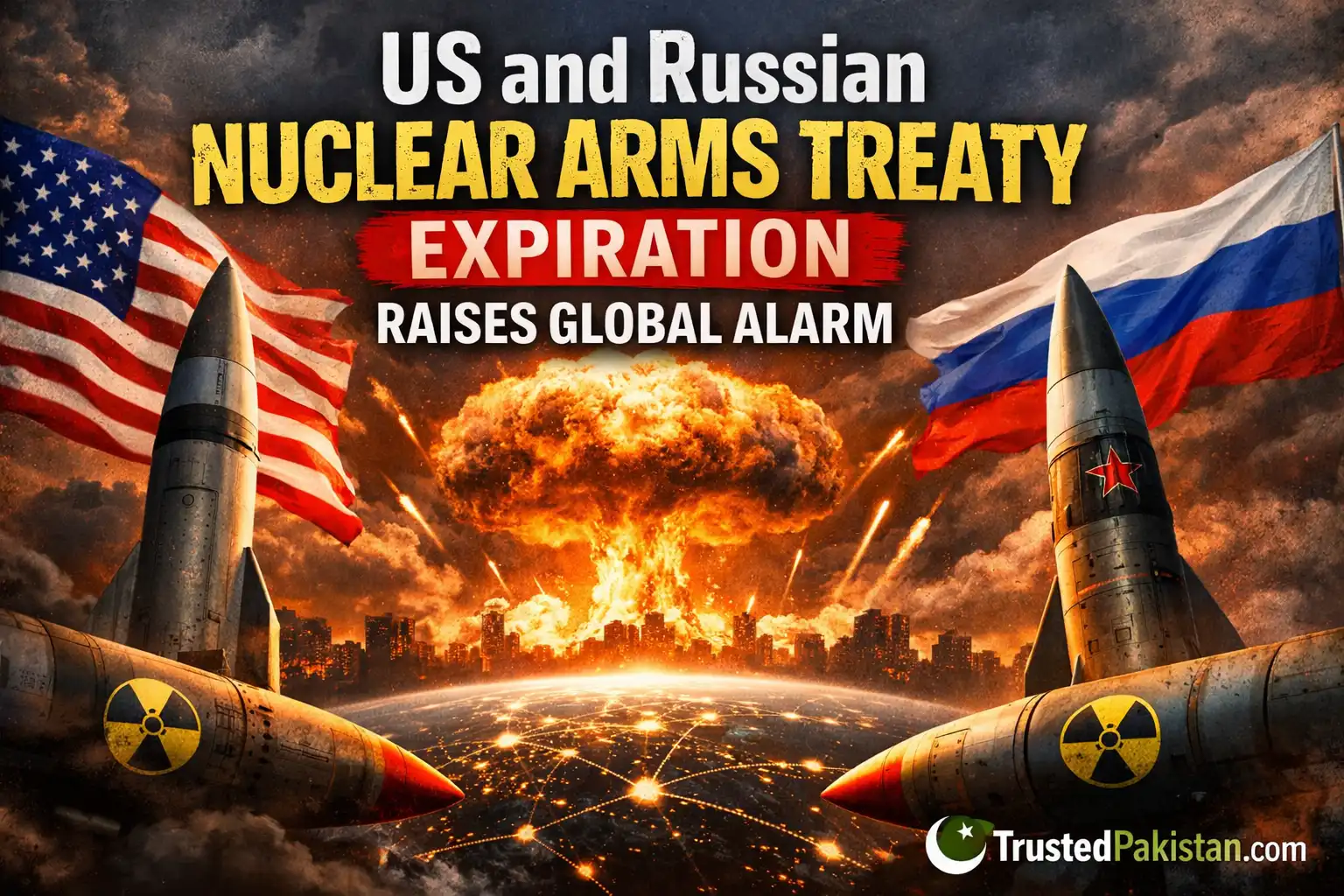
US and Russian Nuclear Arms Treaty Expiration Raises Global Alarm
US and Russian nuclear arms treaty expiration has become a major global security issue, signaling a dangerous shift in international arms control. For decades, nuclear treaties between Washington and Moscow acted as guardrails, preventing unchecked nuclear weapons expansion. With the expiration of the last major agreement, experts warn the world may be entering a new and unpredictable nuclear era.
What Was the US and Russian Nuclear Arms Treaty?
The treaty commonly known as New START (Strategic Arms Reduction Treaty) was signed in 2010 between the United States and Russia. It limited the number of deployed strategic nuclear warheads to 1,550 each and placed caps on missiles and bombers.
The US and Russian nuclear arms treaty expiration formally occurred after years of political tensions, sanctions, and suspended inspections. New START was the final remaining treaty restraining the world’s two largest nuclear arsenals.
Why Did the US and Russian Nuclear Arms Treaty Expire?
Several key factors contributed to the US and Russian nuclear arms treaty expiration:
- Deteriorating diplomatic relations
- Russia’s suspension of treaty inspections
- Disagreements over compliance and verification
- Escalating geopolitical conflicts
Over time, trust eroded to the point where renewal negotiations stalled completely.
What Happens After the US and Russian Nuclear Arms Treaty Expiration?
Without the treaty, both nations are no longer legally bound to limit their nuclear arsenals. This means:
- No inspections of nuclear facilities
- No data exchanges on warhead counts
- No restrictions on new nuclear weapons
The U.S. and Russian nuclear arms treaty expiration removes transparency, increasing the risk of miscalculation and misunderstanding.
Global Security Risks After Treaty Expiration
The end of the treaty does not only affect the U.S. and Russia. The consequences are global:
- Increased risk of nuclear arms race
- Reduced diplomatic communication
- Pressure on other nuclear states to expand arsenals
- Weakening of international non-proliferation efforts
Security analysts warn that the US and Russian nuclear arms treaty expiration could destabilize global peace for decades.



How Does This Impact NATO and Europe?
Europe is particularly vulnerable. With fewer arms control measures, NATO countries fear deployment of new intermediate-range missiles near their borders. The US and Russian nuclear arms treaty expiration revives Cold War-style fears, especially in Eastern Europe.
Official International Response
According to the U.S. Department of State, arms control remains vital despite the expiration. The official stance emphasizes risk reduction and future dialogue.
Is a New Nuclear Arms Treaty Possible?
While difficult, diplomacy is not impossible. Experts believe future agreements could include:
- Modern verification technologies
- Inclusion of other nuclear powers
- Risk-reduction frameworks instead of strict limits
However, rebuilding trust after the U.S. and Russian nuclear arms treaty expiration will take time and political will.
Public Awareness and Media Role
The media plays a crucial role in explaining the dangers of nuclear escalation. Misunderstanding or ignoring the U.S. and Russian nuclear arms treaty expiration could allow silent militarization without public scrutiny.
This article explains how nuclear tensions affect global and regional stability, including South Asia.
Why the World Cannot Ignore This Moment
Instead of a traditional conclusion, it is important to recognize that the U.S. and Russian nuclear arms treaty expiration marks a turning point. The absence of limits does not automatically mean war, but it increases uncertainty, suspicion, and danger.
The future now depends on whether global leaders choose diplomacy over escalation, transparency over secrecy, and cooperation over confrontation. The decisions made after this treaty’s expiration may define international security for generations to come.
US and Russian nuclear arms treaty expiration
Another critical aspect of the U.S. and Russian nuclear arms treaty expiration is its psychological impact on international diplomacy. When formal limits disappear, uncertainty grows not only among governments but also within global markets, defense institutions, and civilian populations. Countries that rely on strategic stability now face unclear signals about future nuclear deployments, military budgets, and deterrence strategies. This uncertainty can quietly push nations toward defensive militarization, making global security more fragile even without a single missile being launched.
