


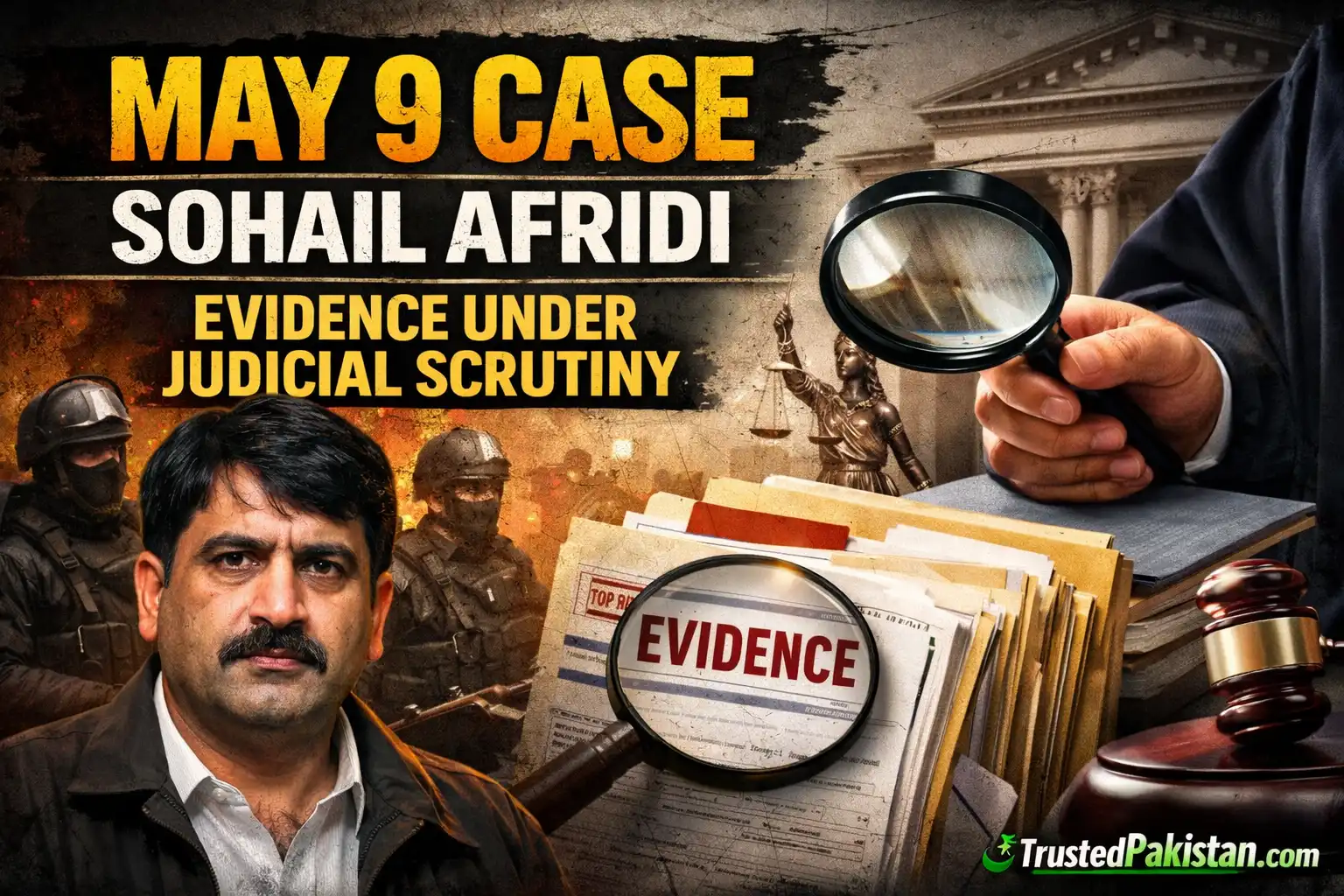
May 9 Case Sohail Afridi Evidence Under Judicial Scrutiny
May 9 Case Sohail Afridi Evidence has emerged as a central point of legal debate as Pakistan’s judiciary intensifies scrutiny over the credibility, authenticity, and procedural handling of key testimonies linked to the violent events of May 9. During recent proceedings, the court raised serious questions regarding the evidence presented by Sohail Afridi and ordered authorities to submit a comprehensive report by February 14, signaling a potentially decisive turn in the case.
The May 9 incidents shook Pakistan’s political and legal landscape, triggering widespread arrests, investigations, and trials. As the legal process unfolds, the spotlight has now shifted toward the quality of evidence, not merely its existence.
Background of the May 9 Case and Legal Context
The May 9 case stems from nationwide unrest following the arrest of a major political figure, leading to attacks on public and military installations. Multiple suspects were detained, and several witnesses, including Sohail Afridi, were presented to establish timelines and responsibility.
However, courts have consistently emphasized that legal outcomes must rest on verified, lawful, and transparent evidence, not assumptions or pressure-driven statements. The current focus on May 9 Case Sohail Afridi Evidence reflects this judicial philosophy.
Court Raises Critical Questions on Sohail Afridi Evidence
During the hearing, the court openly questioned:
- How was Sohail Afridi’s statement recorded?
- Were legal safeguards followed?
- Was any coercion involved?
- Does the evidence align with independent facts?
Judges noted that inconsistencies within the testimony could weaken the prosecution’s position if not clarified. This judicial skepticism underscores the importance of procedural fairness in high-profile political cases.
February 14 Deadline | Why It Matters
The court’s directive to submit a detailed investigative report by February 14 is not a routine order. It reflects growing concern that unresolved gaps in May 9 Case Sohail Afridi Evidence could compromise justice.
The report is expected to include:
- Documentation of evidence collection
- Verification methods
- Chain of custody
- Legal authorization records
Failure to satisfy these requirements may result in evidence being ruled inadmissible.
Legal Standards for Evidence in Sensitive National Cases
Under Pakistani law, especially in cases involving national security and public unrest, evidence must meet strict criteria:



Key Legal Benchmarks
- Voluntary testimony
- Independent corroboration
- Proper documentation
- Constitutional compliance
Legal experts argue that May 9 Case Sohail Afridi Evidence will be judged against these benchmarks, not political narratives.
Political Implications of Weak Evidence
If the court finds flaws in the evidence, the consequences may extend beyond this single case. It could:
- Set precedents for other May 9-related trials
- Strengthen demands for judicial transparency
- Impact public trust in investigative institutions
This is why analysts see the February 14 report as a turning point.
Human Rights and Due Process Concerns
Several rights groups have emphasized that due process must be upheld regardless of public pressure. Questionable evidence can lead to:
- Wrongful convictions
- Legal reversals
- International criticism
The court’s insistence on reviewing May 9 Case Sohail Afridi Evidence aligns with constitutional guarantees under Articles 10-A and 4.
Media Responsibility and Public Perception
Courts have also cautioned against trial by media stressing that selective leaks or unverified claims regarding May 9 Case Sohail Afridi Evidence could distort public understanding.
Responsible journalism requires:
- Verified sources
- Balanced reporting
- Legal context
This approach protects both justice and democratic stability.
What Happens Next in the May 9 Case?
Instead of a traditional conclusion, the situation now moves toward a decisive phase. Once the February 14 report is submitted:
- The court may accept or reject the evidence
- Further investigations could be ordered
- Charges may be upheld, amended, or dismissed
Ultimately, May 9 Case Sohail Afridi Evidence will either reinforce the prosecution’s case or expose structural weaknesses in the investigation.
The outcome will not only affect individual defendants but also shape how Pakistan handles politically sensitive trials in the future.
