


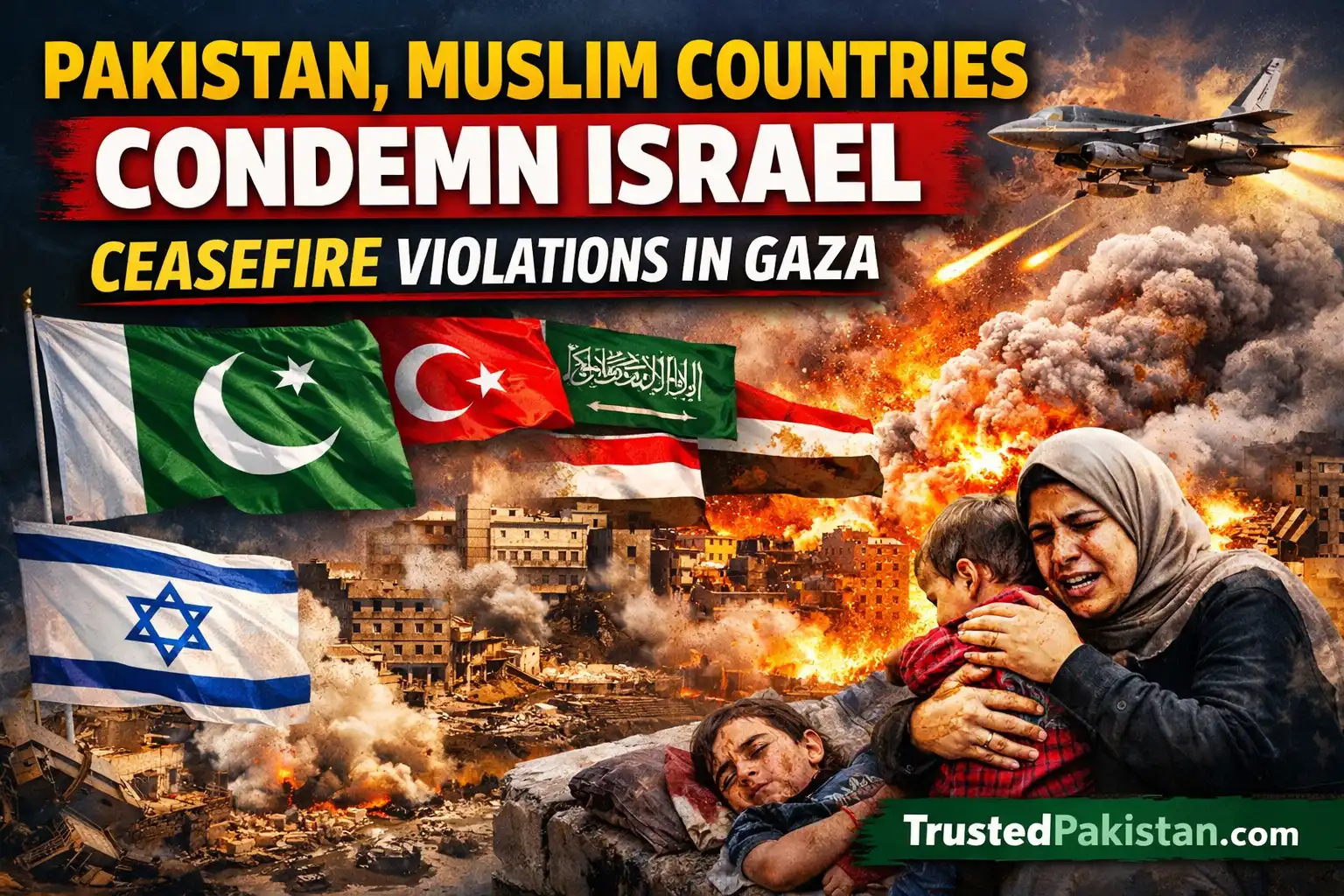
Pakistan Muslim Countries Condemn Israel Ceasefire Violations in Gaza
Pakistan Muslim countries condemn Israel ceasefire violations in Gaza as fresh attacks continue despite internationally brokered ceasefire agreements. The situation in Gaza has once again drawn strong reactions from Muslim nations, global organizations, and human rights bodies, highlighting the growing concern over civilian casualties and humanitarian suffering.
According to official statements, Pakistan joined several Muslim countries in strongly condemning Israel’s repeated violations of the ceasefire, calling them a serious threat to regional stability and international peace. These developments come amid ongoing diplomatic efforts to halt violence and ensure the protection of innocent civilians in Gaza.
Pakistan Muslim Countries Condemn Israel Ceasefire Violations in Gaza: Official Stance
Pakistan’s Foreign Office has reaffirmed its firm position that Israel’s ceasefire violations in Gaza undermine international law and violate United Nations resolutions. Islamabad emphasized that targeting civilians, homes, hospitals, and humanitarian infrastructure is unacceptable under any circumstances.
Pakistan urged the international community to take concrete action rather than limiting responses to verbal condemnations. The government also reiterated its long-standing support for the Palestinian people’s right to self-determination and called for the immediate implementation of ceasefire agreements in both letter and spirit.
Collective Response from Muslim Countries on Gaza Crisis
Several Muslim countries echoed Pakistan’s stance, forming a unified voice against Israel’s actions. Members of the Organization of Islamic Cooperation (OIC) condemned the continued aggression and demanded accountability for violations committed during the ceasefire period.
Muslim nations highlighted that Israel’s repeated attacks during ceasefire windows reflect a pattern that erodes trust in diplomatic agreements. These countries called for an independent international investigation into alleged war crimes and urged global powers to ensure compliance with humanitarian law.
Humanitarian Impact of Israel Ceasefire Violations in Gaza
The humanitarian situation in Gaza has worsened significantly due to continued ceasefire violations. Hospitals are overwhelmed, essential supplies are running out, and thousands of families have been displaced.
Pakistan Muslim countries condemn Israel ceasefire violations in Gaza primarily because civilians—especially women and children—remain the most affected. Aid agencies report shortages of clean water, electricity, food, and medical equipment, making daily survival increasingly difficult.
Despite ceasefire announcements, airstrikes and ground operations have reportedly continued, limiting humanitarian access and endangering relief workers.
Pakistan’s Diplomatic Efforts at the United Nations
Pakistan has actively raised the issue at international forums, including the United Nations General Assembly and the UN Security Council. Pakistani diplomats stressed that ceasefire violations not only threaten Gaza but also destabilize the entire Middle East region.
Islamabad urged permanent members of the Security Council to move beyond political considerations and uphold international law. Pakistan Muslim countries condemn Israel ceasefire violations in Gaza while demanding enforcement mechanisms to prevent repeated breaches.




Global Reaction to Israel Ceasefire Violations
Beyond Muslim countries, several international organizations and human rights groups have also expressed concern. Amnesty International and Human Rights Watch have called for independent monitoring of ceasefire agreements to prevent further violations.
Public protests in Europe, Asia, and North America demonstrate growing global frustration over continued violence in Gaza. Civil society groups argue that silence or inaction by powerful nations encourages further ceasefire breaches.
Role of International Law in Gaza Ceasefire Enforcement
International humanitarian law clearly prohibits attacks on civilians and civilian infrastructure. Pakistan Muslim countries condemn Israel ceasefire violations in Gaza because such actions violate the Geneva Conventions and UN Charter principles.
Legal experts argue that repeated ceasefire violations weaken the credibility of international mediation efforts. Without accountability, ceasefires risk becoming symbolic rather than effective tools for peace.
Media Coverage and Narrative Challenges
Media coverage of Gaza remains polarized, with conflicting narratives emerging across global platforms. Pakistan and other Muslim countries have urged international media to present unbiased reporting and highlight humanitarian realities on the ground.
Accurate reporting is essential to ensure global awareness of ceasefire violations and their impact on civilians. Pakistan Muslim countries condemn Israel ceasefire violations in Gaza while emphasizing the need for responsible journalism.
Regional Stability and the Risk of Escalation
Repeated ceasefire violations increase the risk of broader regional conflict. Analysts warn that continued aggression in Gaza could ignite tensions across neighboring regions, drawing in multiple actors and worsening instability.
Pakistan has stressed that sustainable peace requires addressing the root causes of the conflict, including occupation, blockade, and denial of basic rights to Palestinians.
Why This Issue Matters to Pakistan and the Muslim World
For Pakistan, the Gaza crisis is not just a regional issue but a moral and humanitarian concern. Pakistan Muslim countries condemn Israel ceasefire violations in Gaza because silence would undermine principles of justice, human dignity, and international solidarity.
The Muslim world views Gaza as a test case for the effectiveness of global institutions and international law. Failure to enforce ceasefires sets a dangerous precedent for conflicts worldwide.
Continued Calls for Immediate Action
Instead of a traditional conclusion, Pakistan and Muslim countries continue to push for immediate ceasefire enforcement, humanitarian access, and long-term political solutions. Diplomatic engagement, economic pressure, and international monitoring are seen as essential tools to prevent further violations.
The international community now faces a critical choice: uphold international law or allow repeated ceasefire violations to become the norm. The voices of Pakistan and Muslim countries reflect a growing demand for accountability, justice, and lasting peace in Gaza.
