


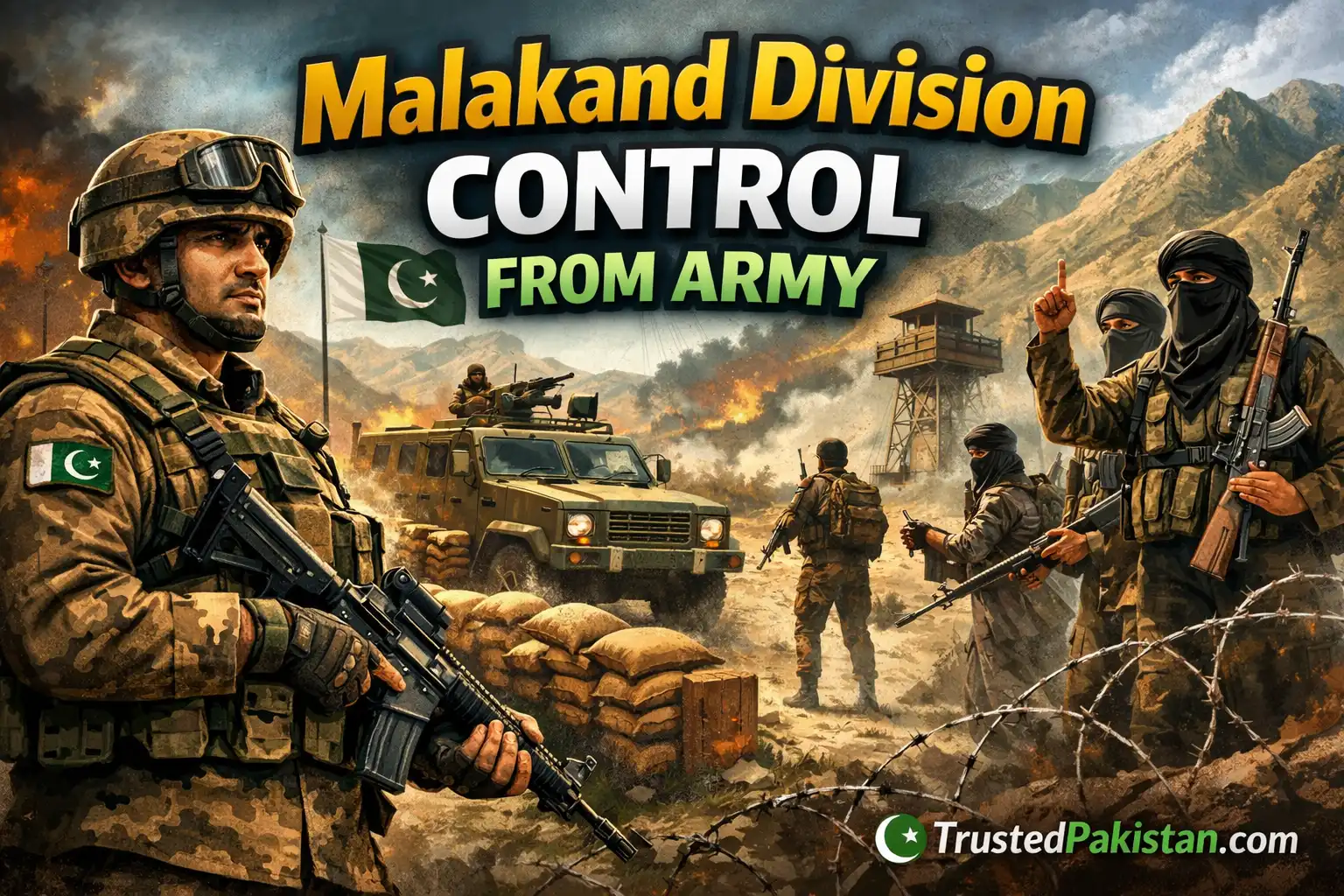
Malakand Division Control from Army
Malakand Division Control from Army has become one of the most discussed political and security developments in Khyber Pakhtunkhwa. The KP government’s decision to take back Malakand Division control from Army authorities marks a significant shift in governance, security policy, and provincial autonomy.
This decision is not sudden. It reflects changing ground realities, improved security conditions, political strategy, and constitutional considerations. Below is a comprehensive analysis explaining why the KP government made this bold move and what it means for the region.
Background of Malakand Division
Malakand Division is one of the most important administrative divisions of Khyber Pakhtunkhwa. It includes districts such as:
- Swat
- Dir Upper
- Dir Lower
- Buner
- Shangla
- Chitral
The region gained international attention during the militancy wave between 2007 and 2010. Due to severe security threats, the military launched operations to restore peace.
Why Malakand Division Control from Army Was Given Initially
The Malakand Division Control from Army arrangement began during counter-terrorism operations. At that time:
- Militancy had severely affected governance.
- Civil administration struggled to maintain law and order.
- The provincial government required military assistance.
Special security regulations and emergency measures were implemented. Military presence ensured stabilization and counter-terrorism success.
The province has gradually strengthened its civil policing and administrative institutions over the years.
7 Powerful Reasons Behind Malakand Division Control from Army Decision
Improved Security Situation
One of the primary reasons behind Malakand Division Control from Army transition is improved security. Major militant networks were dismantled, and law enforcement agencies regained operational capacity.
Strengthening Civil Administration
The KP government aimed to restore full administrative authority under civilian institutions. Civil governance is considered essential for democratic continuity.
Constitutional and Legal Considerations
Under Pakistan’s constitution, provinces are responsible for maintaining law and order. Long-term military involvement in civil administration is usually temporary.
Political Stability Strategy
Political analysts believe the decision supports democratic normalization and strengthens provincial autonomy.
Public Pressure and Local Demand
Local stakeholders, including traders and civil society groups, demanded restoration of civilian governance mechanisms.
Economic Revival Plan
Tourism in Swat and surrounding districts has rebounded significantly. Investors prefer stable civil administrative frameworks rather than prolonged emergency-style arrangements.
Institutional Confidence in Police and CTD
The KP Police and Counter Terrorism Department (CTD) have improved their operational capacity. Modern training and intelligence systems reduced dependency on continuous military deployment.
Administrative Implications of Malakand Division Control from Army
The transfer of Malakand Division Control from Army does not mean complete military withdrawal. Instead:
- Civil administration leads governance.
- Police manage law and order.
- Military remains available for support if required.
This model reflects a “supportive security framework” rather than direct administrative control.


Security Situation After Malakand Division Control from Army Transfer
Security experts suggest that stability depends on coordination between:
- KP Police
- Civil administration
- Intelligence agencies
- Pakistan Army (support role)
The decision signals confidence but requires continued vigilance.
Public and Political Reactions
Reactions to Malakand Division Control from Army decision are mixed:
Supporters say it strengthens democracy.
Critics warn about potential security risks.
However, most agree that normalized governance is necessary for long-term peace.
Governance Transition Strategy
The KP government reportedly prepared a phased transition plan including:
- Strengthening district administration
- Expanding police deployment
- Enhancing judicial processes
- Promoting local development projects
This gradual approach reduces the risk of sudden instability.
Economic and Social Impact
Malakand Division’s economy heavily relies on:
- Tourism
- Agriculture
- Small-scale trade
Civilian control helps restore investor confidence and tourism growth. Swat Valley, once affected by militancy, is again attracting domestic visitors.
The decision may also improve development funding and international cooperation programs.
Broader Strategic Perspective
From a national security standpoint, Malakand Division Control from Army transition reflects Pakistan’s broader counter-terrorism policy:
- Clear
- Hold
- Build
- Transfer
This framework aims to restore civilian control once stability is achieved.
What Comes Next?
Instead of a traditional conclusion, it is important to look ahead at what the future may hold for Malakand Division:
- Continued monitoring of security indicators
- Strengthening of provincial institutions
- Transparent governance practices
- Collaboration between military and civil authorities
The long-term success of Malakand Division Control from Army depends on sustainable peace and institutional maturity.
Final Assessment
The decision regarding Malakand Division Control from Army is a significant administrative shift rather than a complete structural transformation. It symbolizes:
- Improved security confidence
- Democratic normalization
- Strengthened provincial autonomy
- Long-term governance reform
The coming months will determine how effectively the transition model functions. If successful, it may serve as a governance model for other post-conflict regions.
