


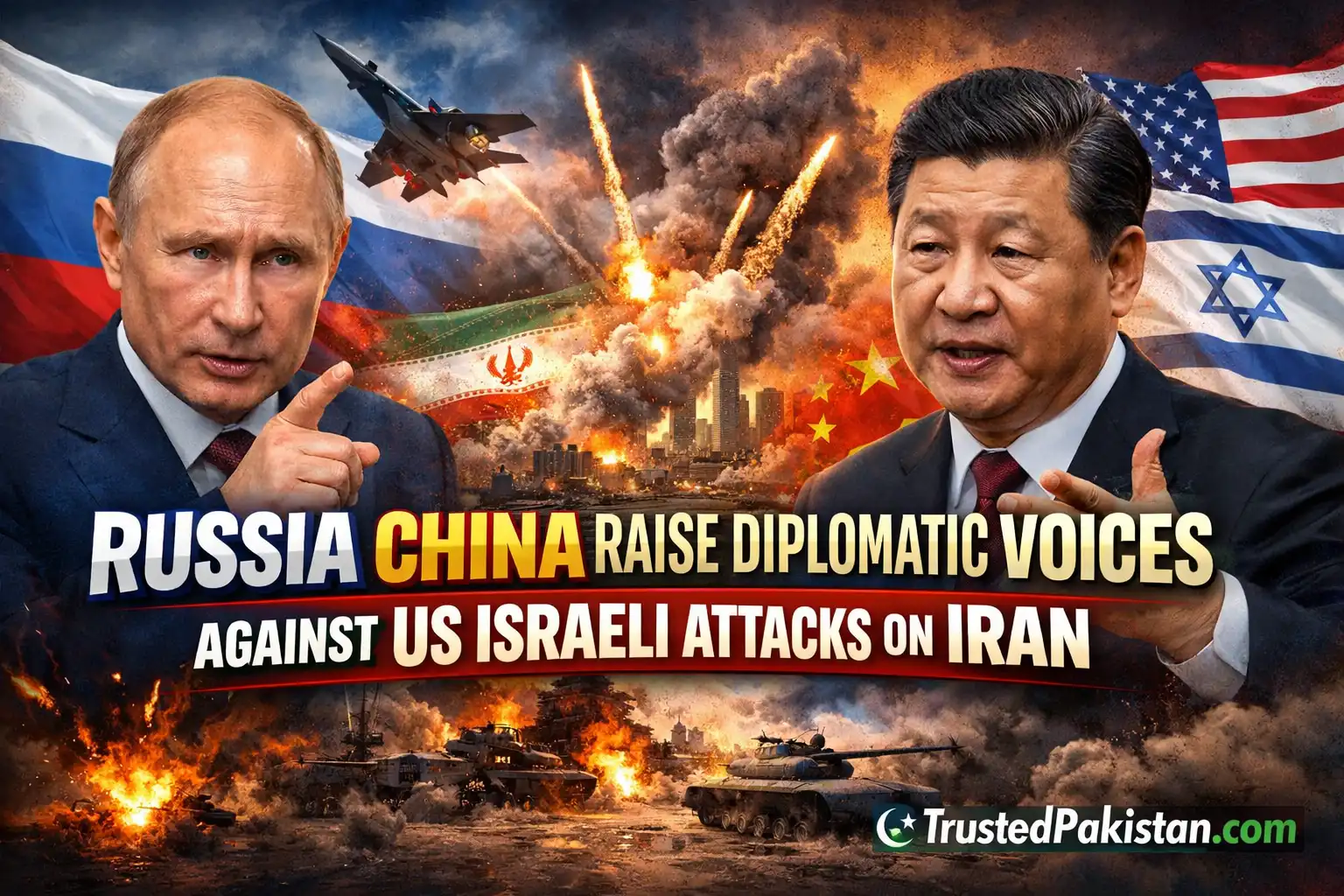
Russia China Raise Diplomatic Voices Against US Israeli Attacks on Iran
Russia, China raise diplomatic voices against US-Israeli attacks on Iran as international tensions rise in the Middle East. Both Moscow and Beijing have strongly criticized the recent military actions carried out by the United States and Israel, warning that such attacks could destabilize the region and provoke wider geopolitical conflict.
Diplomatic representatives from the two global powers have urged restraint and called for dialogue instead of military escalation. The statements highlight growing divisions among major world powers regarding how to address security concerns in the Middle East.
Russia and China believe that diplomatic negotiations and international cooperation remain the best solutions to avoid a larger crisis.
Russia’s Strong Diplomatic Reaction
Russia has been one of the most vocal critics after the attacks. Russian officials stated that the military strikes carried out by the United States and Israel against Iranian targets risk violating international law and undermining regional security.
The Russian Foreign Ministry emphasized that unilateral military actions could worsen an already fragile political situation in the Middle East. Russian diplomats also warned that escalating tensions with Iran could trigger broader instability affecting neighboring countries.
Moscow has repeatedly stressed that disputes involving Iran should be addressed through diplomatic negotiations rather than military force. Russian leadership believes dialogue within international frameworks is necessary to prevent conflict escalation.
According to international analysis from global security reports published by organizations such as the United Nations, diplomatic engagement remains the most effective way to reduce tensions in sensitive geopolitical regions.
China Calls for Immediate De-escalation
China has also responded firmly after Russia, China raise diplomatic voices against US-Israeli attacks on Iran. Chinese officials called for all parties to exercise restraint and avoid further military escalation.
Beijing expressed concern that continued attacks could disrupt economic stability and energy security across the Middle East. As one of the world’s largest energy importers, China has significant interests in maintaining stability in the region.
Chinese diplomats highlighted the importance of respecting sovereignty and territorial integrity under international law. Beijing also urged the international community to support peaceful solutions and avoid actions that could lead to a broader regional conflict.
China’s foreign policy traditionally emphasizes dialogue and multilateral cooperation when addressing international disputes. This stance has become increasingly visible as China plays a more active role in global diplomacy.
Global Reactions to the US-Israeli Attacks
The announcement that Russia, China raise diplomatic voices against US-Israeli attacks on Iran has sparked significant debate among international observers.
Several countries have expressed concern about the potential consequences of escalating military actions. Some governments support the security concerns of the United States and Israel, while others argue that military responses could worsen tensions rather than resolve them.
International analysts warn that continued hostilities could increase instability across the Middle East, potentially affecting global energy markets and international security alliances.



Diplomatic discussions within global institutions are expected to continue as world leaders seek to manage the growing crisis.
For related geopolitical analysis, readers can also explore our internal coverage on Middle East diplomacy and global security developments.
Strategic Interests Behind Russia and China’s Position
When Russia, China raise diplomatic voices against US-Israeli attacks on Iran, their responses are influenced by strategic political and economic interests.
Russia maintains strong diplomatic and military relations with several countries in the Middle East, including Iran. Moscow views stability in the region as critical for maintaining its geopolitical influence.
China’s position is also shaped by economic priorities. The Middle East remains a vital supplier of energy resources that support China’s growing economy. Any major conflict could disrupt oil supply routes and affect global markets.
Both countries therefore advocate diplomatic solutions that preserve stability and avoid unpredictable military escalation.
Their joint criticism of Western military action also reflects a broader effort to promote a multipolar international system where global decisions are not dominated by a single power bloc.
Impact on Middle East Stability
The situation continues to evolve as Russia, China raise diplomatic voices against US-Israeli attacks on Iran. Experts believe the developments could influence diplomatic negotiations, security alliances, and regional political dynamics.
The Middle East already faces numerous challenges including political conflicts, economic uncertainty, and security concerns. Additional military escalation could further complicate these issues.
International observers note that maintaining open diplomatic communication channels will be essential to prevent the crisis from expanding.
Countries across the region are closely monitoring the situation while global leaders discuss possible diplomatic paths forward.
Growing Global Debate Over Military Intervention
The diplomatic reactions following the attacks have intensified global debate over the role of military intervention in international politics.
As Russia, China raise diplomatic voices against US-Israeli attacks on Iran, discussions continue about whether military actions help resolve conflicts or risk deepening geopolitical divisions.
Many analysts argue that diplomacy, economic cooperation, and multilateral negotiations remain the most sustainable tools for maintaining international stability.
The situation demonstrates how modern geopolitical crises often involve complex interactions between military strategy, economic interests, and diplomatic influence. As global powers continue to respond, the coming months may determine whether dialogue or confrontation shapes the future of Middle East relations.
