


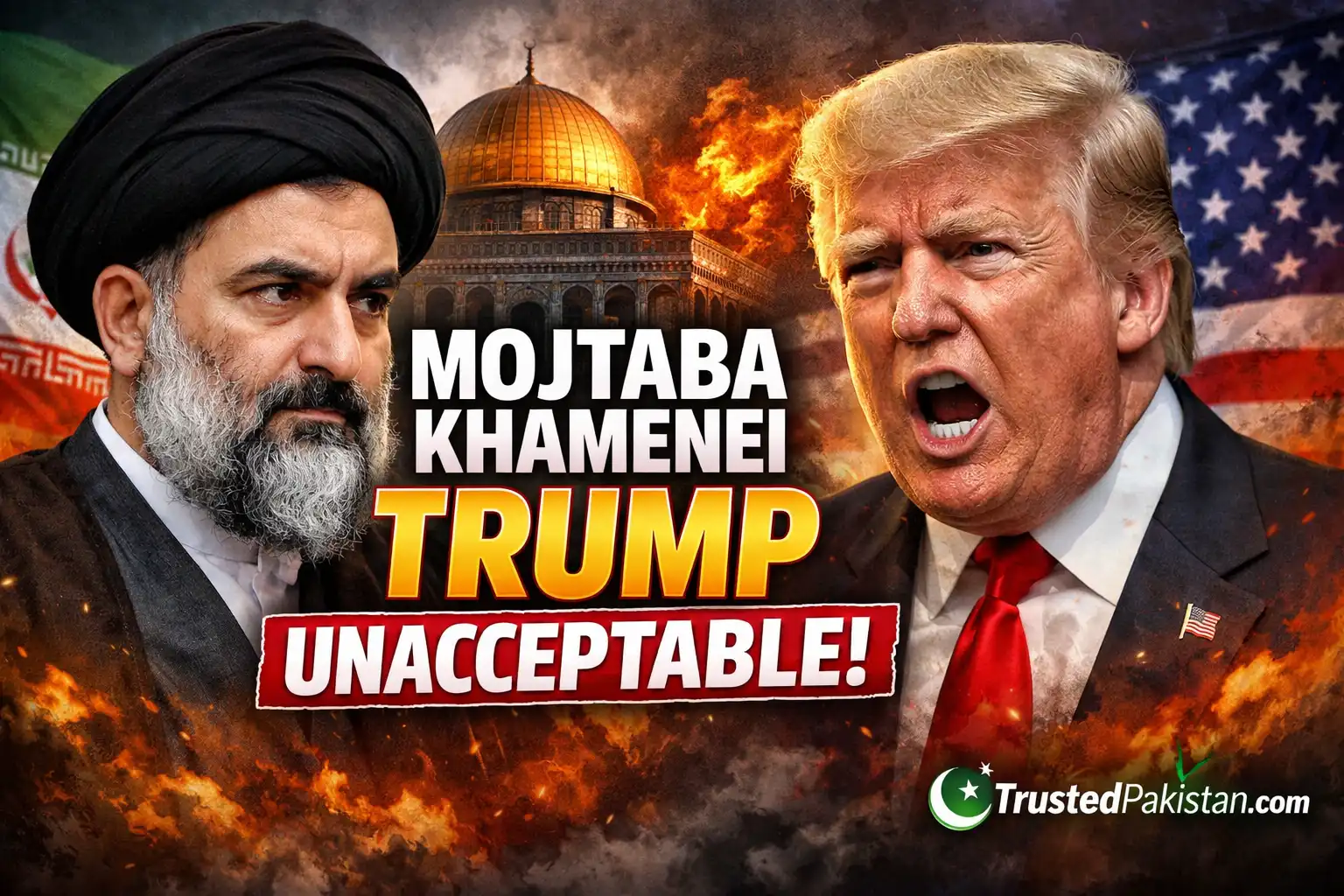
Mojtaba Khamenei Trump Unacceptable
Mojtaba Khamenei Trump unacceptable has become a significant phrase in discussions about Iran’s future leadership and its relationship with the United States. Mojtaba Khamenei, the son of Iran’s Supreme Leader Ayatollah Ali Khamenei, is increasingly viewed as a potential successor to the country’s highest political and religious authority.
During Donald Trump’s presidency, the relationship between the United States and Iran reached one of its most tense phases in decades. Within this context, analysts often described Mojtaba Khamenei as an “unacceptable” figure for Washington because of his perceived hardline political stance and strong ties to Iran’s security institutions.
The possibility that Mojtaba Khamenei could become Iran’s next Supreme Leader has therefore drawn attention from international observers, policymakers, and analysts who closely monitor the power structure in Tehran.
Who Is Mojtaba Khamenei
Mojtaba Khamenei is the second son of Iran’s Supreme Leader Ayatollah Ali Khamenei. Unlike many political figures, Mojtaba Khamenei has largely remained out of the public spotlight. However, he is believed to wield considerable influence behind the scenes within Iran’s political and religious networks.
Reports from political analysts suggest that Mojtaba Khamenei has strong connections with Iran’s Islamic Revolutionary Guard Corps (IRGC), one of the most powerful military and political institutions in the country. His close relationship with the IRGC has strengthened speculation about his growing role in shaping Iran’s internal political landscape.
Why Trump Considered Mojtaba Khamenei Unacceptable
The phrase Mojtaba Khamenei Trump unacceptable gained attention during the period of maximum pressure policies implemented by the Trump administration. Washington viewed Iran’s hardline political factions as obstacles to diplomatic engagement and regional stability.
Analysts argue that Mojtaba Khamenei represents a continuation of the ideological policies that have defined Iran’s leadership for decades. His perceived loyalty to conservative factions and security institutions has led many Western policymakers to believe that his leadership could reinforce Iran’s confrontational stance toward the United States.
For background information about Iran’s leadership structure, readers can consult the detailed overview provided by the Council on Foreign Relations.
Mojtaba Khamenei’s Political Influence in Iran
Although Mojtaba Khamenei does not hold a formal government position, many analysts believe that his influence is significant within Iran’s political system. His connections with religious scholars, conservative political groups, and security forces have strengthened speculation about his role in strategic decision-making.
Iran’s political structure allows influential figures to operate behind the scenes while still shaping policy outcomes. Mojtaba Khamenei is frequently mentioned in discussions about internal coordination between Iran’s clerical establishment and the IRGC.


Possible Succession to Iran’s Supreme Leadership
The debate over Iran’s next Supreme Leader has intensified in recent years due to Ayatollah Ali Khamenei’s age. The Supreme Leader holds ultimate authority over Iran’s military, judiciary, and major political institutions, making succession one of the most critical questions in Iranian politics.
Several candidates have been mentioned as possible successors, including senior clerics and influential political figures. Among them, Mojtaba Khamenei remains one of the most widely discussed names.
Supporters argue that Mojtaba Khamenei possesses the political connections and institutional support required for leadership. Critics, however, warn that a hereditary succession could generate controversy within Iran’s political and religious establishment.
Global Reactions to Mojtaba Khamenei’s Potential Rise
International reactions to the possibility of Mojtaba Khamenei becoming Supreme Leader have been mixed. Western analysts often view his potential leadership as a continuation of Iran’s current strategic direction.
Regional powers in the Middle East are also closely watching the situation, as Iran plays a significant role in regional politics and security dynamics.
The phrase Mojtaba Khamenei Trump unacceptable reflects broader geopolitical concerns about how Iran’s leadership might influence future relations with the United States and its allies.
Diplomatic observers believe that leadership changes in Iran could either create opportunities for new negotiations or deepen existing tensions depending on the policies adopted by the next Supreme Leader.
Future Impact on Iran-US Relations
The future of Iran-US relations remains uncertain. If Mojtaba Khamenei were to become Supreme Leader, analysts expect that relations with Washington could remain complicated due to longstanding political disagreements.
Iran’s strategic priorities, including regional influence and resistance to foreign pressure, are likely to remain central to its policies regardless of leadership changes. However, leadership style and political strategy could influence the tone of international diplomacy.
The Growing Debate Inside Iran
Inside Iran, discussions about future leadership are increasingly visible among political analysts, journalists, and scholars. Some view Mojtaba Khamenei as a stabilizing figure who understands the country’s political system from within.
As debates continue, Mojtaba Khamenei Trump unacceptable remains a phrase that symbolizes the intersection of domestic Iranian politics and global geopolitical rivalry. The evolving political landscape in Tehran will ultimately determine whether Mojtaba Khamenei emerges as the country’s next Supreme Leader and how that decision will reshape regional and international relations.
