


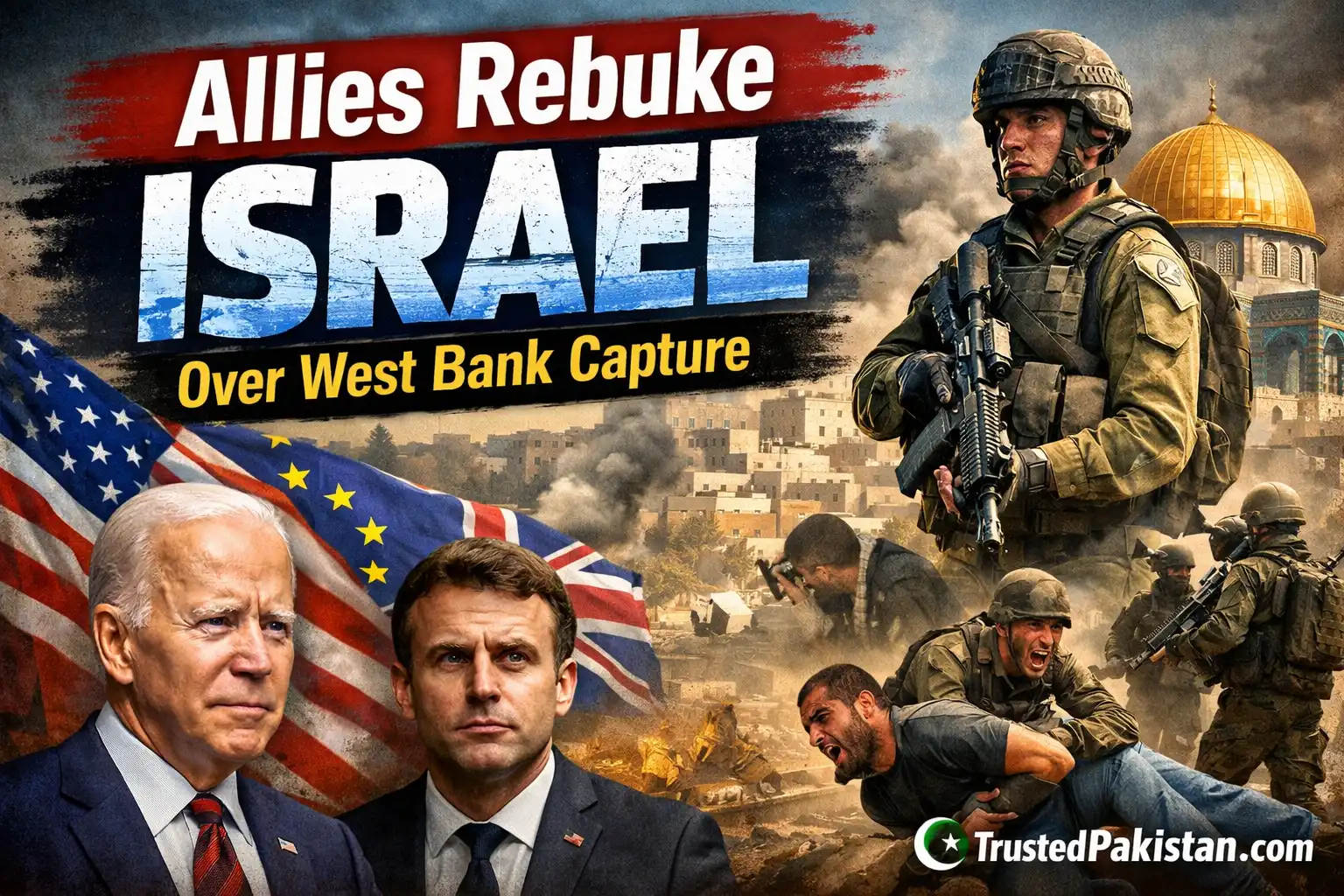
Allies Rebuke Israel Over West Bank Capture
Allies rebuke Israel over West Bank capture as global concern intensifies over Israel’s latest military actions in the occupied Palestinian territory. Several of Israel’s closest allies have publicly criticized the move, warning that expanding control in the West Bank risks destabilizing the region, violating international law, and undermining long-standing peace efforts.
The West Bank has remained a flashpoint for decades, but the latest developments have triggered unusually strong diplomatic responses. Governments that traditionally support Israel are now drawing red lines, signaling growing frustration with policies that threaten a two-state solution.
International Reaction to the West Bank Capture
The international response was swift. Countries across Europe, North America, and parts of Asia issued statements expressing alarm over Israel’s actions. Many emphasized that unilateral steps to alter the status of the West Bank could have severe political and security consequences.
France, Germany, and the United Kingdom collectively stressed that the West Bank is occupied territory under international law. They urged Israel to halt further escalation and avoid actions that could permanently change realities on the ground.
This moment marks a rare shift where allies rebuke Israel over West Bank capture not quietly, but through firm public diplomacy.
United Nations and International Law Concerns
At the United Nations, officials reiterated that Israeli expansion or capture of additional territory in the West Bank contravenes established international legal frameworks. UN representatives warned that continued military operations could deepen humanitarian suffering and fuel long-term instability.
According to official UN statements, the West Bank falls under protections outlined in the Fourth Geneva Convention. Any permanent territorial change without negotiation is considered illegal by the international community.
This official UN platform provides verified updates, resolutions, and legal interpretations related to the West Bank and Gaza.
US and European Allies Increase Pressure
The United States, Israel’s most influential ally, adopted a more cautious but firm tone. While reaffirming Israel’s right to self-defense, US officials emphasized that actions in the West Bank must not undermine prospects for peace.
European Union leaders went further, warning that consequences could follow if Israel continues policies viewed as annexation. Diplomatic insiders report growing discussions around economic and political measures should tensions escalate further.
As allies rebuke Israel over West Bank capture, it reflects a broader shift in Western diplomacy toward accountability and restraint.



Impact on Regional Stability and Peace Efforts
Middle Eastern analysts warn that developments in the West Bank could ignite wider unrest across the region. Neighboring countries, including Jordan and Egypt, have expressed concern that instability could spill across borders.
Peace negotiations, already stalled for years, face further erosion. Palestinian leadership argues that Israeli actions leave little room for dialogue, while regional mediators fear rising public anger could strengthen extremist narratives.
The West Bank capture issue is no longer a localized conflict—it is now a diplomatic stress test for global alliances.
Humanitarian Situation in the West Bank
Beyond diplomacy, the humanitarian cost remains severe. Reports from international aid agencies describe increasing displacement, restricted movement, and limited access to essential services for Palestinian civilians.
Hospitals, schools, and basic infrastructure face mounting pressure. Aid groups warn that prolonged military presence and restrictions could lead to a long-term humanitarian crisis.
This human impact is a key reason allies rebuke Israel over West Bank capture, urging de-escalation and renewed commitment to civilian protection.
Diplomatic Signals and Global Power Shifts
The current backlash also reflects changing global power dynamics. Countries that once avoided criticizing Israel are now more vocal, influenced by domestic public opinion and international legal norms.
Emerging powers have joined calls for restraint, highlighting that global tolerance for territorial expansion through force is diminishing. Diplomats note that silence is increasingly viewed as complicity.
This internal link connects readers to similar geopolitical reporting and strengthens topical relevance.
What Comes Next for Israel and Its Allies
Looking ahead, diplomatic pressure is expected to intensify. Allies may push for renewed negotiations, confidence-building measures, or international mediation to prevent further escalation.
Whether Israel adjusts its strategy remains uncertain. However, the unified global response shows that even long-standing partnerships have limits when international law and regional stability are at stake.
As allies rebuke Israel over West Bank capture, the message is clear: the path forward must prioritize dialogue, legality, and human security—or risk deeper isolation on the world stage.
