


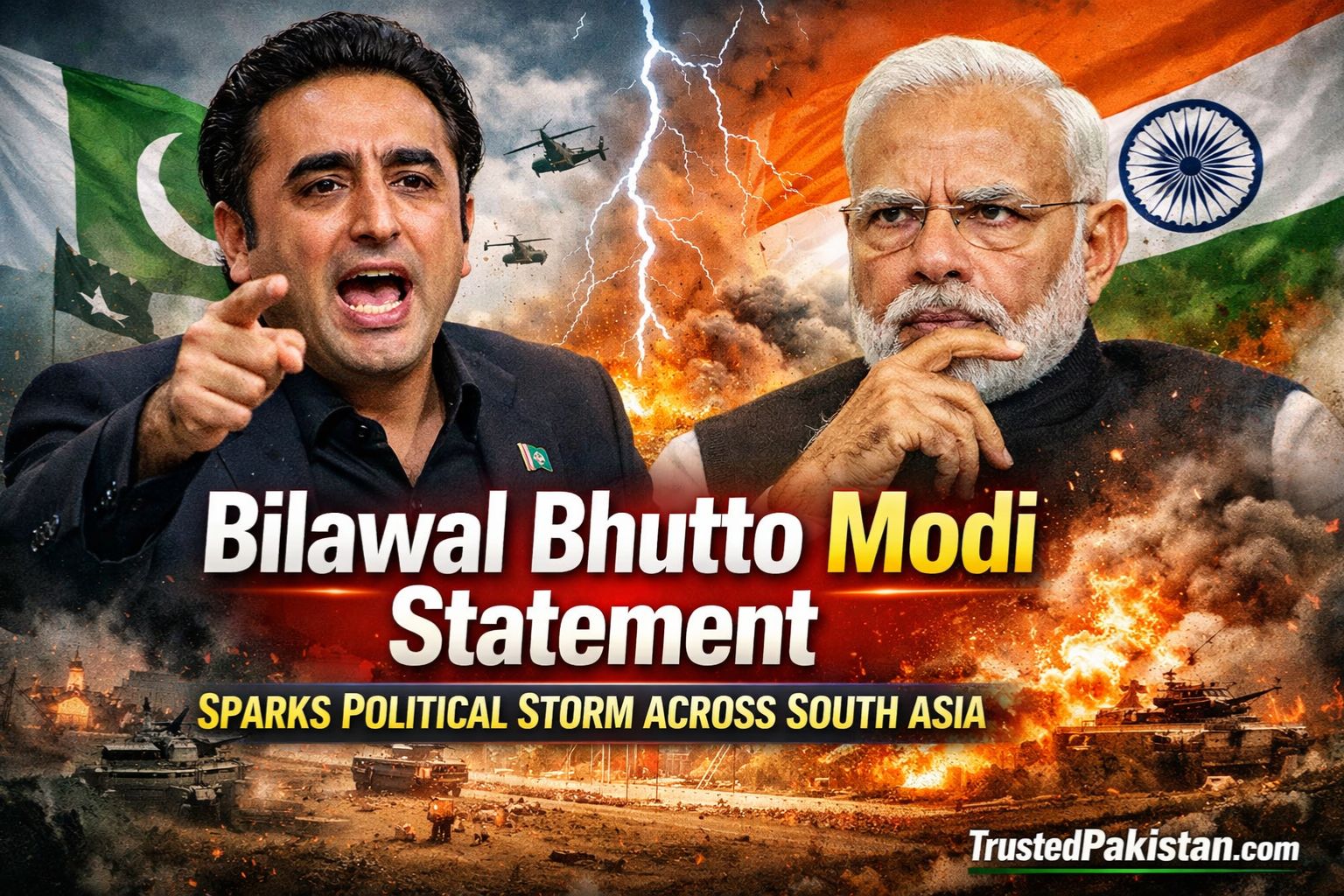
Bilawal Bhutto Modi Statement | Sparks Political Storm Across South Asia
Bilawal Bhutto Modi Statement has once again ignited intense political debate across South Asia after Pakistan Peoples Party (PPP) Chairman Bilawal Bhutto Zardari claimed that Indian Prime Minister Narendra Modi “hides when he hears the name of our Field Marshal.” This bold, provocative, and emotionally charged remark has captured widespread attention from political analysts, media outlets, and the general public in both Pakistan and India.
The Bilawal Bhutto Modi Statement reflects the growing intensity in regional political rhetoric and highlights the deep-rooted tensions between the two nuclear-armed neighbors. Such statements, while often symbolic, play a major role in shaping public opinion and influencing diplomatic narratives in the region.
Background of the Bilawal Bhutto Modi Statement
The Bilawal Bhutto Modi Statement was delivered during a public political address where Bilawal openly criticized India’s leadership style and accused Prime Minister Modi of avoiding direct confrontation with Pakistan’s military strength. By referencing Pakistan’s Field Marshal, Bilawal aimed to project confidence in the country’s defense capabilities and reinforce a message of deterrence.
Historically, political leaders in Pakistan have used strong language when discussing relations with India, especially during periods of heightened tension. However, analysts argue that the timing and tone of the Bilawal Bhutto Modi Statement made it particularly impactful, as it came amid sensitive regional developments and ongoing diplomatic challenges.
Political Context Behind the Statement
The Bilawal Bhutto Modi Statement comes at a time when Pakistan’s internal political environment is highly charged. With economic pressures, governance challenges, and upcoming political realignments, political leaders often resort to strong nationalist rhetoric to mobilize public support.
Bilawal Bhutto Zardari’s remarks align with the Pakistan Peoples Party’s historical narrative of emphasizing national sovereignty, military preparedness, and resistance to external pressure. By directly naming Narendra Modi, Bilawal positioned himself as a vocal and assertive leader on foreign policy matters, appealing to both party loyalists and nationalist sentiment.
Reaction from India
Indian media outlets were quick to respond to the Bilawal Bhutto Modi Statement, with many dismissing it as political rhetoric designed primarily for domestic consumption. Several Indian commentators labeled the remarks as “provocative” and “unnecessary,” arguing that such language does little to improve already strained bilateral relations.
Others, however, acknowledged the statement’s impact, noting that it dominated news cycles and sparked debate across Indian television panels and digital platforms.




Pakistan’s Political Narrative
Within Pakistan, the Bilawal Bhutto Modi Statement was widely circulated across social media platforms, with supporters praising Bilawal’s assertive and fearless tone. Many viewed the statement as a demonstration of strong leadership and a refusal to bow to external pressure.
Political commentators in Pakistan pointed out that such rhetoric often resonates strongly with voters, particularly during times of national uncertainty. For supporters, Bilawal’s words reinforced a sense of national pride and unity.
Media and Public Response
The Bilawal Bhutto Modi Statement dominated headlines across television, print, and digital media. Hashtags related to Bilawal Bhutto, Narendra Modi, and Pakistan-India relations trended on X (formerly Twitter), reflecting massive engagement from users on both sides of the border.
Public reactions were sharply divided. While some praised Bilawal for speaking boldly, others criticized the statement as inflammatory and counterproductive. This polarization highlights how deeply entrenched the rivalry between Pakistan and India remains, even at the level of public discourse.
Why This Statement Matters
The real significance of the Bilawal Bhutto Modi Statement lies not just in its wording, but in what it represents politically and strategically. It underscores the continued rivalry between Pakistan and India and demonstrates how political messaging can influence national narratives and international perceptions.
Such statements also carry diplomatic weight. In an era where global powers closely monitor South Asian stability, aggressive rhetoric can impact foreign relations, investor confidence, and regional security discussions.
Conclusion
In conclusion, the Bilawal Bhutto Modi Statement has emerged as a powerful political message that stirred debate, dominated media coverage, and reinforced long-standing narratives on both sides of the border. Critics dismiss it as political theater, while supporters see it as a bold assertion of national confidence and leadership.
As regional politics continue to evolve, statements like these will remain a defining feature of South Asian political discourse, shaping public opinion and influencing diplomatic dynamics for years to come.
