


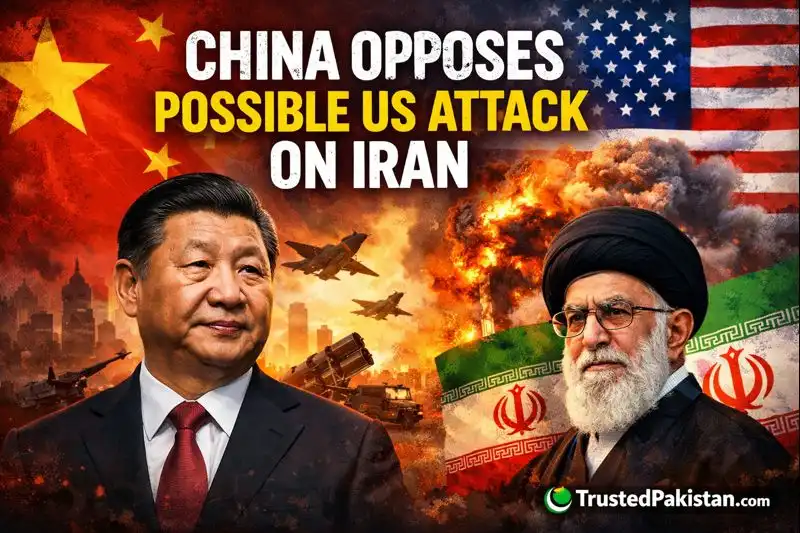
China Opposes Possible US Attack on Iran
China opposes possible US attack on Iran, marking a significant diplomatic intervention amid escalating tensions in the Middle East. Beijing has strongly warned that any military action against Iran would not only destabilize the region but also pose serious threats to global peace and economic security. The statement comes at a time when geopolitical rivalries are intensifying, and diplomatic channels appear increasingly strained.
China’s position reflects its growing role as a global power that seeks to counter unilateral military actions and promote political dialogue. As Washington continues to maintain pressure on Tehran, Beijing’s opposition adds a critical dimension to an already volatile situation.
China’s Official Stance on a Possible US Strike
China’s Foreign Ministry has clearly stated that China opposes possible US attack on Iran, emphasizing that force should never be the solution to international disputes. Chinese officials urged all parties, especially the United States, to exercise restraint and avoid actions that could further inflame tensions in the Gulf region.
According to Beijing, military escalation would undermine ongoing diplomatic efforts and could trigger widespread instability far beyond Iran’s borders. China has consistently supported the resolution of conflicts through dialogue under international law and the framework of the United Nations.
An official statement from China’s Ministry of Foreign Affairs reiterated that sovereignty and territorial integrity must be respected, warning that any violation could set a dangerous precedent globally.
Why China Opposes Possible US Attack on Iran
1. Regional Stability Concerns
China believes a US attack on Iran would destabilize the Middle East, a region already suffering from prolonged conflicts. Such instability could lead to wider confrontations involving regional and global powers.
2. Economic and Energy Security
Iran plays a crucial role in global energy markets. China, being one of the world’s largest energy consumers, fears that conflict could disrupt oil supply routes, particularly the Strait of Hormuz, causing severe economic consequences worldwide.
3. Opposition to Unilateral Military Action
China opposes unilateral military interventions without UN authorization. Beijing argues that bypassing international institutions weakens global governance and increases the risk of unchecked aggression.
US Iran Tensions and Global Reactions
The United States has accused Iran of destabilizing regional security and advancing its military capabilities. In response, Tehran has rejected the allegations and warned of retaliation if attacked. Amid this standoff, China opposes possible US attack on Iran as part of a broader call for diplomatic engagement.



Russia has echoed similar concerns, while European nations have urged restraint, highlighting the potential humanitarian costs of another Middle Eastern conflict.
Impact on Pakistan and the Region
For countries like Pakistan, rising tensions between the US and Iran are a matter of serious concern. Pakistan shares a border with Iran and maintains diplomatic relations with both Washington and Beijing. Analysts warn that conflict could spill over into South Asia, affecting regional security and trade.
China-Iran Strategic Partnership
China and Iran have strengthened their strategic cooperation in recent years, particularly in trade, infrastructure, and energy sectors. Beijing’s opposition is also rooted in its long-term economic interests in Iran, including projects under the Belt and Road Initiative.
While China insists its stance is based on principles rather than alliances, critics argue that strategic interests cannot be ignored when evaluating Beijing’s position.
Diplomacy vs Military Escalation
Chinese diplomats have repeatedly called for renewed negotiations between Washington and Tehran. China opposes possible US attack on Iran because it believes diplomacy remains the only sustainable path to peace.
Experts note that history has shown military interventions often worsen conflicts instead of resolving them. China’s approach aligns with its broader foreign policy narrative of peaceful development and multilateralism.
What Happens Next?
As tensions persist, global attention remains fixed on Washington’s next move. China’s strong opposition may influence international opinion and encourage renewed diplomatic efforts. However, the situation remains unpredictable, with miscalculations posing serious risks.
If ignored, China’s warnings could mark another turning point in global power dynamics, where major states openly challenge US military strategies.
Conclusion
In a rapidly changing geopolitical landscape, China opposes possible US attack on Iran as a firm warning against escalation and unilateral action. Beijing’s stance underscores the growing divide between military-first strategies and diplomacy-driven solutions.
Whether global leaders choose dialogue over conflict will determine not only the future of US-Iran relations but also the stability of the broader international system.
