


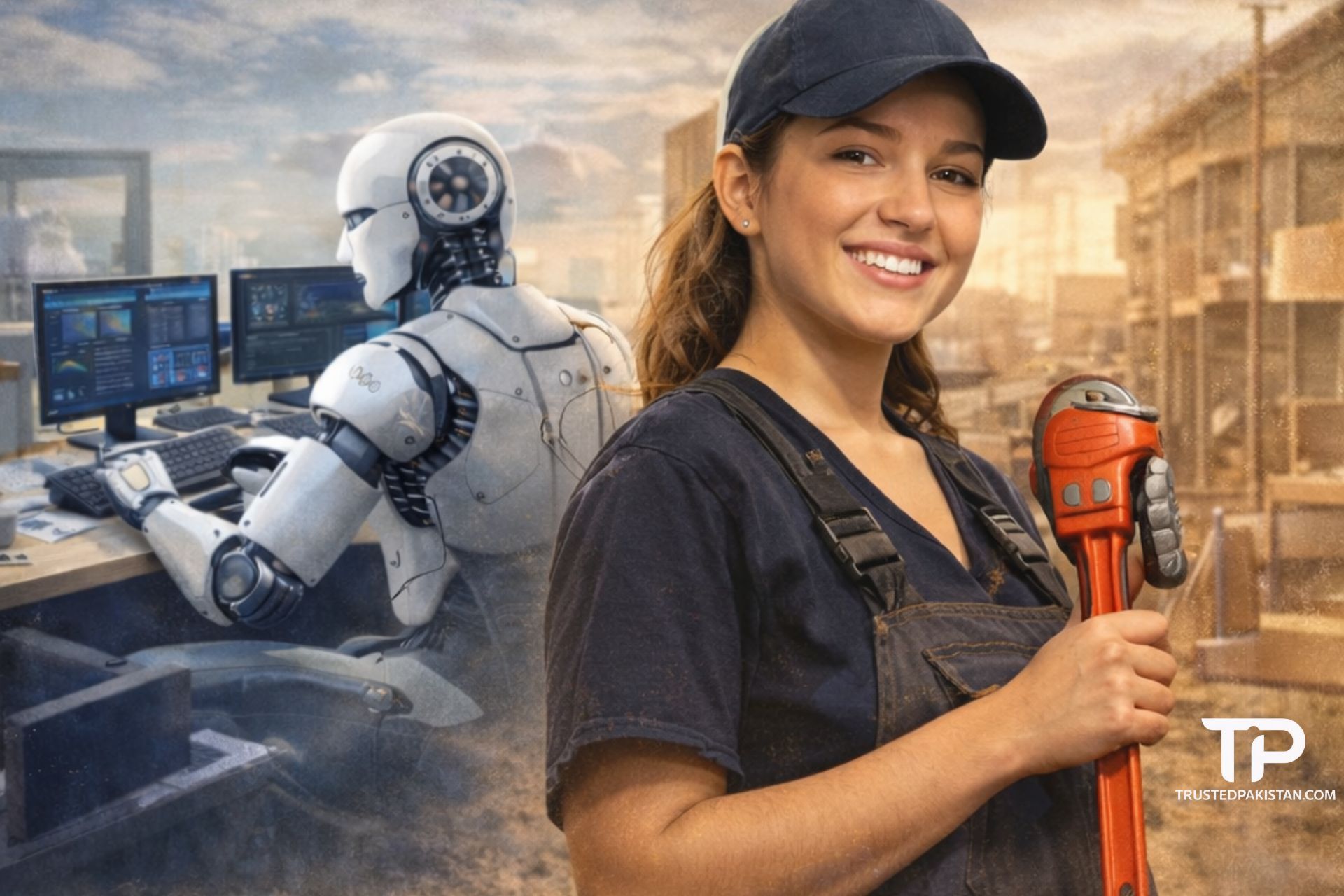
Fearing AI Job Losses, Young Workers in Britain Shift Towards Skilled Trades
As artificial intelligence (AI) continues to advance at a rapid pace, concerns about job security are growing—especially among young workers in Britain. Automation, machine learning, and AI-driven systems are increasingly capable of performing tasks once handled by humans, particularly in office-based and entry-level roles. As a result, many young people are rethinking their career paths and turning towards skilled trades that are less vulnerable to automation.
Why AI Is Creating Job Anxiety
AI has already begun transforming sectors such as customer service, data entry, content moderation, and even basic programming. Chatbots, automated accounting software, and AI-powered analytics tools are reducing the need for large human workforces in these areas. For young workers just entering the job market, this creates uncertainty about long-term career stability.
Unlike previous technological shifts, AI does not only replace manual labor—it also affects white-collar and creative jobs. This has led many young professionals to question whether traditional university degrees alone are enough to secure their futures.
The Rise of Skilled Trades
In response, a noticeable shift is taking place. Young Britons are increasingly choosing skilled trades such as electrical work, plumbing, carpentry, and mechanical repair. These professions require hands-on expertise, problem-solving in real-world environments, and physical presence—factors that make them difficult to automate fully.
Skilled trades also offer clear advantages: shorter training periods, lower education costs compared to university degrees, strong demand across the country, and competitive wages. Apprenticeship programs, supported by both the government and private sector, are making it easier for young people to enter these fields.
Changing Perceptions Among Youth
Traditionally, skilled trades were often viewed as less prestigious than office jobs. However, this perception is changing rapidly. Rising wages, self-employment opportunities, and consistent demand have made trades more attractive. Many young workers now see these roles as practical, future-proof, and financially rewarding.




Social media has also played a role. Platforms like YouTube and TikTok showcase young tradespeople earning good incomes, running successful businesses, and enjoying flexible lifestyles—challenging old stereotypes.
Economic and Social Impact
This shift could help Britain address long-standing skills shortages in construction, infrastructure, and maintenance sectors. According to industry experts, the country urgently needs electricians, welders, and technicians to support housing projects, renewable energy expansion, and transport infrastructure.
At the same time, the move highlights the need for balanced education policies that value vocational training as much as academic education. Encouraging skilled trades does not mean rejecting technology—but rather adapting to a future where human skills and AI coexist.
Skilled Trades vs AI‑Vulnerable Jobs
Below is a comparison of skilled trade jobs and roles more likely to be affected by
AI Automation:
| Job Category | Example Roles | AI Automation Risk | Demand Level in UK | Average Pay Outlook |
|---|---|---|---|---|
| Skilled Trades | Electrician, Plumber, Carpenter | Low | Very High | Strong & Growing |
| Technical Trades | HVAC Technician, Mechanic | Low | High | High |
| Construction | Mason, Welder, Site Supervisor | Low | High | Stable to Growing |
| Office Administration | Data Entry Clerk, Assistant | High | Medium | Declining |
| Customer Support | Call Center Agent | High | Medium | Uncertain |
| Basic IT Roles | Junior Support, Testing | Medium | Medium | Competitive but Risky |
Looking Ahead
The growing interest in skilled trades reflects a smart and realistic response by young British workers to the challenges posed by AI. Rather than fearing technology, they are choosing careers that rely on human judgment, creativity, and physical skill—qualities AI cannot easily replace.
As AI continues to reshape the workforce, skilled trades are emerging not as a fallback option, but as a strong and respectable career choice for the future. This trend may well redefine success and stability for the next generation of workers in Britain.
