


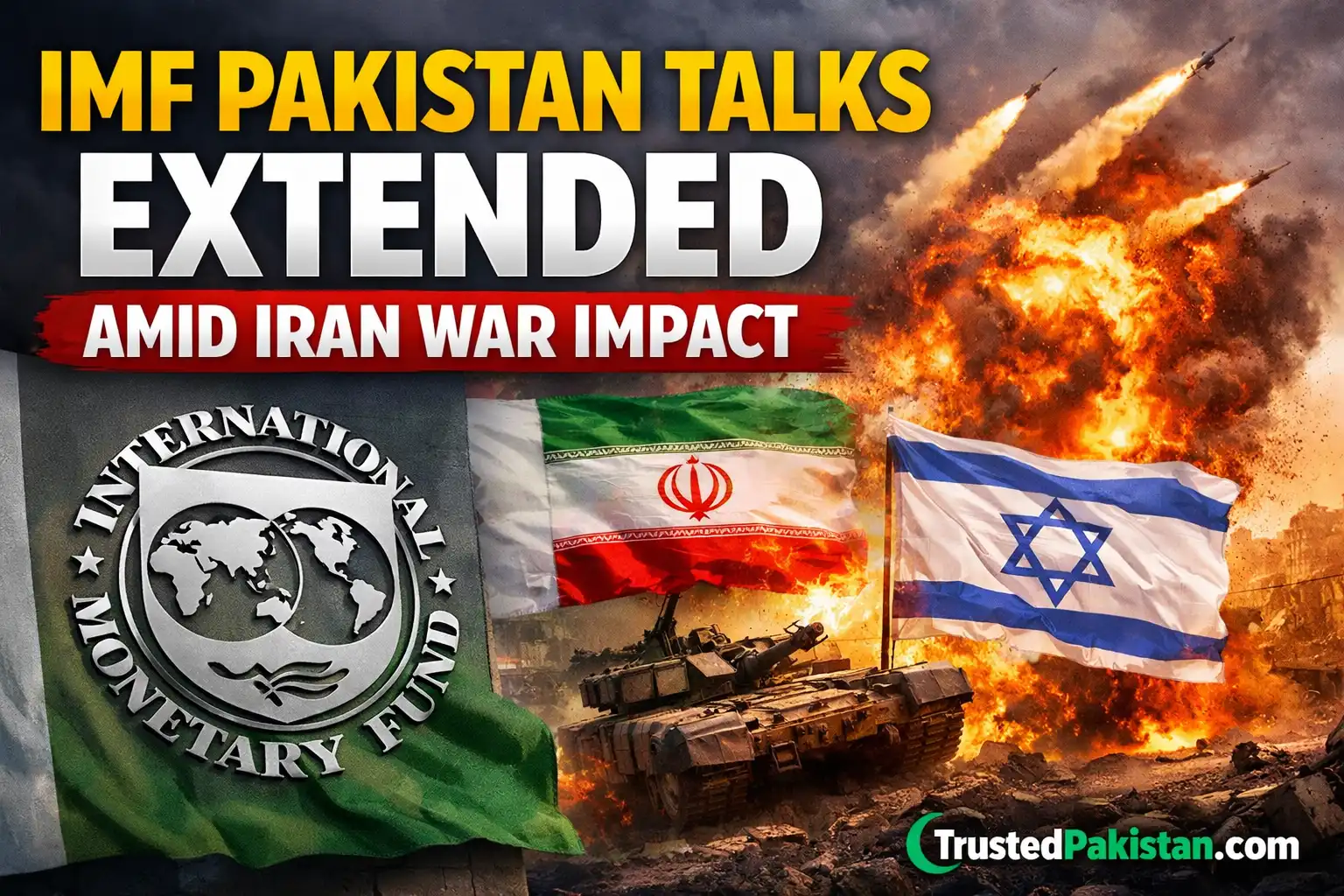
IMF Pakistan Talks Extended Amid Iran War Impact
IMF Pakistan Talks have gained international attention after negotiations between Pakistan and the International Monetary Fund were extended due to growing economic uncertainty and geopolitical tensions. The discussions are centered on Pakistan’s participation in a $7 billion bailout program designed to stabilize the country’s fragile economy.
Pakistan has been working with the IMF to maintain macroeconomic stability, strengthen financial institutions, and rebuild investor confidence. However, global developments and regional security concerns have complicated negotiations and raised questions about the country’s financial outlook.
Background of Pakistan’s IMF Program
The IMF Pakistan Talks are part of a broader financial assistance arrangement under the Extended Fund Facility. This program was introduced to support economic reforms and help Pakistan address long-standing fiscal and structural issues.
The agreement provides financial support while requiring Pakistan to implement reforms aimed at improving fiscal discipline and strengthening economic management. These reforms focus on expanding the tax base, improving governance in the energy sector, and stabilizing foreign exchange reserves.
Pakistan has entered several IMF programs in the past as the country has struggled with balance-of-payments crises, declining reserves, and economic volatility. The current program is designed to create long-term economic stability and reduce reliance on emergency financial assistance.
For further insight into Pakistan’s economic policy framework, visit the International Monetary Fund official website.
Why IMF Pakistan Talks Are Being Extended
The extension of IMF Pakistan Talks reflects the complexity of the negotiations and the challenges Pakistan faces in meeting economic targets.
Several important factors have contributed to the delay. Revenue collection has not fully met expectations, while energy sector reforms are still in progress. In addition, global economic uncertainty has created additional pressure on developing economies.
Pakistan’s government continues to work with the IMF to meet fiscal benchmarks and policy requirements. These negotiations aim to ensure that reforms remain sustainable while minimizing the economic burden on citizens.
Impact of the Iran War on Pakistan’s Economy
The regional conflict involving Iran has added another layer of uncertainty to the IMF Pakistan Talks. Rising geopolitical tensions in the Middle East have increased global energy prices and disrupted international markets.
Pakistan relies heavily on imported energy, which means higher oil prices directly affect the national economy. Increased fuel costs raise transportation expenses, electricity prices, and inflation across multiple sectors.
These pressures can weaken Pakistan’s foreign exchange reserves and increase the cost of maintaining economic stability. As a result, policymakers must carefully evaluate how regional conflicts might influence economic planning and IMF reform commitments.
Key Economic Challenges Facing Pakistan
Pakistan continues to face structural economic challenges that make the IMF Pakistan Talks particularly significant.
One of the most pressing issues is the fiscal deficit, which occurs when government spending exceeds revenue. Limited tax collection and high public expenditures have contributed to recurring financial imbalances.



External debt is another challenge. Pakistan depends on international financing to meet balance-of-payments requirements and support development projects.
Inflation also remains a major concern. Rising prices affect purchasing power and increase the cost of living for households.
The energy sector presents additional difficulties. Pakistan’s power industry has long struggled with circular debt, inefficiencies, and high production costs.
Addressing these issues is essential for improving economic resilience and reducing financial vulnerabilities.
Possible Outcomes of IMF Pakistan Talks
The outcome of the ongoing IMF Pakistan Talks could significantly influence Pakistan’s financial stability.
One possible outcome is a successful agreement that allows Pakistan to continue receiving financial support while maintaining investor confidence. Such an agreement would help strengthen foreign reserves and stabilize financial markets.
Another possibility is further delays if negotiations require additional adjustments or policy commitments. This could prolong economic uncertainty.
The IMF may also request stricter reform measures to ensure that economic targets are achieved. These conditions could include stronger fiscal discipline and additional structural reforms.
Policy Reforms and Economic Stability
The continuation of IMF Pakistan Talks highlights the importance of consistent economic reforms. Sustainable growth requires policies that strengthen financial management while promoting economic development.
Reforms may include improving tax administration, strengthening state-owned enterprises, and encouraging export growth. Investment in productive sectors can also support long-term economic expansion.
By implementing these measures, Pakistan can reduce its dependence on external borrowing and build a more resilient economic framework.
Pakistan’s Economic Transformation Opportunities
Beyond the IMF Pakistan Talks, Pakistan has opportunities to strengthen its economic future through strategic reforms and investment. Expanding industrial capacity, supporting technological innovation, and improving infrastructure can contribute to sustainable development.
Trade partnerships, regional cooperation, and digital economic growth may also help Pakistan diversify its economy and increase global competitiveness.
If economic reforms continue alongside strategic development initiatives, Pakistan could gradually move toward greater financial stability and long-term economic resilience.
