


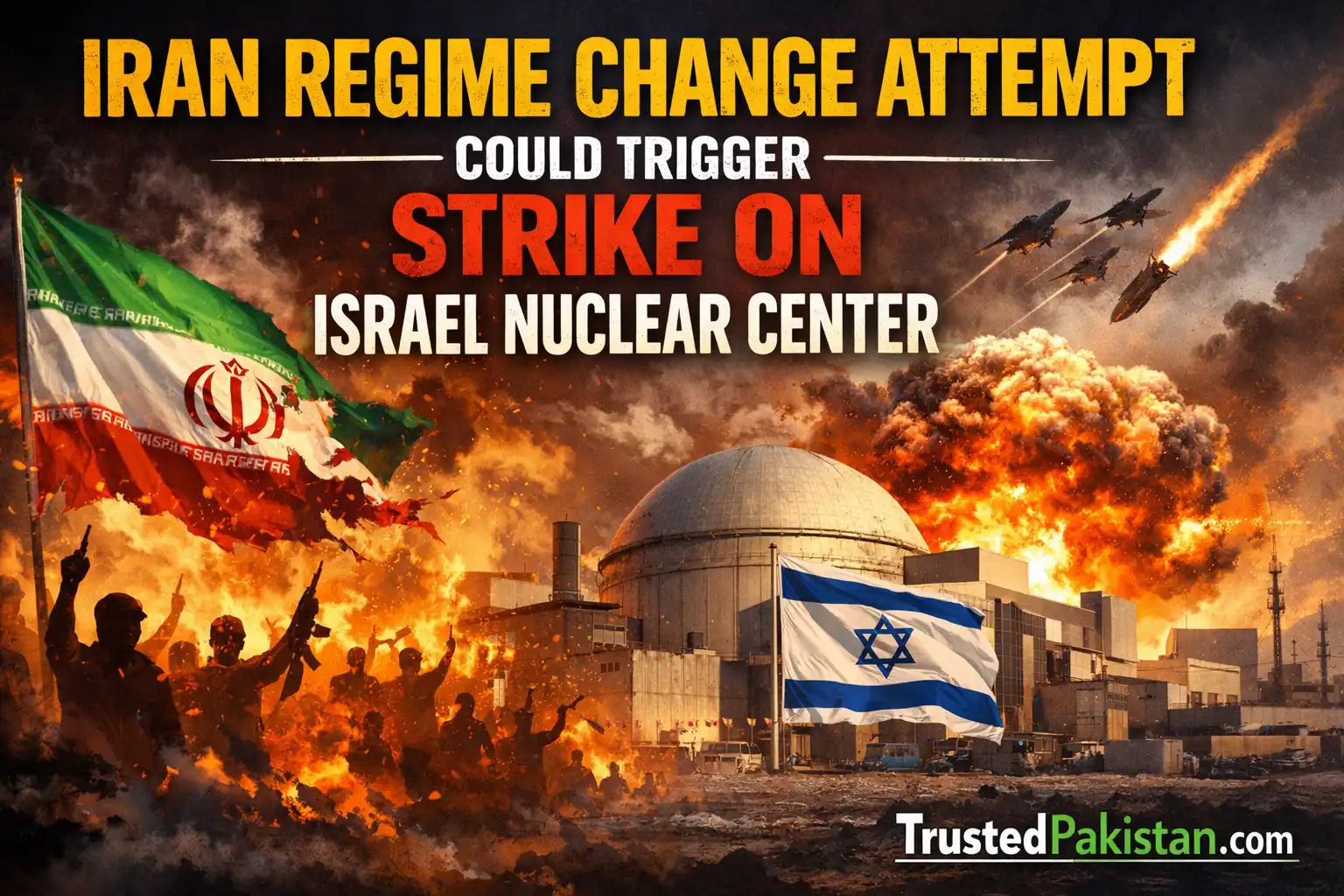
Iran Regime Change Attempt Could Trigger Strike on Israel Nuclear Center
Iran Regime Change Warning has emerged as a serious geopolitical issue after Iranian officials cautioned that any attempt to impose regime change in Iran could lead to retaliation targeting Israel’s nuclear facilities. The statement reflects rising tensions in the Middle East, where political rivalry, nuclear concerns, and military capabilities are closely intertwined. Analysts believe the warning signals Iran’s determination to defend its political system and strategic interests against external pressure.
The debate around regime change in Iran has existed for decades, especially among some Western policymakers who argue that political transformation could reshape regional security dynamics. However, Tehran has consistently described such ideas as interference in its sovereignty. The recent Iran Regime Change Warning demonstrates how quickly political pressure could escalate into a broader security crisis involving multiple states.
Background of the Iran Regime Change Debate
The Iran Regime Change Warning comes amid longstanding discussions about Iran’s political structure and its role in regional conflicts. Since the 1979 Islamic Revolution, Iran has maintained a unique political system that blends religious leadership with elected institutions. Critics in Western capitals have frequently debated whether internal political transformation could alter Iran’s foreign policy orientation.
Supporters of regime change arguments often claim that a different government in Tehran might adopt a less confrontational stance toward Western nations and Israel. On the other hand, Iranian officials argue that such discussions are unrealistic and destabilizing. They maintain that foreign attempts to influence Iran’s internal politics violate international norms and risk provoking serious confrontation.
The current warning therefore reflects a broader historical context in which Iran perceives regime change narratives as part of strategic pressure campaigns aimed at weakening its regional influence.
Iran’s Warning About Israel’s Nuclear Center
The most striking aspect of the Iran Regime Change Warning is Tehran’s suggestion that any coordinated effort to destabilize its government could trigger military retaliation against Israel’s nuclear infrastructure. Iranian officials have often criticized Israel’s undeclared nuclear arsenal, arguing that it poses a threat to regional stability.
According to analysts, the warning serves several strategic purposes. First, it signals deterrence by indicating that Iran would respond forcefully to attempts at regime change. Second, it emphasizes Israel’s vulnerability despite its advanced defense systems. Third, it highlights the potential consequences of escalating political pressure into military confrontation.
Observers also note that Iran’s message is aimed not only at Israel but also at its allies. By raising the possibility of attacks on nuclear facilities, Tehran is reminding global powers that regional escalation could have far-reaching consequences.
Regional Security Concerns
The Iran Regime Change Warning has intensified concerns among Middle Eastern governments already dealing with fragile security environments. Countries in the region face ongoing conflicts, proxy rivalries, and competition for strategic influence.


Experts believe that any direct confrontation between Iran and Israel could draw in additional actors, including regional militias and international powers with military presence in the area. Such escalation could disrupt global energy supplies, trade routes, and diplomatic relations.
Security specialists also highlight that nuclear facilities are extremely sensitive targets. An attack on such sites could create environmental risks and humanitarian consequences beyond immediate military damage. For this reason, many international observers stress the importance of diplomatic engagement rather than confrontation.
Global Reactions and Strategic Implications
International reactions to the Iran Regime Change Warning have been cautious but attentive. Several diplomatic analysts argue that the warning reflects growing mistrust between Iran and Western governments. Some experts interpret it as part of Tehran’s broader strategy to strengthen deterrence and discourage foreign intervention.
Global powers continue to monitor the situation closely because of its implications for nuclear non-proliferation and regional stability. Discussions surrounding Iran’s nuclear program have long been a central issue in international diplomacy. Any escalation connected to regime change debates could complicate negotiations and increase the risk of military conflict.
For example, organizations monitoring nuclear policy emphasize that transparency and diplomatic agreements remain critical tools for preventing escalation and maintaining global security standards.
Future of Middle East Power Balance
The Iran Regime Change Warning also highlights the evolving balance of power in the Middle East. Iran, Israel, and several regional actors continue to compete for strategic influence through alliances, military capabilities, and technological development.
In the coming years, analysts expect geopolitical competition to focus on nuclear technology, missile defense systems, and cyber capabilities. Diplomatic initiatives may attempt to reduce tensions, but mistrust among regional rivals remains a major obstacle.
Understanding the long-term consequences of these developments requires close attention to political narratives, security doctrines, and diplomatic negotiations. The Iran Regime Change Warning demonstrates how quickly regional disputes can escalate into broader strategic challenges affecting global stability.
For deeper analysis of nuclear policy discussions, readers can review research published by the International Atomic Energy Agency, which monitors global nuclear safety and cooperation. Internally, related discussions about regional security trends and geopolitical analysis provide additional insight into how these developments shape international relations.
