


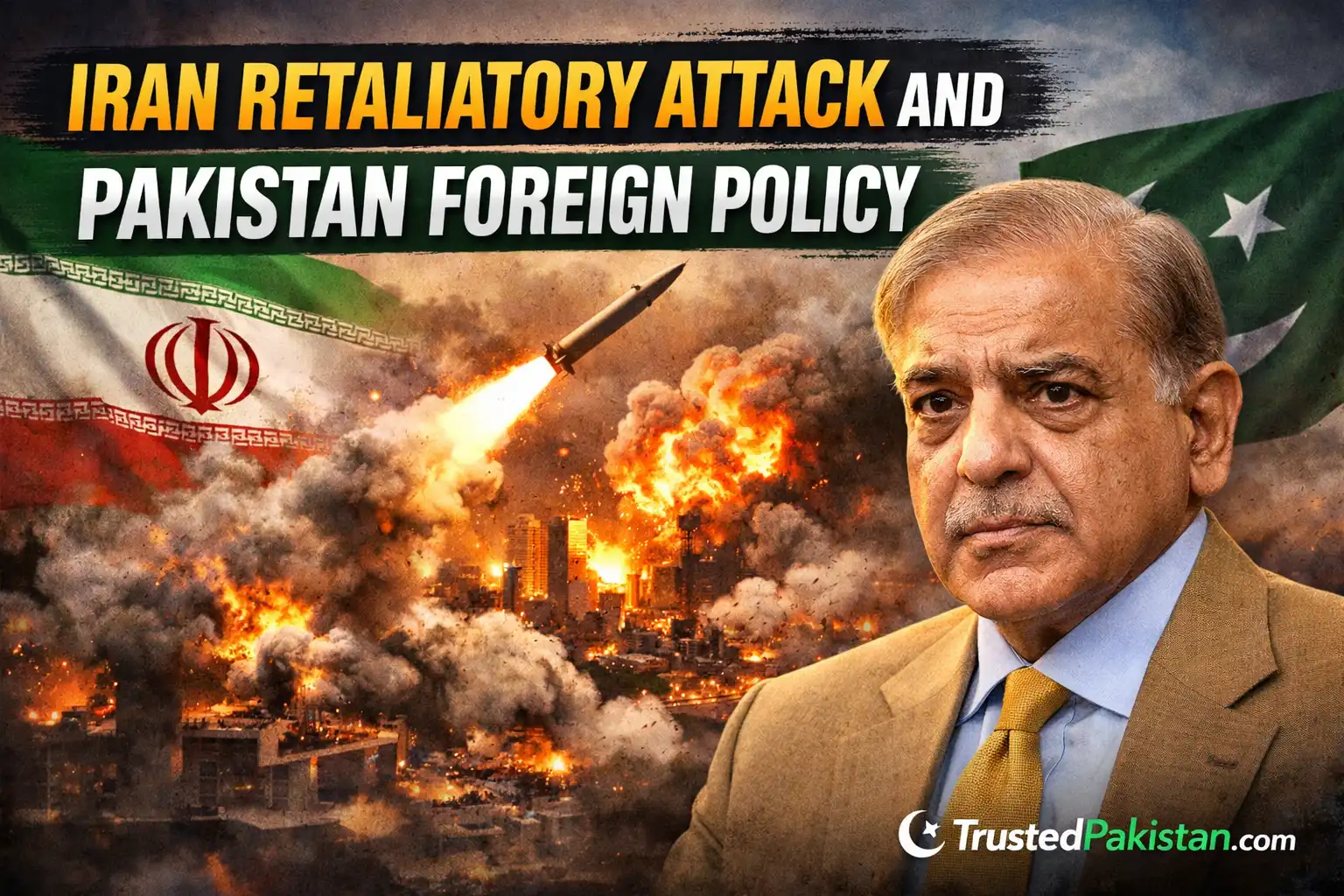
Iran Retaliatory Attack and Pakistan Foreign Policy
The Iran retaliatory attack has become one of the most discussed geopolitical developments in the Middle East and South Asia. For Pakistan, this situation creates a complex challenge. The country must balance its diplomatic relations with Iran while also maintaining strong ties with Saudi Arabia and other Gulf states.
Pakistan foreign policy has always focused on strategic neutrality in regional conflicts. However, the Iran retaliatory attack has intensified debates about whether Pakistan can continue this balanced approach. Analysts believe that economic pressures may ultimately influence Pakistan’s position in the regional power structure.
Iran Retaliatory Attack and Regional Tensions
The Iran retaliatory attack reflects growing tensions in the Middle East. Regional conflicts often spill over into neighboring areas, and Pakistan is geographically and politically connected to these developments.
Iran has historically emphasized its security interests and regional influence. Any retaliatory action usually sends a strong political signal to rivals and allies alike. The recent developments highlight how rapidly geopolitical dynamics can change.
For Pakistan, such tensions require careful diplomatic messaging. Islamabad must avoid actions that could escalate the conflict while ensuring that its own security interests remain protected.
Saudi Defense Agreement and Strategic Alliances
Pakistan has long maintained a close strategic partnership with Saudi Arabia. Defense cooperation between the two countries includes military training, intelligence sharing, and security coordination.
In the context of the Iran retaliatory attack, these partnerships gain even more importance. Saudi Arabia expects its allies to support its security concerns in the region. Pakistan therefore faces pressure to align with Saudi interests while also keeping diplomatic channels open with Iran.
Saudi-Pakistan relations have historically been influenced by economic assistance and energy cooperation. These factors can indirectly shape Pakistan’s policy responses during regional crises.
Economic Pressure on Pakistan Foreign Policy
One of the most significant factors shaping Pakistan’s response to the Iran retaliatory attack is its economic condition. Pakistan has faced financial challenges in recent years, including debt pressures, inflation, and the need for international financial support.
Economic dependence often influences foreign policy decisions. Countries experiencing financial strain may prioritize relationships with states that provide economic assistance or investment opportunities.
Pakistan receives financial support and energy cooperation from Gulf states, including Saudi Arabia and the United Arab Emirates. This economic relationship can create indirect pressure on policy decisions during regional tensions.
Many analysts argue that Pakistan’s economic vulnerability could push it toward positions that align more closely with Gulf allies rather than maintaining strict neutrality.



Diplomatic Balancing Between Iran and Saudi Arabia
Pakistan has historically attempted to maintain balanced relations with both Iran and Saudi Arabia. This diplomatic strategy is necessary because both countries are important neighbors and partners.
The Iran retaliatory attack complicates this balance. Any perceived alignment with one side could strain relations with the other.
Diplomatic engagement therefore becomes essential. Pakistan may focus on mediation, dialogue, and regional stability initiatives to avoid taking sides. This approach has previously been used in other regional conflicts.
Maintaining neutrality can help Pakistan preserve its strategic autonomy and avoid becoming directly involved in broader geopolitical rivalries.
Security and Defense Challenges
Security concerns also arise from the Iran retaliatory attack. Pakistan shares a long border with Iran, which means any escalation in tensions could affect border security and regional stability.
Cross-border security cooperation between Pakistan and Iran has been important in preventing militant activity in border areas. Increased tensions could complicate this cooperation and create new security challenges.
Pakistan’s military and intelligence agencies must therefore remain vigilant while ensuring that diplomatic channels remain active to prevent misunderstandings.
Global Political Reactions
The Iran retaliatory attack has attracted attention from global powers as well. The United States, European countries, and international organizations closely monitor developments in the region.
Global reactions often influence regional politics. Diplomatic statements, sanctions, and international negotiations can shape how countries respond to escalating tensions.
Pakistan must therefore consider not only regional alliances but also the broader international political environment when formulating its policy response.
Future Strategic Policy Debate
The Iran retaliatory attack has triggered an important debate within Pakistan about the future direction of its foreign policy. Some experts believe Pakistan should strengthen its strategic partnerships with Gulf states, while others advocate maintaining strict neutrality.
Economic reforms and stronger domestic stability could give Pakistan more flexibility in foreign policy decisions. Without economic pressure, policymakers would have greater freedom to pursue balanced diplomatic strategies.
The ongoing regional developments will likely continue influencing Pakistan’s diplomatic priorities and strategic planning in the coming years.
