


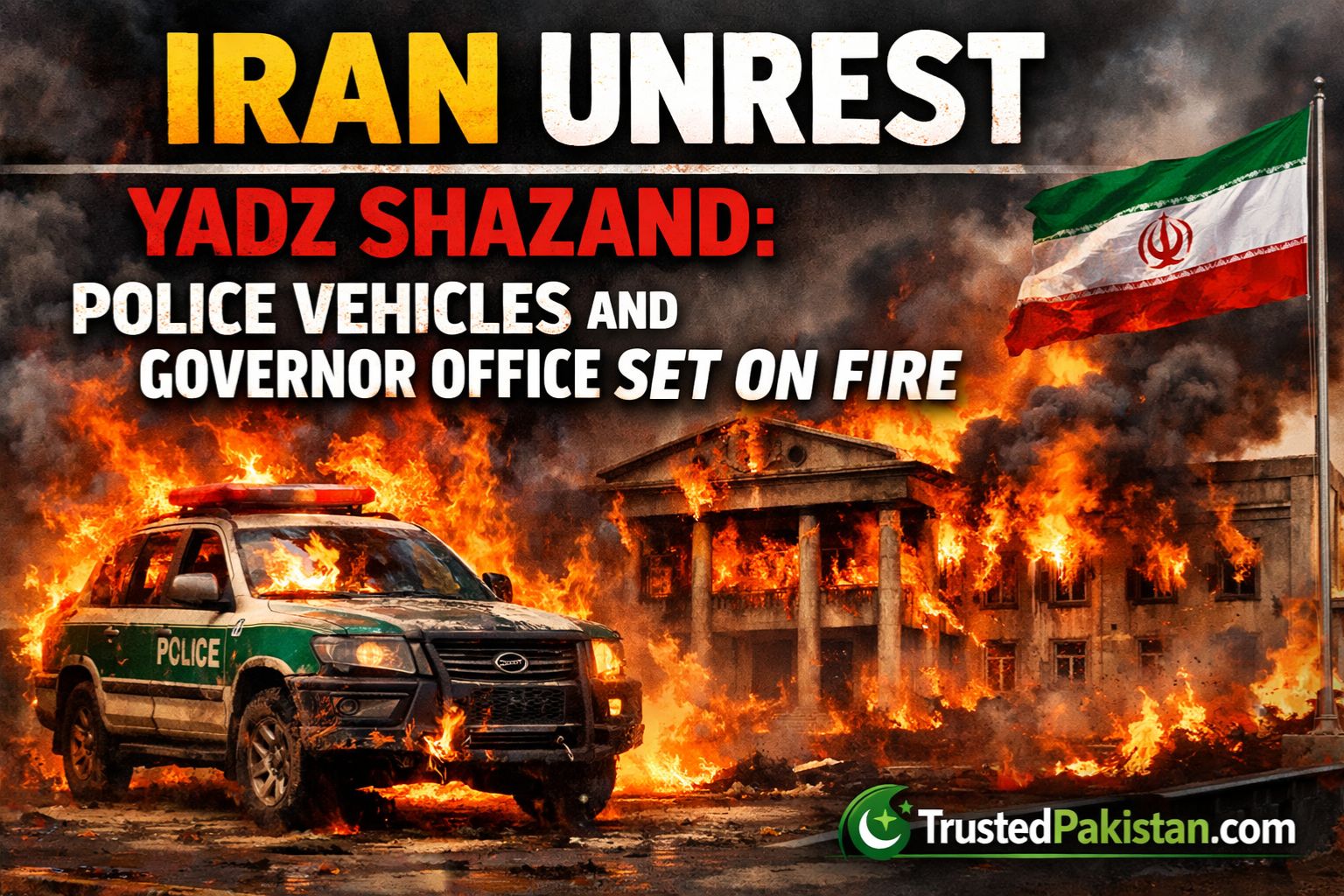
Iran Unrest Yadz Shazand | Police Vehicles and Governor Office Set on Fire
Iran Unrest Yadz Shazand has escalated sharply after reports confirmed that police vehicles were torched in Yazd, while the governor’s office building in Shazand was set on fire during ongoing protests. The unrest highlights growing public anger amid political tension, economic hardship, and international pressure on Tehran.
This wave of violence is being viewed as one of the most serious developments in recent weeks, drawing strong reactions both inside Iran and from global political figures. Citizens across multiple cities have expressed frustration over inflation, unemployment, and government policies, turning economic grievances into broader calls for reform.
Background of Iran Unrest Yadz Shazand
The Iran Unrest Yadz Shazand is part of a broader pattern of protests spreading across several Iranian cities. Demonstrations initially sparked by economic grievances have increasingly taken on political overtones, with protesters targeting state institutions and symbols of authority.
Experts note that the unrest reflects long-standing public dissatisfaction with Iran’s leadership. Issues such as inflation, rising food and energy prices, unemployment, and restrictions on civil liberties have created fertile ground for protests. Analysts warn that without meaningful reforms or dialogue with citizens, these demonstrations could intensify and spread to other regions.
The unrest also comes amid heightened international scrutiny of Iran. U.S. sanctions, diplomatic tensions, and regional conflicts have added layers of complexity to the domestic situation. The combination of economic hardship and political pressure has created a volatile environment where even minor incidents can spark large-scale protests.
Yazd | Police Vehicles Burned
In Yazd, eyewitnesses and local reports confirmed that multiple police vehicles were set on fire during clashes between protesters and security forces. Videos circulating on social media show flames engulfing official vehicles as crowds chant anti-government slogans.
The police response has been swift, with increased deployments to affected areas and temporary restrictions on public gatherings. However, many residents argue that the unrest is fueled not by protester aggression, but by frustration over the government’s inability to address economic and social issues.
Authorities have not released an official casualty count, but human rights organizations are closely monitoring the situation. Independent reporting is limited due to government restrictions on press coverage, making it difficult to verify the full scale of damage and injuries.
Shazand | Governor Office Building Set Ablaze
A more alarming incident occurred in Shazand, where protesters reportedly set fire to the governor’s office building. The attack on such a key government facility marks a serious escalation in the Iran Unrest Yadz Shazand.



Officials claimed the situation was eventually brought under control, but the incident underscores the depth of public anger and the potential for further instability. Analysts suggest that targeting government buildings indicates a shift from spontaneous demonstrations to more organized expressions of dissent.
The Shazand incident also raises concerns about the safety of public officials and the potential for further confrontations. Local authorities have called for calm, urging citizens to avoid violence, while security forces remain on high alert.
Mike Pompeo Urges Support for Iranian People
Reacting to the developments, former U.S. Secretary of State Mike Pompeo stated that “America should support the Iranian people in every possible way.” His comments quickly gained attention across international media and added a geopolitical dimension to the Iran Unrest Yadz Shazand.
Pompeo has previously taken a hardline stance against Iran’s leadership, and his remarks are likely to fuel debate over foreign involvement in Iran’s internal affairs. International observers have expressed mixed reactions, with some cautioning against external interference that could escalate tensions further.
International Reaction and Media Coverage
Global media outlets have widely covered the Iran Unrest Yadz Shazand, with human rights organizations calling for restraint and protection of civilians. Many international journalists have highlighted the economic struggles driving protests and warned of potential crackdowns on civil liberties.
Governments and organizations around the world have expressed concern over the escalation, emphasizing the need for dialogue and peaceful resolution. At the same time, social media has become a key platform for documenting events, although online reporting is limited by government censorship.
What Happens Next?
Experts warn that if underlying issues remain unresolved, the Iran Unrest Yadz Shazand could spread further. Analysts are closely monitoring economic indicators, public sentiment, and government responses to predict how the situation may evolve.
The coming days are critical in determining whether authorities will pursue dialogue or continue strict security measures. Observers suggest that engaging local communities, addressing economic grievances, and increasing transparency could help reduce tensions.
Meanwhile, protesters remain resolute, signaling that the Iran Unrest Yadz Shazand is more than a temporary flare-up. Without meaningful change, Iran may witness further unrest in other provinces, potentially creating a nationwide movement demanding reform.
