


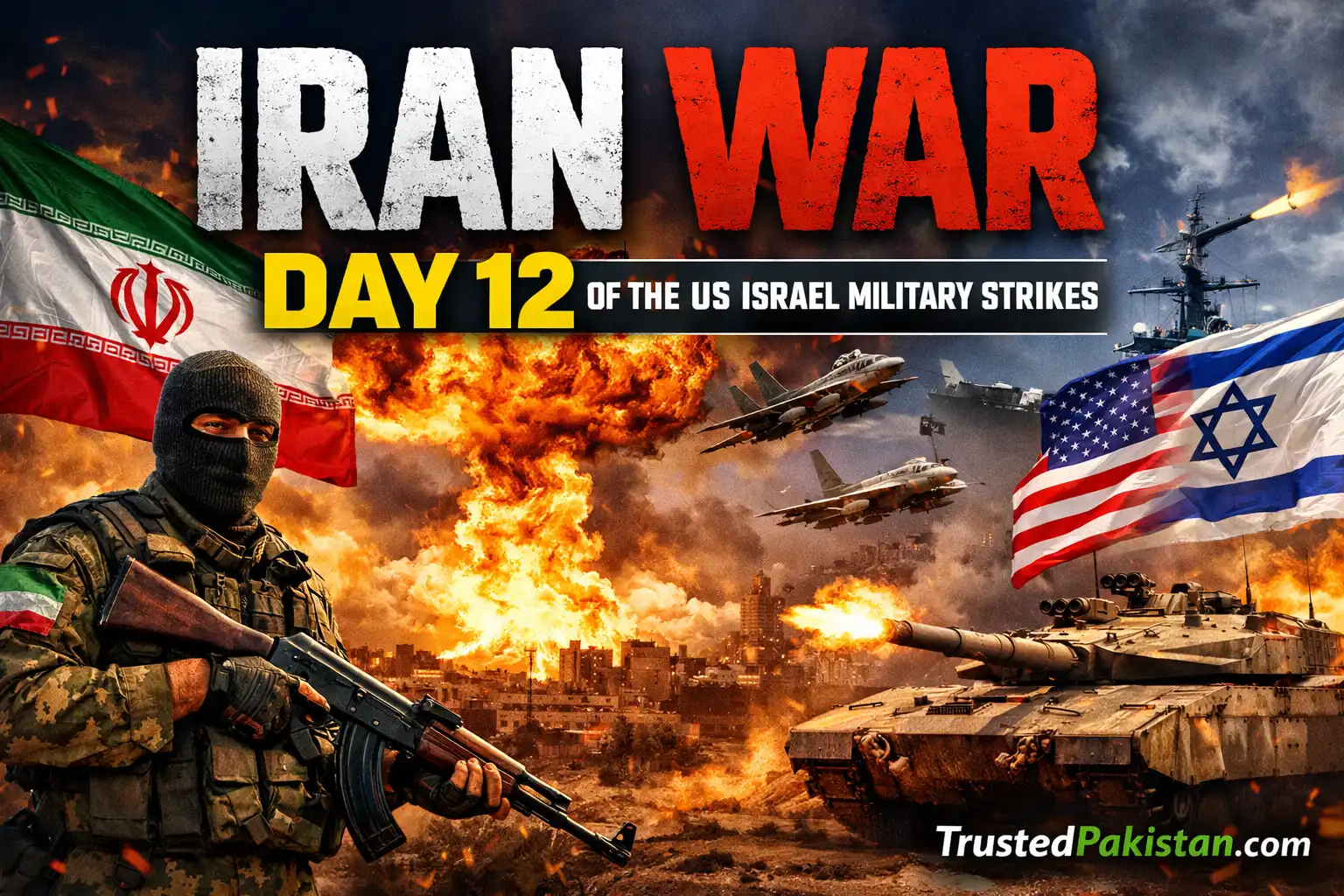
Iran War | Day 12 of the US Israel Military Strikes
The conflict involving Iran, Israel, and the United States has entered its twelfth day, with military operations intensifying across the Middle East. The confrontation began after joint U.S.–Israeli strikes targeted Iranian military and strategic sites. Since then, both sides have exchanged missile attacks, airstrikes, and naval operations. As the fighting continues, concerns are growing that the conflict could expand into a wider regional war.
Intensified Airstrikes Across Iran
On the twelfth day of the conflict, U.S. and Israeli forces carried out some of their most intense airstrikes yet against Iranian targets. The attacks focused on military infrastructure, missile production facilities, and strategic defense installations across different parts of the country.
Advanced aircraft and precision-guided weapons have been used to strike facilities believed to be connected to Iran’s missile program. Military officials say these operations are intended to weaken Iran’s ability to launch further attacks and to reduce its military capabilities. Analysts note that the targeting of deeply fortified sites suggests the campaign is aimed at damaging Iran’s long-term military infrastructure.
Iran’s Retaliatory Missile Attacks
In response to the continued bombing campaign, Iran has launched a series of retaliatory missile and drone attacks. Several missiles were reportedly fired toward Israeli territory, triggering air-raid sirens in multiple cities and forcing civilians to seek shelter.
Israel’s air defense systems, including the Iron Dome and other interception technologies, have successfully intercepted many incoming missiles. However, some attacks have still caused damage and casualties. These exchanges highlight the growing intensity of the conflict and demonstrate that the confrontation has become a direct military clash between Iran and the U.S.–Israel alliance.
Naval Tensions in Strategic Waterways
Another important development on day twelve involves naval activity in the Persian Gulf and the Strait of Hormuz. This narrow waterway is one of the most important routes for global oil shipments.
Reports suggest that U.S. naval forces have taken action against Iranian vessels suspected of preparing to deploy sea mines in the area. Such actions are seen as an attempt to prevent disruptions to global shipping and to protect international trade routes. Any instability in the Strait of Hormuz could affect energy supplies and have serious economic consequences worldwide.




Regional Tensions Continue to Rise
Although the main fighting involves Iran, Israel, and the United States, the conflict has raised tensions across the wider Middle East. Iran-aligned groups and militias in neighboring countries have shown support for Tehran, though many of them have not yet entered the conflict directly.
Security experts believe some of these groups are cautiously monitoring the situation while avoiding actions that could trigger a full-scale regional war. Nevertheless, small clashes and attacks on military facilities have been reported in several areas, increasing fears that the conflict could spread.
Humanitarian Concerns and Civilian Impact
As the fighting continues, humanitarian concerns are growing. Reports indicate that numerous military sites and surrounding areas have been hit by airstrikes since the start of the conflict. Civilians living near targeted facilities have been affected, and many families have been forced to leave their homes.
Hospitals and emergency services are under pressure as they deal with casualties and damage caused by ongoing attacks. International organizations have called for the protection of civilians and for efforts to reduce the humanitarian impact of the conflict.
No Immediate Ceasefire
Despite international calls for restraint, there is currently no sign of an immediate ceasefire. Iranian officials have stated that the country will continue to defend itself against what it considers foreign aggression. At the same time, U.S. and Israeli leaders have indicated that military operations will continue until Iran military capabilities are significantly reduced.
Diplomatic efforts are ongoing, but so far they have not produced a breakthrough that could stop the fighting.
Conclusion
As the conflict reaches its twelfth day, the situation remains tense and uncertain. Heavy airstrikes, missile attacks, and naval tensions continue to shape the course of the war. With no clear path toward a ceasefire, the coming days will be critical in determining whether the conflict remains limited or develops into a broader regional crisis.
