


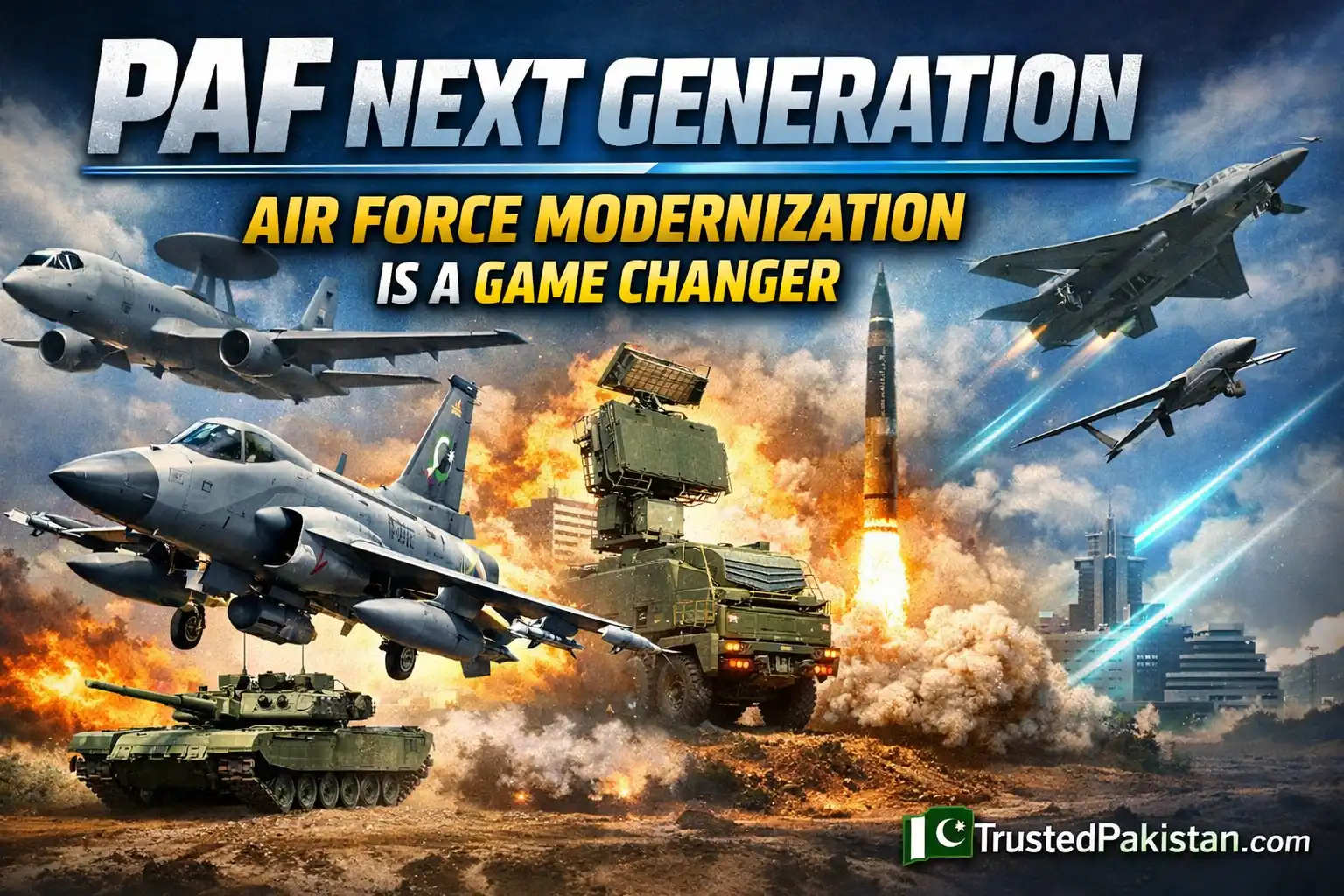
PAF Next Generation Air Force Modernization Is a Game Changer
PAF Next Generation Air Force modernization is reshaping the future of Pakistan’s aerial defense strategy. The Pakistan Air Force (PAF) is actively transitioning toward a technologically advanced, network-centric, and fully integrated combat force capable of responding to modern security challenges.
This transformation reflects a long-term strategic vision focused on innovation, operational excellence, and enhanced deterrence capability. The leadership has emphasized that modernization is not merely about acquiring new aircraft, but about evolving into a smarter, digitally connected, and strategically empowered force.
Vision Behind PAF Next Generation Air Force
The vision of the PAF Next Generation Air Force revolves around multi-domain integration, precision warfare, and technological superiority.
The Air Chief has highlighted that future conflicts will rely heavily on artificial intelligence, unmanned systems, and advanced electronic warfare. Therefore, the modernization plan prioritizes these critical areas.
The transformation strategy includes:
- Development of network-centric warfare systems
- Integration of AI-driven decision-making tools
- Adoption of advanced surveillance technologies
- Strengthening real-time intelligence sharing
This vision ensures that PAF remains operationally ready in both conventional and hybrid warfare environments.
For more updates on Pakistan’s defense initiatives, visit our internal coverage on defense reforms at /defense-strategy-updates.
Technological Advancements and Innovation
The PAF Next Generation Air Force initiative places strong emphasis on cutting-edge technology. Modern combat demands digital superiority, speed, and accuracy.
Key technological advancements include:
Advanced Fighter Platforms
The induction of next-generation fighter jets enhances air superiority and precision strike capabilities. These aircraft feature advanced avionics, radar systems, and beyond-visual-range missile technology.
Unmanned Aerial Systems (UAS)
Unmanned systems are now a core part of the modernization framework. Drones provide surveillance, reconnaissance, and strike capabilities while reducing risk to human pilots.
Network-Centric Warfare
Integrated command and control systems enable seamless communication between air, land, and sea forces. This connectivity significantly improves battlefield awareness and rapid response.
According to global defense analysis by the International Institute for Strategic Studies (IISS), future air forces must prioritize digital integration and autonomous systems to remain competitive. This aligns with the direction of the PAF Next Generation Air Force transformation.
Indigenous Development and Strategic Partnerships
A critical pillar of the PAF Next Generation Air Force strategy is strengthening indigenous defense production.
Local development reduces dependency on foreign suppliers and enhances strategic autonomy. Pakistan Aeronautical Complex (PAC) plays a central role in producing advanced aircraft and upgrading existing fleets.
Collaboration with international partners also contributes to technology transfer and knowledge sharing. These partnerships ensure access to modern systems while boosting domestic capability.
By investing in local research and development, PAF is building a sustainable ecosystem for long-term modernization.
Human Resource and Training Transformation
Modern technology is only as effective as the personnel operating it. The PAF Next Generation Air Force program emphasizes professional development and advanced training methodologies.
Digital Simulation Training
High-fidelity simulators replicate real combat environments. Pilots and engineers can train in complex scenarios without operational risks.




Leadership Development
Strategic leadership programs prepare officers for multi-domain warfare and digital command structures.
Technical Skill Enhancement
Engineers and technicians receive specialized training in cyber defense, AI systems, and advanced avionics.
This comprehensive human resource transformation ensures that modernization is sustainable and effective.
Cyber and Space Capabilities Expansion
The battlefield is no longer limited to airspace. The PAF Next Generation Air Force also focuses on cyber and space domains.
Cyber Defense Units
Dedicated cyber teams protect military networks from electronic threats and digital intrusions.
Satellite and Space Integration
Space-based surveillance and communication systems improve operational awareness and intelligence gathering.
The integration of cyber and space capabilities strengthens national defense by creating a multi-layered security architecture.
Strategic Deterrence and Regional Stability
The modernization under the PAF Next Generation Air Force enhances credible deterrence.
A technologically advanced air force discourages aggression and supports regional stability. Precision strike capability, rapid mobilization, and superior surveillance systems collectively reinforce defensive posture.
Deterrence is not about confrontation; it is about maintaining peace through preparedness. By modernizing its structure, PAF ensures it can respond swiftly to evolving threats.
Future Roadmap of PAF Next Generation Air Force
The future roadmap of the PAF Next Generation Air Force includes continuous innovation and adaptation.
Planned developments involve:
- Artificial intelligence integration in mission planning
- Hypersonic research collaboration
- Expanded drone fleets
- Enhanced electronic warfare systems
- Smart logistics and predictive maintenance
Sustained investment in research and modernization will define the next decade of transformation.
The strategy demonstrates that modernization is an ongoing journey rather than a one-time upgrade.
TAP FOR MORE NEWS HERE
Emerging Aerospace Opportunities
Beyond defense modernization, the PAF Next Generation Air Force initiative opens new aerospace opportunities.
Pakistan’s growing expertise in avionics, aircraft manufacturing, and digital warfare systems creates potential for regional aerospace leadership.
Investment in aerospace engineering education, innovation hubs, and public-private collaboration can transform the country into a competitive aerospace contributor.
This broader vision ensures that modernization benefits not only national security but also technological and economic growth.
The transition toward a fully integrated, technologically superior PAF Next Generation Air Force marks a defining chapter in Pakistan’s defense evolution.
