


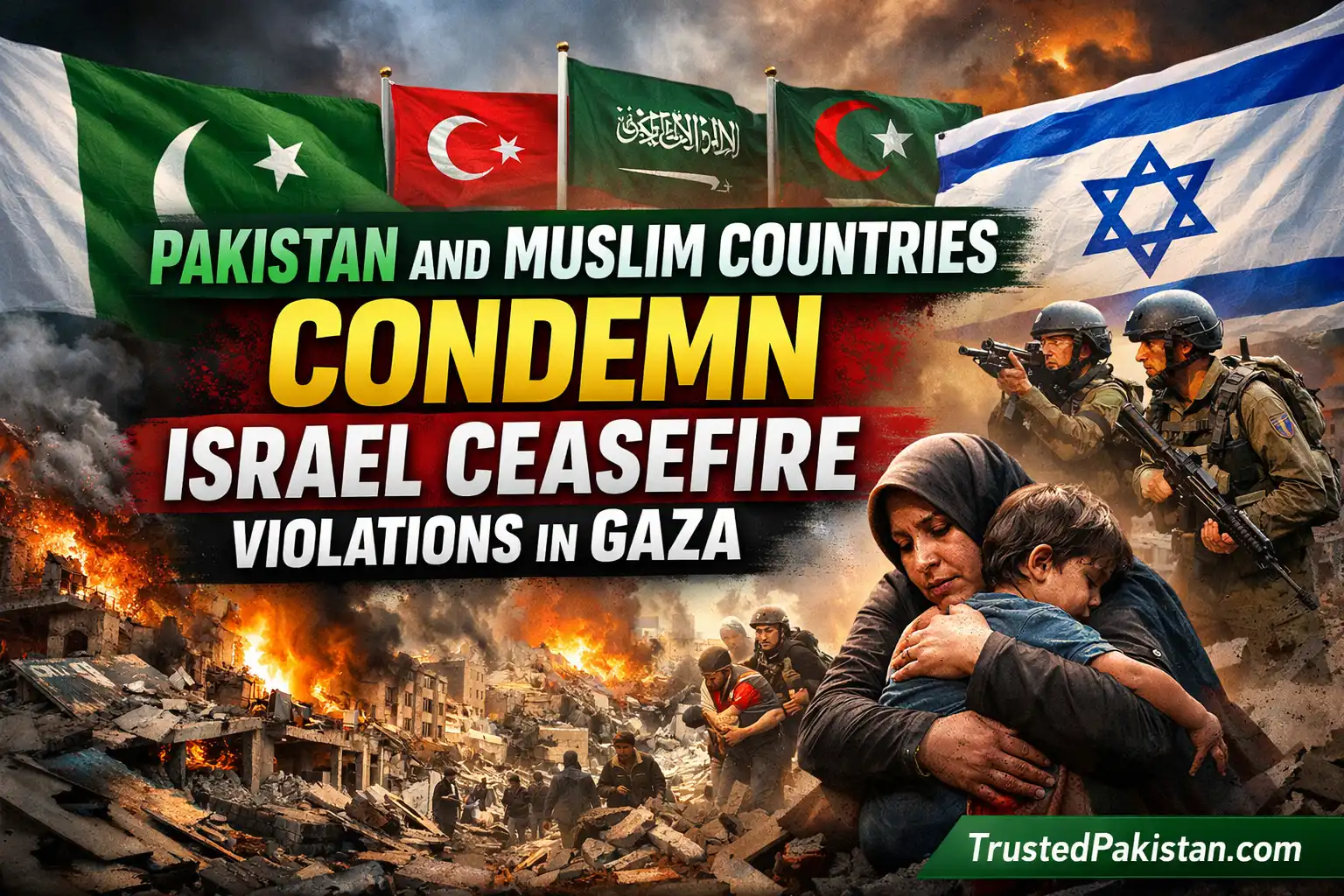
Pakistan and Muslim Countries Condemn Israel Ceasefire Violations in Gaza
Pakistan and several Muslim-majority countries have condemned Israel ceasefire violations in Gaza, expressing serious concern over the worsening humanitarian conditions and the continued suffering of civilians. The statements come amid rising regional tensions and renewed international calls for restraint and diplomatic engagement.
Pakistan’s leadership reiterated the country’s consistent position on the Palestinian issue, emphasizing the urgent need for strict adherence to ceasefire commitments and the protection of innocent lives. Officials stressed that violations of truce agreements risk undermining fragile peace efforts and further destabilizing the region.
Multiple Muslim countries echoed similar concerns, highlighting the humanitarian consequences of continued hostilities. Diplomatic representatives pointed to the destruction of infrastructure, displacement of families, and shortages of essential resources as factors demanding immediate global attention.
Diplomatic observers note that ceasefire agreements are often regarded as critical windows for humanitarian relief and political dialogue. Any reported violations during such periods tend to heighten tensions, complicate mediation efforts, and intensify international scrutiny. Governments across the Muslim world have therefore emphasized the importance of respecting negotiated truces and protecting civilian populations.
Rising Humanitarian Concerns in Gaza
The humanitarian situation in Gaza continues to draw international concern. Civilians remain the most affected by ongoing tensions, with many families facing disruptions to healthcare services, food supplies, and basic living conditions. Aid agencies have repeatedly warned that any escalation could further worsen an already fragile environment.
Humanitarian organizations have highlighted challenges related to medical shortages, damaged infrastructure, and restricted access to essential resources. These conditions place vulnerable populations at increased risk, particularly children, the elderly, and those requiring urgent medical care. Relief groups have repeatedly called for safe corridors and uninterrupted humanitarian assistance.
Muslim countries have emphasized the importance of safeguarding civilian populations and ensuring uninterrupted humanitarian assistance. Policymakers argue that ceasefire agreements represent essential mechanisms for reducing violence and enabling relief efforts.
Experts observe that repeated violations of ceasefire arrangements often weaken diplomatic trust, making peaceful resolutions increasingly difficult. This cycle of instability has contributed to broader regional anxieties and intensified calls for sustainable solutions.
Regional Stability and the Importance of Ceasefire Compliance
Observers warn that continued ceasefire violations in Gaza could have wider implications for regional stability and diplomatic relations across the Middle East. Periods of truce are generally viewed as critical opportunities for humanitarian relief, confidence-building measures, and negotiations aimed at preventing further escalation.



Analysts argue that fragile security environments can deteriorate rapidly when ceasefire agreements break down. Escalations not only affect directly involved parties but may also influence neighboring regions, diplomatic engagements, and international policy debates. Sustained compliance with truce arrangements is therefore widely seen as essential for preventing further instability.
International Reactions and Diplomatic Implications
The international community has continued to monitor developments closely, with global organizations urging restraint and dialogue. Pakistan has consistently advocated for peaceful conflict resolution based on international law and United Nations resolutions.
Diplomatic commentators emphasize that long-term solutions require political engagement, confidence-building initiatives, and adherence to humanitarian principles. Repeated cycles of violence risk prolonging civilian suffering and reducing the effectiveness of mediation efforts. Many governments continue to call for renewed negotiations and diplomatic initiatives.
For broader global updates and humanitarian assessments, readers may consult the United Nations News coverage on Gaza and Middle East developments, which provides ongoing international reporting and official perspectives on the situation.
Pakistan’s Longstanding Diplomatic Position
Pakistan’s stance on Palestine has remained consistent across successive governments. The country continues to call for a just and peaceful resolution of the conflict, emphasizing the need for dialogue, regional stability, and civilian protection.
Policy experts suggest that Pakistan’s diplomatic messaging reflects broader concerns shared by numerous Muslim-majority countries regarding humanitarian consequences and regional security. Officials have repeatedly highlighted the importance of international law, negotiated settlements, and the protection of fundamental human rights.
READ: Israel Recognizes Somaliland | A Controversial Move Explained
Outlook and Continued International Attention
As developments continue to unfold, the situation in Gaza remains under close international scrutiny. The evolving responses from Pakistan and other Muslim countries highlight growing international concern over Israel ceasefire violations in Gaza and their humanitarian consequences.
Observers argue that diplomatic engagement, humanitarian access, and ceasefire compliance will remain central to international discussions. Sustainable peace efforts are widely viewed as dependent on dialogue, accountability, and cooperative frameworks aimed at preventing further civilian suffering.

