


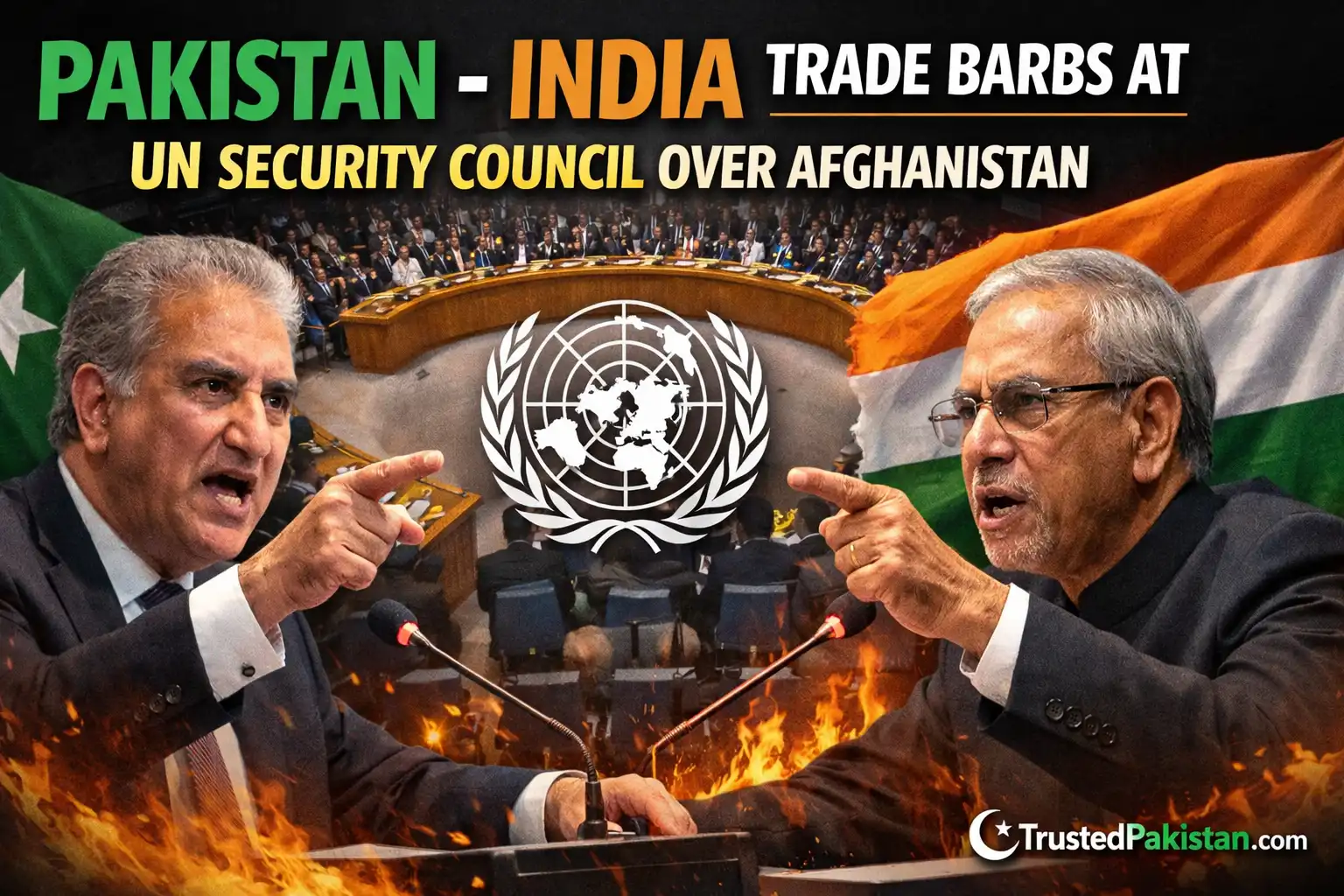
Pakistan India Trade Barbs at UN Security Council Over Afghanistan
The long-standing rivalry between Pakistan and India once again surfaced at the United Nations Security Council (UNSC), where both countries exchanged sharp remarks over the situation in Afghanistan. The debate highlighted competing narratives about regional stability, cross-border tensions, and the humanitarian crisis in Afghanistan. As two neighboring countries with deep geopolitical interests in the region, Pakistan and India used the global platform to defend their policies while accusing each other of contributing to instability.
The UN Security Council Debate on Afghanistan
During a session focused on Afghanistan’s humanitarian and security challenges, India and Pakistan engaged in a diplomatic confrontation. The discussion centered on issues such as border security, economic access for Afghanistan, and the protection of civilians.
India criticized Pakistan’s actions in Afghanistan, accusing Islamabad of destabilizing the region through military operations and policies that allegedly restrict Afghanistan’s access to trade routes. Indian representatives argued that such actions worsen the humanitarian crisis in the already fragile country and undermine international efforts to stabilize the region.
Pakistan rejected these accusations and emphasized its role in supporting Afghanistan during difficult times. Islamabad highlighted the need for international cooperation to address terrorism, economic collapse, and humanitarian challenges facing Afghanistan. The Pakistani delegation also pointed to India’s past involvement in Afghanistan, suggesting that New Delhi’s policies have sometimes contributed to tensions in the region.
India’s Accusations Against Pakistan
India used the UNSC platform to strongly condemn Pakistan’s alleged airstrikes in Afghanistan, claiming that such operations violate Afghanistan’s sovereignty and international law. According to Indian representatives, the attacks resulted in civilian casualties and added to the suffering of Afghan communities already facing economic hardship.
Indian officials also accused Pakistan of creating obstacles for Afghanistan’s trade and transit routes. Since Afghanistan is a landlocked country, it relies heavily on neighboring states for trade access. Any disruption in transit routes can have serious consequences for its economy and supply chains.
Pakistan’s Response and Position
Pakistan firmly rejected India’s allegations and described them as politically motivated. Islamabad emphasized that its actions are primarily driven by security concerns, particularly the threat posed by militant groups operating along the Pakistan–Afghanistan border.


Pakistani officials have repeatedly warned about the activities of the Tehrik-e-Taliban Pakistan (TTP), which Islamabad claims operates from Afghan territory. Pakistan argues that measures taken near the border are intended to combat terrorism and protect its citizens from cross-border attacks.
Afghanistan at the Center of Regional Rivalry
The exchange between Pakistan and India highlights how Afghanistan has become a focal point of broader regional competition. Both countries view Afghanistan as strategically important for security, trade, and regional influence.
In recent years, tensions in the region have intensified due to border disputes, trade disruptions, and shifting diplomatic relations. Afghanistan’s economic challenges and political uncertainty have made the situation even more complex.
Implications for Regional Stability
The heated exchange at the United Nations highlights the broader challenges facing South Asia. Afghanistan continues to struggle with economic difficulties, food insecurity, and political instability.
Diplomatic confrontations between Pakistan and India at global forums reflect their long-standing rivalry, which has often involved issues such as security concerns, regional influence, and cross-border tensions. These disagreements frequently extend into discussions about Afghanistan.
Conclusion
The clash between Pakistan and India at the UN Security Council illustrates how Afghanistan remains at the heart of regional geopolitical tensions. While India accuses Pakistan of destabilizing Afghanistan through military and trade policies, Pakistan argues that its actions are necessary to address security threats and maintain border stability.
For Afghanistan, caught between competing interests, the priority remains economic recovery and long-term stability. Moving forward, constructive dialogue and regional cooperation will be essential to address the challenges facing Afghanistan and reduce tensions among its neighbors.
