


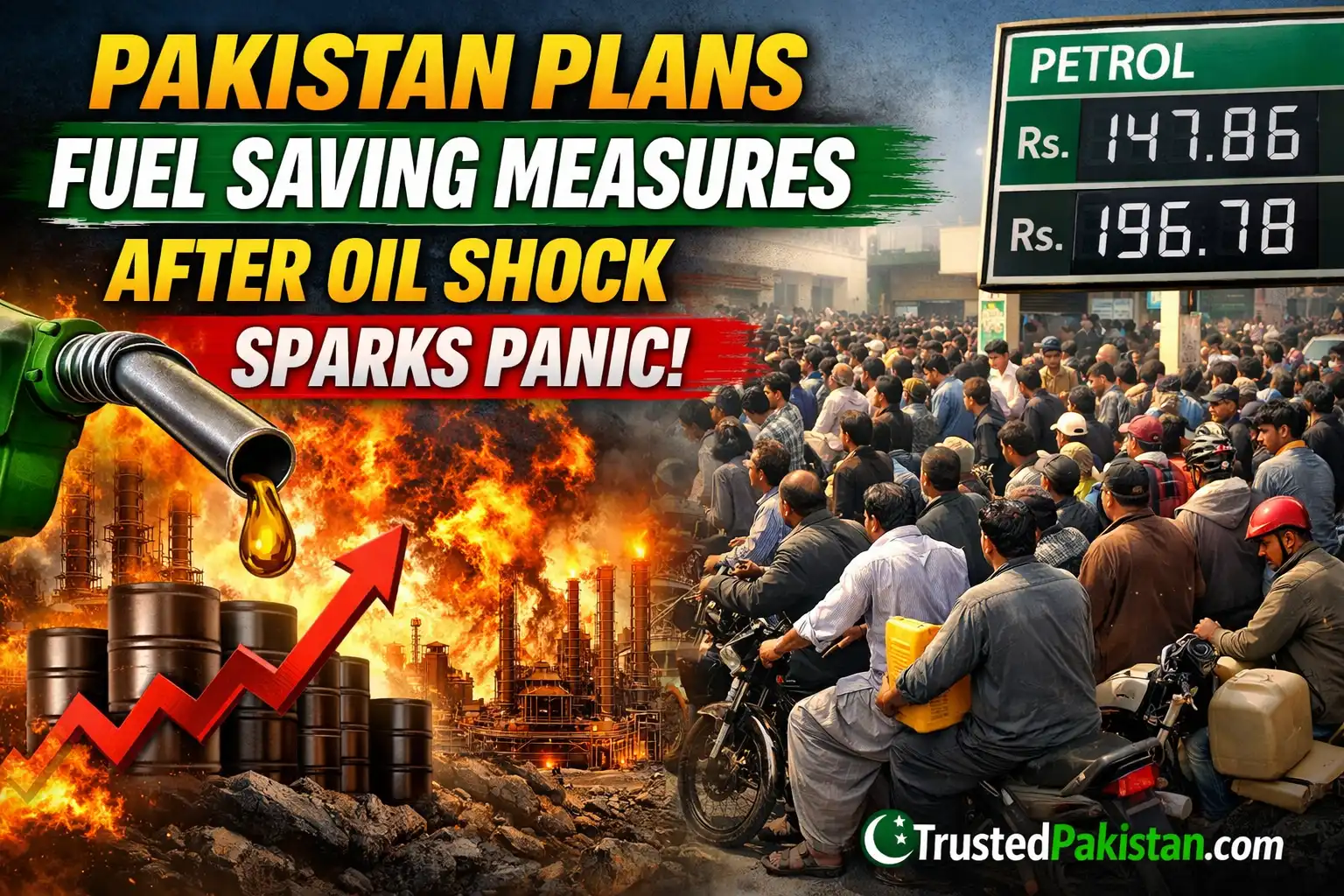
Pakistan Plans Fuel Saving Measures After Oil Shock Sparks Panic
Pakistan is preparing a set of fuel-saving measures after a sudden surge in global oil prices triggered panic buying and concerns about possible shortages. The spike in oil prices, largely linked to geopolitical tensions in the Middle East, has raised alarms in countries that rely heavily on imported energy. Pakistan, which imports a significant portion of its petroleum needs, is particularly vulnerable to such global shocks.
As the situation developed, authorities began working on emergency strategies to reduce fuel consumption and maintain supply stability. These proposed steps include work-from-home policies, online education, more frequent fuel price adjustments, and stronger monitoring of petroleum supplies. The government hopes these measures will help control demand while preventing disruption to economic activity.
Global Oil Shock and Its Effects
Rising Tensions in Energy Markets
The recent surge in oil prices is connected to rising geopolitical tensions that threatened key oil supply routes in the Middle East. Concerns over possible disruptions in major shipping lanes pushed global crude oil prices sharply higher.
When international oil prices rise quickly, countries dependent on imported fuel often face immediate economic pressure. The increase affects transportation costs, electricity production, and industrial operations.
Impact on Pakistan’s Economy
Pakistan’s economy is especially sensitive to global oil price changes because it imports most of its fuel. As international prices surged, domestic fuel prices also increased significantly.
This sudden rise led to long queues at petrol stations in several cities as people rushed to buy fuel before prices climbed further. Panic buying added additional pressure on supply chains and raised concerns about the stability of fuel markets.
Government Response to the Crisis
Emergency Planning
Following the oil shock, Prime Minister Shehbaz Sharif instructed government departments to prepare a comprehensive fuel-saving strategy. Officials were given a short deadline to propose measures that could reduce fuel consumption without severely affecting economic activity. The government’s plan focuses on controlling demand while ensuring adequate fuel supplies remain available across the country.
Key Objectives of the Plan
The fuel conservation strategy aims to achieve several important goals:
- Reduce national fuel consumption
- Prevent panic buying and supply disruptions
- Maintain stable fuel availability
- Limit the economic impact of rising oil prices
By balancing these priorities, authorities hope to avoid a major energy crisis.
Work-From-Home Policies
Reducing Commuting Fuel Use
One of the main proposals under consideration is encouraging work-from-home arrangements for government and private-sector employees where possible. Remote work can significantly reduce daily commuting, which is a major source of fuel consumption in large cities.
Benefits for Urban Areas
Major urban centers such as Islamabad, Lahore, and Karachi experience heavy traffic during working hours. If more employees work from home, fewer vehicles will be on the road, reducing both fuel consumption and congestion.




Online Learning for Educational Institutions
Distance Learning Options
Another proposal being considered is shifting universities and schools toward online learning if the situation worsens. Educational institutions generate large amounts of daily transportation as students and staff commute.
By temporarily moving classes online, authorities could significantly reduce fuel demand.
Lessons from the Pandemic
Pakistan’s education system already gained experience with online learning during the pandemic. While not perfect, digital education proved to be a workable solution during emergencies.
Officials believe this experience can help institutions adapt quickly if such measures become necessary again.
More Frequent Fuel Price Reviews
Weekly Price Adjustments
Currently, Pakistan typically adjusts fuel prices every two weeks. However, officials are considering shifting to weekly price reviews. More frequent adjustments would allow the government to respond faster to global oil market changes.
Managing Market Volatility
Weekly price revisions could help prevent sudden large increases that shock consumers. Instead, smaller and more gradual adjustments would better reflect international price trends. This approach could also help the government manage financial pressures caused by fluctuating energy costs.
Strengthening Fuel Supply Monitoring
Establishing Oversight Committees
The government has also strengthened monitoring of petroleum supplies across the country. A special committee has been assigned to track fuel imports, stock levels, and daily consumption. These reports are regularly reviewed to ensure that supply remains stable.
Maintaining Strategic Reserves
Pakistan maintains fuel reserves to handle short-term supply disruptions. Authorities are closely monitoring these reserves and exploring alternative import sources to ensure the country does not face shortages.
Public Concerns and Economic Pressure
Rising Cost of Living
The increase in fuel prices has raised concerns among citizens about the rising cost of living. When fuel prices go up, transportation costs increase, which often leads to higher prices for food and other essential goods.
Impact on Businesses
Transport companies, logistics providers, and small businesses also face higher operating costs. If fuel prices remain elevated for an extended period, some industries may struggle to maintain normal operations.
Conclusion
Pakistan’s move to introduce fuel-saving measures reflects the country’s vulnerability to global energy shocks. Rising oil prices and geopolitical tensions have forced authorities to prepare emergency strategies aimed at reducing fuel consumption and protecting supply stability. Policies such as remote work, online learning, frequent fuel price reviews, and stronger supply monitoring are intended to manage demand while keeping the economy functioning.
