


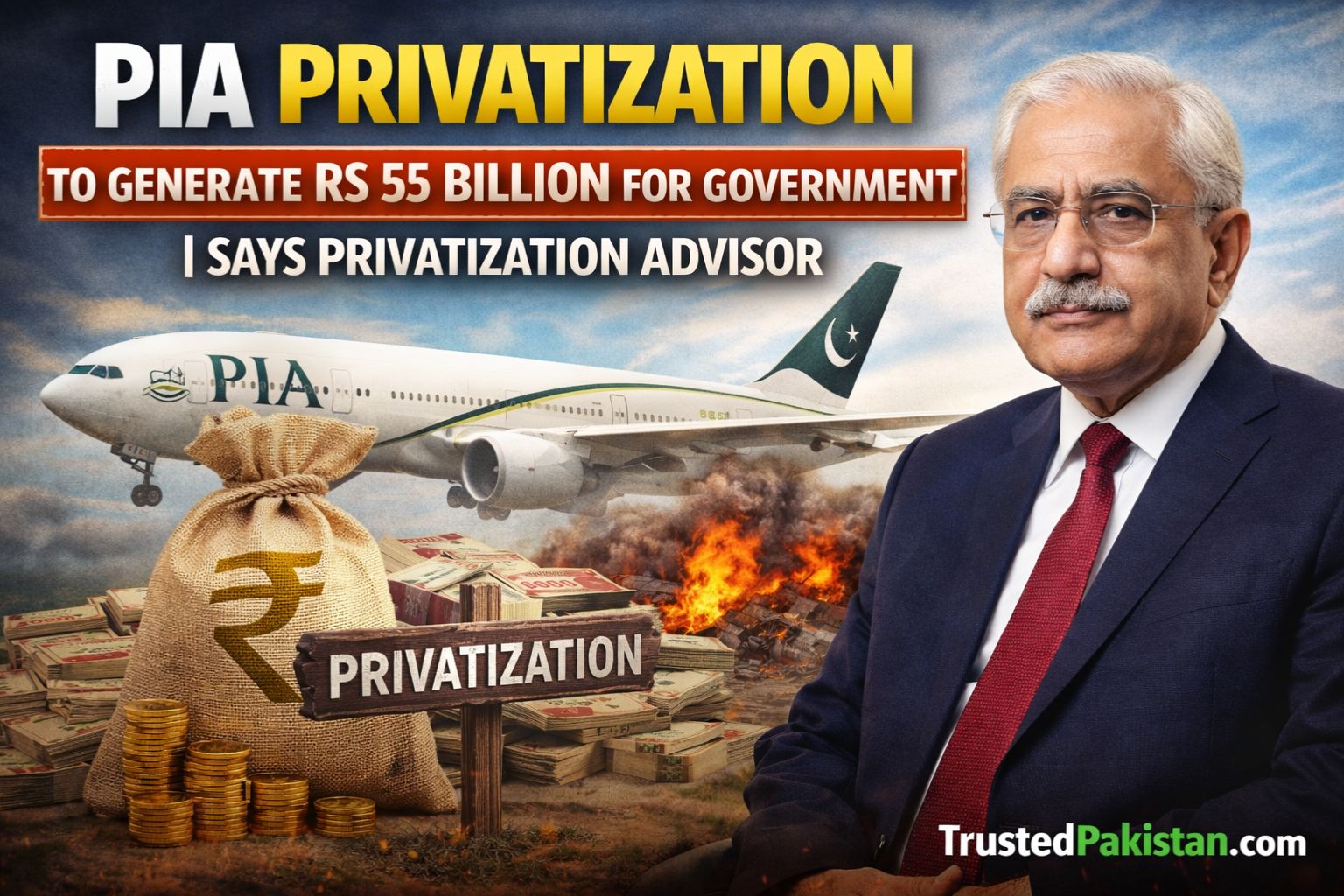
PIA Privatization to Generate Rs 55 Billion for Government | Says Privatization Advisor
Pakistan International Airlines (PIA) is slated for privatization, which is expected to generate approximately Rs 55 billion for the government, according to the Privatization Advisor. The move is part of a broader effort to improve efficiency, reduce fiscal burden, and attract private sector investment in the aviation sector.
Government Plans and Financial Impact
The Privatization Advisor stated that the sale of PIA shares or assets would provide a significant boost to the government’s finances. The estimated Rs 55 billion is expected to be used for developmental projects and to strengthen the country’s economic position.
He emphasized that PIA privatization is a strategic step towards reducing the financial losses the airline has been incurring for years. The government has repeatedly injected funds into the airline to keep it operational, creating a heavy fiscal burden. Privatization is viewed as a way to stabilize the airline while allowing market forces to improve management and service quality.
Objectives Behind Privatization
Officials outlined several key objectives for privatizing PIA:
- Financial Efficiency: Reduce government subsidies and financial drain caused by the airline’s operational losses.
- Operational Improvements: Enable professional private management to enhance service quality, fleet maintenance, and route management.
- Investment Attraction: Encourage local and international investors to participate in the aviation sector.
- Market Competitiveness: Make PIA more competitive with regional airlines through modernization and streamlined operations.
The Privatization Advisor highlighted that careful planning is being undertaken to ensure the privatization process is transparent, competitive, and aligned with international best practices.
Challenges and Considerations
Despite the financial benefits, privatization of PIA faces several challenges. Stakeholders have expressed concerns about employee layoffs, labor disputes, and maintaining national connectivity, especially to remote regions.
The government has assured that employee interests will be protected and that steps will be taken to minimize disruption. Additionally, regulatory frameworks are being reviewed to ensure a smooth transition from a state-owned entity to a private or semi-private airline.
Market Reactions
Industry experts have welcomed the PIA privatization move, suggesting that private sector management could revitalize the airline, improve customer experience, and attract foreign investment.




However, some analysts have cautioned that success depends on selecting capable management, updating fleet and infrastructure, and addressing systemic inefficiencies that have plagued PIA for decades.
International and Regional Context
Privatization aligns Pakistan with international trends, as many countries have either privatized their flag carriers or allowed private airlines to dominate domestic and regional routes. Privatization is seen as a way to enhance competitiveness and reduce reliance on state support.
The advisor also noted that the government is engaging with potential investors and international partners to ensure PIA’s privatization aligns with global aviation standards and safety regulations.
Expected Timeline
While an exact timeline has not been disclosed, officials expect the privatization process to be completed in phases over the next 12 to 18 months. Initial steps include valuation, stakeholder consultations, and drafting of legal frameworks to facilitate the sale of shares or assets.
The Privatization Advisor stressed that all procedural steps would be fully transparent, and the government is committed to ensuring that the process benefits the public, the airline, and investors alike.
TAP FOR MORE NEWS HERE
Conclusion
PIA Privatization represents a significant development in Pakistan’s aviation sector. With an estimated Rs 55 billion expected to flow into government coffers, the move is seen as a step toward fiscal responsibility, operational efficiency, and improved competitiveness.
By carefully managing the transition, the government aims to transform PIA from a struggling state-owned enterprise into a commercially viable and internationally competitive airline, benefiting the national economy and citizens who rely on air travel.
